Introduction
Hello. I'm Mata. I'm someone who usually researches and contemplates various things about Japanese history and yo-kai.
Beyond the Sengoku and Bakumatsu periods, I've recently been interested in the Heian to Muromachi periods, and I'm currently studying as a history nerd.
There is a reason why I came to love Japanese history, and that reason is actually yo-kai.
Yo-kai are grotesque monsters that have been feared by the masses since the Heian period—no, since ancient times. It was from the Edo period that they became mascots and started a boom.
People in the Edo period wove stories of yo-kai and humans through ukiyo-e and kabuki, and perceived yo-kai as characters.
In other words, yo-kai changed from beings to be feared into beings to be loved.
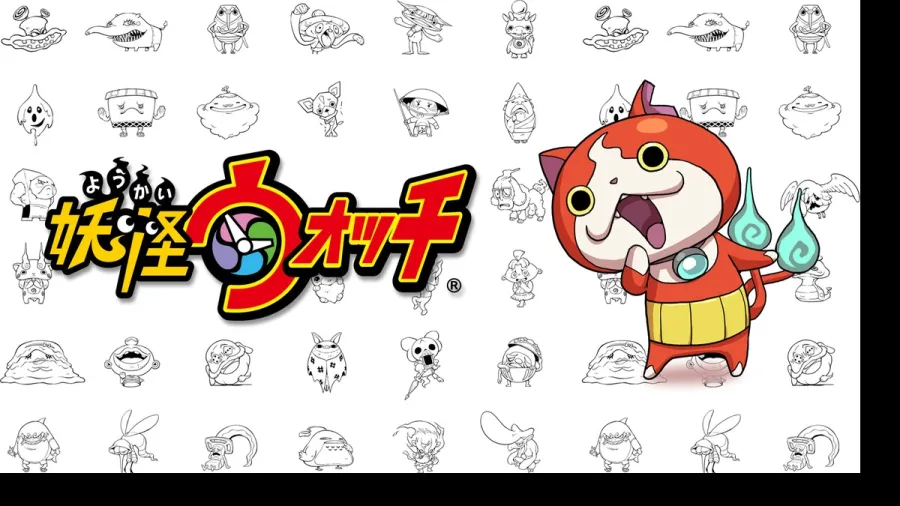
Well, about 10 years ago, in Heisei-era Japan, there was a phenomenon where yo-kai were turned into mascots and became popular, just like in the Edo period.
Yes, that is Yo-kai Watch.
Everyone from current high school students to university students must have been obsessed with it when they were children.
I myself entered the world of yo-kai through Yo-kai Watch, and I continue to be fascinated by the world of Japanese history today.
My love for Japanese history has its origins in Yo-kai Watch. So, it holds a very special place in my heart as well.
Now, this project is about looking at the origins of the yo-kai that appear in Yo-kai Watch.
In Yo-kai Watch, there is a type of yo-kai called "Classic Yo-kai".
Classic yo-kai are those that have been known to humans since long ago, such as "Hitotsume-kozo" and "Rokurokubi"; meta-speaking, they are not Yo-kai Watch original yo-kai.
The concept of classic yo-kai was created in Yo-kai Watch 2. However, there are many classic yo-kai among the yo-kai considered "modern yo-kai (Yo-kai Watch original yo-kai)" in the original version of Yo-kai Watch.
This time, I would like to introduce those classic yo-kai that appeared in the original version but are not explicitly stated as classic yo-kai.
For the record, I plan to introduce the classic yo-kai from Yo-kai Watch 2 next.
Well then, let's get started!
※I would also be happy if you read my article "Yo-kai Inquiry," where I deeply contemplate individual yo-kai.
Yo-kai Watch Original Version
This is an introduction to the classic yo-kai from the original Yo-kai Watch, that is, Yo-kai Watch 1.
Original yo-kai created based on classic yo-kai (Kyubi, Orochi, etc.) are excluded.
It is a classic yo-kai. No matter what anyone says, it is a classic yo-kai.
I believe it was a yo-kai you could befriend early in the story (my memory is hazy).
In Yo-kai Watch, it has become a yo-kai that just forces people to sleep and eats their dreams, but it is actually different in its original form.
Here is the origin.
Spirit Beast "Baku"
It is a yo-kai originating from the continent, and it is a sacred beast that eats people's nightmares.
Its appearance is mysterious, with an elephant's nose, rhinoceros's eyes, an ox's tail, and a tiger's legs (don't say that the Yo-kai Watch version only has an elephant's nose).
If you sleep with a picture of a Baku placed under your pillow, it is said that the Baku will appear in your dreams and eat your nightmares.
There is a custom of placing a picture of a treasure ship with the Seven Lucky Gods under your pillow at New Year's so that you have good dreams in your first dream of the year. Some of those treasure ships have "Baku" written on the sail (though most have "Treasure" written). This is likely because it eats nightmares.
Also, there is a pillow modeled after the shape of a Baku called a "Baku Pillow", and its purpose is, of course, to prevent nightmares. Surprisingly, the pillow that Toyotomi Hideyoshi himself loved to use was also a Baku pillow.
The author Baku Yumemakura is also famous. The origin of this name is probably also this "Baku".
By the way, the animal tapir (baku) was named because its appearance resembles the Baku. It's the same origin as the name for the giraffe.
Haku, a color-variant yo-kai of Baku.
In the Yo-kai Watch description, it says "a very rare pure white Baku."
That's not true at all, though!
The origin of this yo-kai is here.
Auspicious Beast "Hakutaku"Hozuki's Coolheadedness
This is also a sacred beast from China, and like the Baku, its picture is used as a charm against evil.
It speaks human language, and like spirit beasts such as the Qilin and Phoenix, it only appears before a virtuous ruler.
In China, there is a book called "Hakutaku-zu" that describes information about yo-kai, disasters, and monsters that harm this world.
It is, so to speak, the oldest Chinese yo-kai encyclopedia and disaster manual, and legend has it that this book is based on knowledge that the Yellow Emperor, the oldest king in China, received from the Hakutaku.
Now, this sacred beast, the Hakutaku, is often confused with the aforementioned Baku.
In the first place, the Baku in China did not have the setting of eating nightmares; it was just a charm against evil, but in the process of being transmitted to Japan, it was confused with a dream-eating god called "Hakuki", so the setting of eating nightmares was added.
The role of the Hakutaku in Japan is the same as the role of the Baku in China.
Perhaps, the Japanese Baku is the Chinese Baku mixed with Hakuki and transmitted to Japan, and the Japanese Hakutaku is the Chinese Baku with its original role mixed with the name of the Chinese Hakutaku and transmitted to Japan. It is likely that the name "Haku" for the color variant of "Baku" was created based on the Hakutaku, which can be confused with the Baku.
It's a yo-kai that I wouldn't complain about even if it were S-rank...
UngaikyoI don't think many people know that its origin is a classic yo-kai. Probably.
In the main game, it appeared as a means of transportation to warp from place to place.
Here is the origin.
Tsukumogami "Ungaikyo"
Shomakyo It is said to be a mirror that reveals the truth about a person, which became a tsukumogami after many years.
Perhaps it is a yo-kai original to Toriyama Sekien. There are no details about what kind of mischief it causes.
There are various theories, such as it being a yo-kai related to sake or connected to Suzuhikohime introduced on the next page, but in the end, it is not well understood. What exactly is this yo-kai...
I wonder if it's okay to classify this as a yo-kai...?
It's that familiar thing that appears if you ignore traffic signals. I won't forget going to befriend it early in the game and getting beaten back.
As for the origin... it's famous, but here it is.
Visitor Deity "Namahage"
It is often misunderstood, but it is not an oni. It is a deity.
A visitor deity worshipped in Oga, Akita. It appears in town wearing a grotesque mask and straw garments, going from house to house admonishing lazy people by saying, "Are there any bad children here?"
When a Namahage visits, the family members explain their misdeeds (no matter how trivial) and then serve sake to have it leave. Then,it is said that good fortune will visit that house.
Nowadays, it seems to have changed into a festival to make young children experience fear and stop them from doing bad things, but...
There are two types of Namahage.
One is a Namahage wearing a red mask called "Jijinamahage", and the other is a Namahage wearing a blue mask called "Babanamahage".
The Namahage in Yo-kai Watch is a "Babanamahage" (Kushamusha? I don't know).
Namahage is a folk custom originating in Akita Prefecture, but similar stories have spread to various regions.
A famous one is the yo-kai "Amamehagi" handed down in Noto, Ishikawa Prefecture.
It is the same as Namahage in that it goes around from house to house saying "Are there any bad children?", but this yo-kai is said to peel off the skin of people's feet.
Strictly speaking, it is not skin. It is "fire blisters".
Fire blisters are thermal erythema that form on the body after being exposed to stoves, hearths, or braziers for a long time. In old language, this is called "amame".
"Amame" is proof of a lazy person.The yo-kai Amamehagi is a yo-kai that peels off this amame to admonish people's laziness. Well, it does give a blessing afterwards, though.
By the way, amame is also called namomi.
It seems that the origin of the name Namahage is a corruption of "namomi-hagi", which means to peel off namomi and give a blessing.
It's so famous that I don't know what to say when asked to explain the origin... (I'm the one who brought it up, aren't I?)
It's a Tengu. A Tengu. An unmistakable classic yo-kai.
Mountain Deity "Tengu"
Generally, the most famous one is the long-nosed "Hanataka Tengu", but there are many other types,Konoha Tengu, Karasu Tengu, Kawa Tengu, Kurama Tengu, Hiten Tengu and others, just to name a few. There are also the Eight Great Tengu, such as the Tengu of Mt. Atago and the Tengu of Mt. Shiramine (Kurama Tengu is also included in the Eight Great Tengu).
There are also ranks for Tengu: Great Tengu, Medium Tengu, and Small Tengu.
Also, among the mysterious fires is "Tengu Fire", as a phenomenon of trees falling is "Tengu-daoshi", when walking on a mountain path, a gust of wind occurs and a large stone flies at you is "Tengu-tsubute", and laughter coming from nowhere is "Tengu-warai" and so on.
There are so many types... I wasn't conscious of it, but it became a big deal when I listed them as far as my knowledge allowed.
A Tengu is literally a "Heavenly Dog".
In China, meteors and fireballs have long been signs of bad omens.The sound of a fireball exploding in the sky sounded like a dog barking, which is why the Heavenly Dog, or Tengu, was created.
However, this perception faded after it spread throughout Japan.
For some reason, the Tengu became associated with Shugendo and mountain worship, and came to be treated as a fallen Yamabushi or a symbol of a corrupt monk. Furthermore, they are sometimes enshrined as gods, linked to
Sarutahiko, who guided the descent of the heavenly grandson, or the vengeful spirit of the retired Emperor Sutoku, who was ousted during the Hogen Rebellion. In hell, besides the six realms, there is a hell for fallen monks called the
Tengu Realm, also known as the Avici Hell. If you dig deep enough, the Tengu are quite interesting, but to analyze them, you would need more knowledge of Buddhism, Shugendo, and Shinto. They are profound Yo-kai.
The gacha-exclusive S-rank Yo-kai, Inugami.
I think everyone has made the retort, 'No, no matter how you look at it, that's a fox.'
Here is the original source.
Possessing spirit 'Inugami' Probably unrelated to the Inugami family
It is the same type of possessing spirit as a fox spirit or a tube fox. In Kyushu and Shikoku, where foxes do not inhabit, they are worshipped in place of foxes (so it's just a substitute for a fox after all).
Their appearance is very small, and they may or may not be visible depending on the person.
They are animal spirits that possess people and cause harm, specifically, it is said that they cause chest, foot, or hand pain, make the person suddenly shake their shoulders, or bark like a dog, and it is said that they possess jealous people.
The state of being possessed by an Inugami is called Inugami possession, and it cannot be broken without the special techniques of a prayer master.
However, the Inugami itself does not have the power to cause these phenomena; it is controlled by families that have possessed such spiritual power for generations, known as Inugami users, and it is said that this ability is inherited by descendants, and such families are called Inugami holders. It is said that happiness visits families that worship Inugami, but there is also a legend that if you worship them incorrectly, the family will fall into ruin, making them difficult spirits to handle.
By the way, to intentionally manipulate an Inugami,
a ritual is required where you bury a dog in the ground with only its head sticking out, and cut off its head when the dog's resentment reaches its limit.
Wow... that's scary...
DaidarabotchiYou're not a Yo-kai anymore. You're a god.
The name is famous, but I don't think many people know what it actually does.
Giant 'Daidarabotchi'
Well, 'Daidarabotchi' is fine too, but since I am a citizen of Sagamihara, I will go with the 'Deidara' notation that I have been used to saying for a long time.
The first time the notation for Deidarabotchi appears in literature is in the Fudoki. It is written there that the shells of the shellfish that Deidarabotchi ate piled up to form hills, or that Deidarabotchi's urine became a lake,
legends that Deidarabotchi created the land in various places. Famous ones include digging up soil in Omi to build Mt. Fuji, leaving behind Lake Biwa, comparing the heights of Mt. Yatsugatake and Mt. Fuji, or tripping over Mt. Hiei and kicking the lump of soil in anger, which became Awaji Island. It is somewhat similar to the creator giant 'Pangu' passed down in China.
'A Yo-kai with a heart as wide as the sea. That's only natural, as it is actually an incarnation of the sea, and it is no exaggeration to say that the Umibozu itself is the sea,' the description says.
Huh, since when did it become so generous and high-ranking?
The original Umibozu is not like that.
Yo-kai 'Umibozu'
There are various types such as 'Umiboshi', 'Uminyudo', 'Funayurei', 'Tachieboshi', 'Zato-gashira', and 'Kuronyudo'.
The phenomena they cause are the same for every Umibozu: they suddenly appear from the bottom of the sea and sink ships. Their appearance can be a giant, pitch-black, bald-headed giant, a group of naked monks, a catfish, or a turtle. It is said that if you go fishing at the end of the month, you will encounter an Umibozu, so fishermen used to take the end of the month off.
The evolved form, Fubuki-hime, is not a classic one. It's an original.
Demon woman 'Yuki-onna'
She is a classic female ghost.
The types vary. There is the classic Yuki-onna who kills travelers in a snowy mountain hut, the ' Icicle Woman ' who melted away when her husband, whom she fell in love with at first sight and married, forced her to take a bath, and a Yuki-onna like the Ubume who carries a child Yo-kai called a Yukinko and comes to make travelers hold it. Her true identity is said to be various things: just a female ghost, no, a celestial maiden who fell to earth, no, an inhabitant of the moon. Come to think of it, I saw an interesting theory about Yuki-onna the other day. It's that the existence of hidden Christians played a role in the formation of the Yuki-onna legend. You should check it out.
Amanojaku. The term "Amanojaku" is used to collectively refer to contrarians, people who cannot be honest, or those who go against the grain.
This demon is the origin of that term. Originally, it is a venerable demon yo-kai, alongside the Tengu and Kappa.
The imp "Amanojaku"
This yo-kai was created through the blending of China and Japan, specifically the Shinto and Buddhist traditions that have existed in Japan since ancient times.
Its origin in Shinto is the Kojiki and Nihon Shoki.
It is said that the goddess who appears there, "Ame-no-Sagume", was a deity with shamanic powers capable of reading human hearts. Because she caused the death of a god named "Ame-no-Wakahiko" using that power, the name "Ame-no-Sagume" became corrupted into "Amanojaku," meaning someone who guesses human hearts and acts in opposition or plays tricks.
In Buddhism, the evil demon being trampled by the Four Heavenly Kings is called "Haijo" in China.
Since "Haijo" can be read as "Amanojaku" in Japanese, it was identified as the same entity as the "Amanojaku" already known in Japan.
Also, this Haijo is said to originate from the Chinese water god, the god of the Yellow River, "Hebo", and Hebo was transmitted to Japan and became the "Kappa".The origin of the name Kappa is this Hebo.
And because of that connection, Amanojaku is sometimes written as "Hebo" or "Haijo".
Amanojaku and Kappa are like brothers.
In the Edo period, another origin for Amanojaku was fabricated.
According to the "Wakan Sansai Zue", Amanojaku was born from a goddess named "Amanozako", the daughter of Susanoo.
The same book explains that the Tengu were also born from this Amanozako, but as I explained earlier, since the Tengu originate from meteors, it is generally considered that the "Wakan Sansai Zue" is a fabrication.
TsuchinokoAh! Experience points!
Of course, Tsuchinoko-panda is an original.
The Tsuchinoko is a cryptid that became popular in the Showa era, said to bring happiness if seen, but it actually has a proper origin, which is this.
Yo-kai "Nozuchi"
Nozuchi was originally a spirit of the fields.Another name for the plant goddess Kayanohime is "Nozuchi-no-Kami
".
However, because this goddess Kayanohime gave birth to one terrifying god after another, the Nozuchi gradually became a yo-kai.Its appearance is described as a snake with no eyes or nose. It only has a large mouth and swallows rabbits, squirrels, and even deer whole
.There is also a legend that if you see one, you will develop a high fever and die
, so it is a yo-kai with characteristics completely opposite to the Tsuchinoko.
Tsuchinoko was originally another name for this Nozuchi.
However, once the name Tsuchinoko became famous in the Showa era and it was recognized as a rare and precious cryptid if found, the label of "happiness," which is the exact opposite of the original Nozuchi, was attached to it.
Yo-kai are things whose characteristics can be changed 180 degrees by how humans perceive them. And the study that unravels that is what we call folklore.
You are not a yo-kai, you are a god (second time).
I wonder why such a god is in the Infinite Inferno. It's a mystery.
The Four Symbols: "Azure Dragon"
This is one of the Four Symbols that govern directions and seasons in China.
It is said that there is the Azure Dragon of the East, the Vermilion Bird of the South, the White Tiger of the West, and the Black Tortoise of the North, and the Azure Dragon is the deity that guards the East.
According to the Five Elements philosophy, the Qilin is positioned in the center, so they are also called the Five Symbols.
Although it is written as "blue," its original meaning is green, and the nature of the Azure Dragon is also green when viewed through the Five Elements.
The Azure Dragon corresponds to "spring," and in the terminology of Onmyodo based on the Five Elements, the first quarter of life is expressed as "seishun" (youth/spring of life).
In other words, it is a concept from China. We often use the terms 'seishun' or 'aoharu' in Japan as well. I think it's good to know about the Four Symbols as a piece of common knowledge.
Conclusion
I believe I have now explained all the classic Yo-kai from the original version.
I'm sure there were some that made you think, 'Wait, this was a classic Yo-kai!?'
I would be very happy if this article sparked your interest in Yo-kai (and I would be deeply moved if you eventually became interested in history as well).
Next, I would like to talk about the origins of the classic Yo-kai in Yo-kai Watch 2.
Thank you very much for reading!