The rapid growth of the cloud service Cloudflare is due in part to the company's many unique technologies. Technologies such as Anycast and same-IP access are prime examples, and it was CTO and co-founder Lee Holloway who created these mechanisms. However, he was forced to step down due to a serious brain disease (FTD). This article explores his technical achievements and the tragedy of the illness that came to light. Text by Masakazu Urabe
Born into an Apple Family
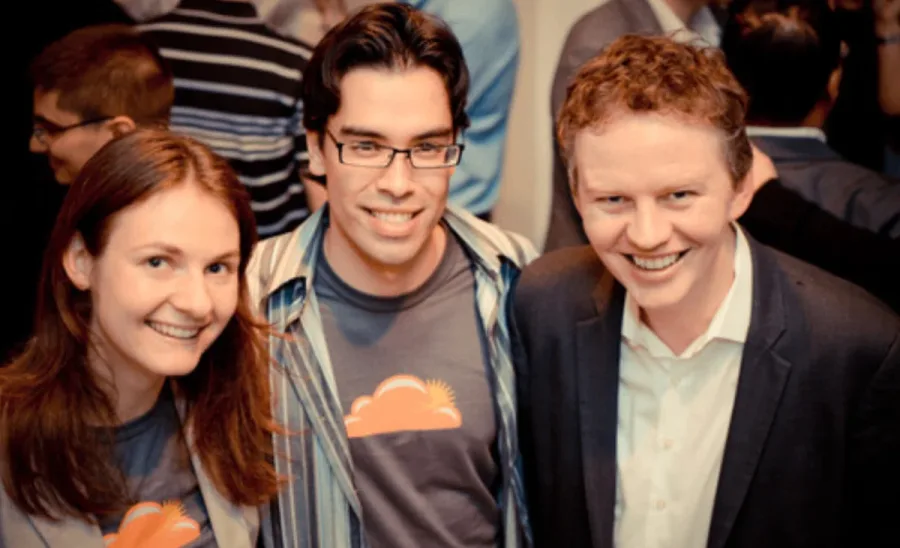
Lee Holloway was born (estimated) in 1981 in California, USA, and grew up in Cupertino, the heart of Silicon Valley. Thanks to his father, who worked at Apple, he was blessed with opportunities to interact with computers from a young age and naturally became familiar with technology.
He demonstrated exceptional strategic thinking in the video games he played with his younger brother, showing a level of skill that became legendary among his friends. There is even a story of him entering a middle school chess club tournament on a whim and winning it. It is clear that he possessed an outstanding intellect and a natural instinct for competition from an early age.
Studying Computer Science
Lee graduated from Monte Vista High School, a prestigious public school in his hometown of Cupertino. He demonstrated his programming talent while still in high school, and after graduation, he worked as an engineer at HomeWarehouse.com, a startup during the early days of the internet.
The company was acquired by retail giant Walmart in 2000. For the young engineer Lee, the experience here was a valuable asset. He later enrolled at the University of California, Santa Cruz (UC Santa Cruz), majoring in computer science. While studying computers in earnest at university, he cultivated the spatial awareness and logical thinking skills to visualize large-scale system structures in his mind.
Through Professor Arthur Keller at the university, Lee met a young entrepreneur named Matthew Prince. Matthew was pursuing an idea for anti-spam software, and Lee's lab was working on a project with a similar concept. Matthew took note of Lee's results, formed a collaborative relationship involving joint patent ownership, and hired Lee on the spot.
Living in Matthew's Basement
Unspam Technologies, the anti-spam company Matthew founded in 2004, was based in Park City, Utah, and Lee became its key member. He lived in the basement of Matthew's home, working on software development in exchange for food and housing instead of a salary. Lee became the Chief Software Architect, literally leading the design and implementation of the company's software foundation. While employed there, Lee and his colleagues co-founded Project Honey Pot as a side project. This is an open-source community project that tracks and collects data on spammers (malicious actors) on the web. Project Honey Pot still exists today as an initiative to track online fraud and abuse, and it is one of the achievements that highlights Lee's creativity and technical prowess.
In 2007, when Prince left Utah to attend Harvard Business School, Lee also returned to California and began living with Alexandra Carey, a friend from his university days.
As Matthew Prince's MBA program neared its end, Lee began receiving job offers from other companies. Upon hearing this, Matthew made a bold proposal to Lee regarding a new business plan he had been developing with his Harvard classmate Michelle Zatlyn. That idea, which would later evolve into Cloudflare, was the concept of "utilizing the spammer information collected by Project Honey Pot to build a service that not only 'monitors' threats but also 'blocks' threats on the internet."
It is said that Matthew spoke passionately about the business concept for an hour at this time. After listening, Lee was silent for a moment before saying, "That's interesting, let's do it!" and immediately decided to join the new venture.
Founding Cloudflare and the Supporting Technical Infrastructure
Lee Holloway was known as the "resident genius" during the early days of Cloudflare, and was recognized for his ability to write code for long hours with exceptional concentration.
The platform he designed continued to support Cloudflare's growth, and his technical vision has been passed down as the foundation of the company's services to this day. Lee Holloway co-founded Cloudflare in 2009 with Matthew and Michelle, and as co-founder and lead engineer, he built the company's foundation. Based on the business plan the two had refined at Harvard, Lee developed Cloudflare's first prototype and built the core software infrastructure of the service. Examples include the implementation of the Anycast network and the design of the Cell architecture.
In 2010, the three of them took on the emerging business contest TechCrunch Disrupt and unveiled Cloudflare to the world. Although Lee did not stand on stage, he worked frantically to fix software bugs until the day of the presentation, leading the demo to success.
After that, Lee was active at the company as Chief Engineer and Architect, and also took on the role of hiring and mentoring the early engineering team. The system built under his command is extremely scalable, serving as the cornerstone that allows Cloudflare to process over 10% of all internet requests and block billions of cyber threats every day.
In 2014, there was an event that demonstrated Lee's excellence as an engineer. During a project to provide free encrypted communication (SSL/TLS) to all websites, he entered a state of deep concentration from the day before the deadline, wearing a hoodie and listening to music with headphones so no one could talk to him, and wrote the code in a single night. Thanks to that, free encrypted communication was provided to all Cloudflare customers as scheduled. It was also reported that the amount of encrypted web traffic on the internet doubled overnight.
Lee's abnormality. The onset of frontotemporal dementia
Lee's career appeared to be smooth sailing, but starting in the early 2010s, abnormalities began to emerge. Around 2011, when he was around 30 years old, he became extremely prone to fatigue, and days increased where he would collapse on the floor as soon as he returned home from work. His once-sociable personality began to dim, and he stopped showing up to invitations from colleagues or events. At home, he began to stand out for his lethargy, such as no longer interacting with his young son.
Initially, his wife Alexandra (his first wife from his college days) thought they had grown apart emotionally and recommended counseling, but the situation did not improve.
In 2012, when Alexandra decided to temporarily separate, taking their young son with her, Lee easily asked for divorce papers to be filed. Their marriage ended this way, and his colleagues perceived it as, "He must have become selfish because he succeeded and gained financial freedom." However, this inexplicable behavioral change was actually a symptom of the disease that would later be identified.
Afterward, Lee became close with Kristin Tarr, who was in charge of communications at the same company, Cloudflare, and in 2014, he proposed during a trip to Rome and remarried. Their married life seemed to be going well, but in early 2015, a turning point in the treatment of his underlying condition arrived. Lee had been born with a heart condition called aortic valve regurgitation and it had been pointed out that this might be the cause of his headaches. Recommended by a doctor at Stanford University Hospital, he underwent a six-hour heart surgery in January 2015. The surgery was successful and his heart condition improved, but Holloway's mental state changed significantly after this surgery.
Even after returning to work, Lee was listless throughout, and the passion and charisma he once had had faded away. His wife Kristin felt that even at the event in Hawaii just before their wedding, he seemed somewhat absent-minded, as if the rich colors of his former personality had been lost. Later, at work, he began to exhibit behavior that was like a different person than before, such as starting to play games on his smartphone during meetings, not responding to people, and stubbornly opposing colleagues' suggestions. Matthew and Michelle repeatedly held meetings to urge him to improve, but it had no effect.
Matthew recalled feeling a "tremendous anxiety, as if losing a best friend," as he watched his co-founder change before his eyes. Eventually, entering 2016, it became difficult to keep Lee at the workplace, and a decision for him to leave the company was made. It is said that while Matthew was giving a tearful farewell speech at an all-hands meeting, Lee stood by holding a beer bottle with a faint smile on his face. People inside and outside the company were shocked by the outcome of him leaving Cloudflare at age 36, having dedicated his life to the company's business.
After leaving the company, Lee planned to become a stay-at-home father for his second child (with Kristin) who was about to be born. However, his strange behavior gradually escalated at home as well. While his wife was in labor and suffering at the hospital, Holloway slept for a long time next to her, and when he woke up, he reportedly argued with the doctor, opposing the epidural procedure.
He showed no interest in the newborn baby, and frequently exhibited clearly abnormal behavior, such as watching the movie "Home Alone" over and over again alone in the middle of the night, or walking around the house all day with a beanie pulled down low over his eyes.
Kristin grew increasingly alarmed by her husband's condition and dragged him to multiple hospitals. Despite these desperate efforts, Lee himself remained expressionless, only repeating "I'll get better," and gradually, their conversations stopped making sense. Those around him initially suspected aftereffects of the heart surgery, burnout syndrome, or depression.
Then, in March 2017, the results of an examination by a specialized neurologist showed an unbelievable finding: atrophy of Lee's brain. Holloway's brain, as seen in the MRI images, showed atrophy disproportionate to his age, and the doctor told his family that "the possibility of some kind of neurodegenerative disease is high."
Further detailed examinations and interviews were conducted at the University of California, San Francisco (UCSF) Memory and Aging Center, where he was referred, and the medical team diagnosed him with "behavioral variant frontotemporal dementia (bvFTD)."
His wife Kristin, his parents, and his younger brother were devastated by the shocking news of a type of early-onset dementia at just 36 years old.
Unlike Alzheimer's disease, frontotemporal dementia is a disease where changes in personality and behavior appear more prominently than memory impairment, and it is a disease that often develops in one's 50s or 60s. There is no fundamental cure, and the doctor explained that the symptoms would progress further, eventually making it impossible to converse, difficult to walk, causing a loss of swallowing function, and ultimately threatening his life through infections or accidents.
It is said that the family members present were speechless when they saw the cross-section of Lee's brain projected on the screen, where the gray matter of the frontal lobe that should have been there was replaced by black collapse in scattered places.
It is reported that Holloway alone accepted this diagnosis, which was equivalent to a "death sentence," calmly, and while his family was in tears, he behaved as if it were someone else's problem, such as by complimenting the attending physician's wedding ring. That figure was no longer the person his family knew, but a painful reminder that he was a different person created by the disease.
After the diagnosis, Kristin quit her job to spend as much time as possible facing her husbandw. However, the progression of the disease was relentless, and by the summer of 2017, Holloway's judgment had further declined, making it impossible for the family to keep an eye on him alone. They could no longer control behaviors such as playing music videos at high volume in the middle of the night or walking around the house all night long.
His spoken language was also gradually lost, and by around 2018, he was in a state of mechanically repeating events from his life, such as "met at Cloudflare," "engaged in Rome," and "held a wedding in Maui," and the words he uttered gradually turned into strings of numbers and letters that made no sense.
By 2019, meaningful conversation had finally become impossible, his emotional expression was lost, and he was in a state where he could not even make a single phone call. Searching for the shadow of the son who once affectionately hugged her and said, "Mom, I love you," his mother Kathy said in tears, "I will never hear those words from my son again."
Reaction of the US media
The US media also showed great interest in Lee's dramatic life, his technical achievements, and the tragedy that suddenly struck him. In 2020, a feature article titled "The Devastating Decline of a Brilliant Young Coder" was published in the US edition of Wired magazine, reporting in detail on the process by which Holloway, who built the technical foundation as a "genius" within Cloudflare, gradually began to show lethargic and unpredictable behavior, with no one knowing the reason why.
Wired senior editor Sandra Upson wrote, "Lee's personality had been consistent for decades—until that day," and vividly depicted the personality transformation that occurred to him, the years his family spent struggling to find the cause, and how the disease called FTD toyed with the lives of him and those around him.
This feature attracted a great response, and Lee's name became widely known outside the technology industry. Also, through the same article, the awareness of the disease FTD itself increased, and "dementia that can occur in one's prime working years" was received with surprise by many readers.
On the other hand, praise and gratitude for the technical contributions Lee built were also expressed from various quarters. Cloudflare had its initial public offering (IPO) in 2019. In the published IPO prospectus, co-founders Matthew and Michelle clearly stated that "the third co-founder, Lee Holloway, was a genius who designed our platform and led the early technical team" and that "his technical decisions and the engineering team he nurtured are the foundation of our current business." When deciding on the codename for the IPO preparation within the company, they named it "Project Holloway" to pay tribute to his contributions.
Furthermore, the tech news site TechCrunch also introduced him at the time of the IPO with the headline "Cloudflare has a third co-founder," reporting that "Lee Holloway, who stepped down in 2016 due to symptoms of the neurological disease FTD, was the key figure who built the company into what it is today." In this way, the media widely reported on his achievements and his battle with the disease, and many readers responded with comments such as "I was moved" and "My heart aches for the tragedy of this genius programmer."
Lee and his family have also begun contributing to the community fighting this disease. In 2019, his wife Kristin and Lee's parents established The Holloway Fund for Help and Hope in Honor of Lee Holloway within the FTD support organization AFTD (Association for Frontotemporal Degeneration), deciding that 50% of donations would go to support programs for patients and their families, and the remaining 50% to FTD research.
Partly due to the calls for support from this fund and Kristin's own active work as an AFTD board member, Lee's case is featured in various media and professional conferences as a symbolic case for deepening understanding of FTD.
Since 2020, an annual conference by FTD researchers called the "Holloway Summit," named after him, has also been held to discuss uncovering causes and developing treatments. These social movements ensure that his personal history is not just introduced as a tragedy, but leads to hope for saving future patients.
I have created an addendum text of about 400 characters, focusing on "Agent Lee." Please use this as an addendum to the end of the second part.
[Addendum] Lee's name revived in the AI era: "Agent Lee"
One year after the publication of this article, Lee Holloway's name is in the spotlight in a new form in the AI era.
Symbolic of this is the new AI assistant "Agent Lee" being deployed by Cloudflare. This feature enables the automation of complex infrastructure configuration and troubleshooting simply by entering instructions in natural language. The name was chosen to pay deep respect to Lee, the genius engineer who built the company's robust system foundation.
What is interesting is that the foundation that powers this latest AI around the world is the "Cell-based architecture" he designed himself, and the "Workers" technology derived from it. The simple and flexible infrastructure born from his philosophy that "failure is inevitable" continues to live on as the foundation of the AI platform.
(Added October 7, 2026)
Continued in Part 2
Sources:
Wired,
AFTD,
TechCrunch,
Longreads
Cloudflareblog