To better enjoy this article, it helps to understand how "souls" are treated in D&D. You can find a clear explanation in Beholder's article, "Secrets of the Afterlife".
Introduction
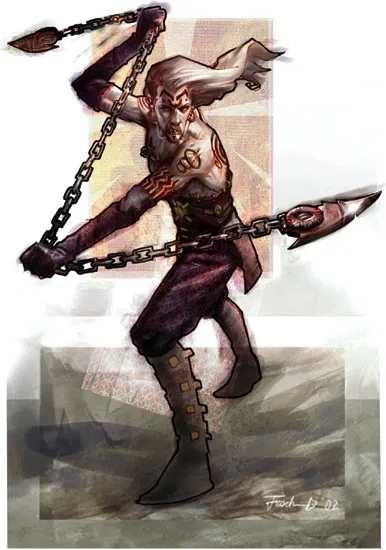
In Dungeons & Dragons (D&D), there are many creatures whose lore has changed significantly with each edition. However, few races have undergone as dramatic a transformation as the Shadar-kai. They appeared in 3rd Edition as "shadow-cursed fey," changed into "humanoids living in the Shadowfell" in 4th Edition, and were redefined in 5th Edition as "descendants of elves who serve the Raven Queen." Their very racial classification has shifted from "fey" to "humanoid" and then to "elf," a transition that is extremely rare in the history of D&D.
In this article, we will trace how the lore of the Shadar-kai was born, deepened, and fundamentally rewritten, based on official sourcebooks and magazine articles from each edition. We will focus on flavor—world-building, background, culture, and society—rather than data (stat blocks or combat abilities).
Chapter 1: Birth—Fiend Folio (3rd Edition, 2003)
The Shadow Fey, Their First AppearanceThe Shadar-kai first appeared in the D&D world in the 3rd Edition's "Fiend Folio," published in 2003. This supplement was an homage to the original AD&D book of the same name, featuring many eccentric and unique monsters, and the Shadar-kai were introduced to the world as one of them.
At this point, the Shadar-kai were classified as "Medium-sized fey (extraplanar)"—that is, not humanoids like elves or dwarves, but a type of fey like nymphs or dryads. As their alias "Shadow Fey" suggests, they were designed as alien beings who, despite being fey, had a deep connection to the Plane of Shadow.
Appearance and AtmosphereThey have gray skin, dark eyes, and a slender build slightly taller than the average human. Their movements are graceful, exuding a supernatural stealth. The shadows cast by the folds of their clothing are deeper than those of ordinary humanoids, and they can vanish from sight simply by stepping into an ordinary shadow.
What is characteristic is the body modification, such as piercings and tattoos, that many Shadar-kai prefer. As later materials reveal, this is not merely fashion, but a desperate means to counter the "Shadow Curse" described below. As for weapons, they prefer spiked chains and favor lightweight, technical weaponry.
The Shadow Curse—The Fate That Defines the RaceThe core of the 3rd Edition Shadar-kai lore lies in the "Shadow Curse."
In the distant past, the Shadar-kai sought to protect the world from rising humanoid races like humans. Skilled in shadow magic, they made a pact with the dark powers of the Plane of Shadow, intending to shroud the world in eternal twilight. In that world of twilight, the Shadow Fey were to reign as supreme rulers.
However, this grand experiment ended in failure. The ritual went out of control, and the Shadar-kai were bound to the Plane of Shadow, cursed to have their souls stolen by the dark abyss.
This Shadow Curse is a very impressive mechanism, both in terms of gameplay and lore. Every time a Shadar-kai becomes dazed, dazzled, staggered, or unconscious, if they fail a Will save, a portion of their soul is dragged into the Plane of Shadow, and they receive a negative level. This negative level cannot be recovered by normal means; it requires a "greater restoration" cast in the Plane of Shadow, or the highest-level magic such as "wish" or "miracle" on the Material Plane. Shadar-kai consumed by the Shadow Curse cannot even be resurrected and gain no experience points.
In other words, for a Shadar-kai, being knocked unconscious in battle is not just a temporary disadvantage, but an existential crisis involving the loss of their soul. This setting provides a brilliant basis for the gloom, desperation, and cruelty of the Shadar-kai race.
Gal-ralan and the Culture of PainTo counter the Shadow Curse, the Shadar-kai developed a special magical bracelet called a "Gal-ralan." Forged from cold iron, this bracelet drives long needles into the wearer's forearm when equipped, causing constant pain. The wearer constantly takes 1 point of Constitution damage, but in return, they gain a resistance bonus to saving throws, with an additional bonus specifically against the Shadow Curse.
The Gal-ralan is an item that symbolizes Shadar-kai culture. The idea of anchoring the soul to the body through pain is directly linked to their culture of body modification, such as piercings, tattoos, and scarification. While it might be possible to anchor the soul through joy or ecstasy, the bitter temperament of the Shadow Fey concluded that extreme pain was the most certain means.
Society and PersonalityThe shadar-kai of the 3rd Edition form predatory societies. Few permanent cities remain, and those that do are hidden by illusions and shadow magic, guarded by scout parties leading shadow mastiffs. Because many shadar-kai have been dragged into the Shadowfell, even their greatest cities are desolate, sparsely populated places.
The political system is a magocracy, where powerful illusionists rule. They hate other fey and hunt down any they encounter. Alliances with humanoids are formed only for a greater purpose or to eventually betray and plunder them.
Their alignment is "usually neutral evil." Their favored class is rogue, and they are also said to be frequently wizards or clerics.
Characteristics of their initial settingWhat is noteworthy here is that in the 3rd Edition, there is no sign or trace of the "Raven Queen" for the shadar-kai. They are an independent race and do not serve any specific deity. Their motivations are "liberation from the shadow curse" and "revenge against humanoid races," and they are depicted as tragic yet self-centered beings.
Also, the racial classification of "fey" is important. Shadar-kai are beings of the natural world and are creatures that originally belong to the Material Plane. Their binding to the Shadowfell is an exile from their homeland for them, and this setting of "wanting to return but being unable to" is the source of the entire race's despair and anger.
Chapter 2: Deepening—Dragon Magazine Issue 337, "Ecology of the Shadar-kai" (3.5 Edition, 2005)
Significant fleshing out of the settingTwo years after their appearance in the Fiend Folio, "Ecology of the Shadar-kai" by Jesse Decker was published in Dragon Magazine issue 337. This was an article that significantly expanded the setting of the shadar-kai, detailing every aspect from history, physiology, and psychology to society, tactics, and magic.
This article does not deny the setting of the Fiend Folio, but rather fleshes it out while maintaining its framework. The basic settings—being shadow fey, the shadow curse, and the existence of Gal-Laran—are all followed.
Elaboration of historyThe history briefly mentioned in the Fiend Folio, that they "tried to shroud the world in twilight," is developed into a grand epic in Dragon Magazine.
In the early days of the world, the shadar-kai lived in peace just like other fey. However, shadow and the shadar-kai were always one, and the pale-skinned fey inherently possessed the secrets and influence of the Shadowfell. As mortal races began to gain power, the greatest spellcasters among the shadar-kai peered into the swirling currents of the Shadowfell and saw visions of a future where nature would be trampled by inferior races.
Although there were voices calling for a preemptive strike, the shadar-kai were few in number, and they could not prevent the foreseen future with force alone. Therefore, they sought ways to darken the world itself by utilizing their innate intimacy with shadow and powerful magic.
According to legend, one hundred shadow fey—each a master of ancient magic—gathered and performed a grand ritual to irreversibly bind the world of mortals to the Shadowfell. This ritual was supposed to bind the souls of all living shadar-kai to a dark node in the Shadowfell, using their very essence as a conduit to fuse the two worlds forever.
However, there were those who opposed this plan. "Servants of the Primal Order" and "visitors who protect what their masters created"—heroes of a forgotten age—broke through the shadar-kai's guardians, invaded the Shadowfell, and interrupted the ritual. The resulting magical backlash was tremendous, scattering countless shadar-kai and erasing all traces of those involved from both dimensions.
The eternal twilight of the Shadowfell remained separated from the Material Plane, but the bonds the shadar-kai had forged did not break; they merely transformed. The shadow chains bound to their souls reversed their gravitational pull, forever corrupting into a terrifying curse that drags their essence into the Shadowfell.
Physiology and sensory dullnessThe Dragon Magazine article describes in detail the effects the shadow curse has on the bodies of the shadar-kai. Their bodies, touched by shadow, are numb to sensation, and even the strongest spices feel faint and distant. Few find joy in eating, and meals are merely "another opportunity to be reminded of the fact that they will one day be dragged into the shadow."
This dulling of sensation is the basis for the Shadar-kai culture of self-harm. Because vivid and sharp sensations serve as a precious tether to the Material Plane, Shadar-kai regularly wound themselves with deep, intricate tattoos, pierce their bodies with rings and nails, and slice their flesh with cold iron blades. For them, pain is a survival mechanism to keep their souls anchored to the living world.
Society and EmotionThe Shadar-kai society depicted in Dragon magazine is surprisingly emotional. While they behave bloodthirstily toward others, they are fiercely loyal to their own group, described as being like "traumatized siblings clinging to orphaned brothers and sisters."
Deep passion flows among the Shadar-kai, but what would manifest as tenderness in other races appears here as masochistic relationships. Trysts filled with the agony of tattoos, piercings, scarification, and amputation are as intimate and precious to the Shadar-kai as romance is to other races.
This depiction elevates the Shadar-kai from mere "evil monsters" to complex beings with tragic backgrounds. Their cruelty is not born from innate evil, but from generations of loss and pain, and even within that pain, love and bonds exist.
The Symbolism of the Spiked ChainInterestingly, the text describes the spiked chain not just as a weapon for the Shadar-kai, but as a cultural symbol. Despite having no organization for the race as a whole, the Shadow Fey universally adopt the spiked chain as their weapon of choice. It is "a tool and symbol of their holy war of rage against the younger races," and the Shadar-kai take joy in its versatility, which brings about various painful deaths, from brutal strangulation to slow, carving dismemberment.
Shadar-kai of the Shadow PlaneDragon magazine also depicts the Shadar-kai who have been dragged into the Shadow Plane. Only a very few Shadar-kai actually exist on the Material Plane, as the majority have been dragged into the Shadow Plane over the centuries.
The Shadar-kai of the Shadow Plane are more restrained than their Material Plane counterparts. They live in the shadow reflections of ruined cities as mad thieves or desperate wanderers, devoid of passion, happiness, or hope. They no longer wound or torture themselves, but their hatred for all humanoid races is even stronger than those on the Material Plane, and travelers passing through the Shadow realm are hunted without mercy.
However, if even the slightest hint of a way to return to the Material Plane is suggested, they immediately pay attention and may even become subservient. That said, those who make such claims but fail to deliver are said to meet "a long and unimaginably agonizing end."
Relationships with Other RacesThe Shadar-kai have been disowned by other fey. They are disliked as a result of their attempts to fundamentally alter the natural world, and instead, they utilize various shadow creatures such as shadow mastiffs and shadow asps.
Of all the fey, only the bloodthirsty redcaps are willing to trade with the Shadar-kai, though this is not out of a sense of kinship, but out of a thirst for savage blood. They also share an intense hatred with the Dark Ones, the reasons for which have not been fully explained.
Chapter 3: The Shift—Monster Manual and Dragon Magazine Issue 372 (4th Edition, 2008)
A Fundamental RedefinitionThe description of the Shadar-kai in the 4th Edition Monster Manual (2008) marks a dramatic shift from the 3rd Edition. Although the description is only a few paragraphs long, the changes contained within were fundamental.
First, the racial classification was changed from "fey" to "humanoid." The Shadar-kai, who were a type of fey belonging to the natural world in the 3rd Edition, were reclassified as humanoids, the same as humans and elves.
Next, their habitat was changed from the "Plane of Shadow" to the "Shadowfell." This was due to the reorganization of the 4th Edition cosmology, in which the Plane of Shadow was redefined as the Shadowfell.
And as the most important change, a connection to the Raven Queen was introduced. While the 3rd Edition Shadar-kai were an independent race, in 4th Edition they were redefined as beings who "live in the Shadowfell and serve the Raven Queen."
Rewriting the Origin—Those Who Were Once HumanThe origin of the 4th Edition Shadar-kai is fundamentally different from that of the 3rd Edition. "Playing Shadar-kai" by Chris Sims, published in Dragon Magazine issue 372 (2008), details this new origin.
The 4th Edition Shadar-kai were once human. They were all members of an expansive tribe that called themselves "Shadar-kai." These early humans witnessed the abuse that the former god of death, Nerull, inflicted upon the souls that passed into his power. They also feared the unknowable realm of death through which most souls passed.
When the Raven Queen struck down Nerull and ascended to godhood in an era now mostly forgotten, the Shadar-kai made a pact with her. They promised to serve as her agents in the mortal world, and in return, she granted them incredible longevity and freedom from frailty. The Shadar-kai believe that through this pact, they became the "chosen people of death and winter."
After the pact, the Shadar-kai moved to the Shadowfell and built communities on the borders of Letherna, the Raven Queen's domain. Life in the shadows transformed the humans and reshaped their forms. Eventually, they became so different from humans that they became a distinct race. As they expanded their territory in the Shadowfell and began interacting with the mortal world again, the tribal name became the racial name.
This origin setting is completely different from the 3rd Edition's "fey who failed to protect nature." The 3rd Edition Shadar-kai were beings cursed as the price for their arrogance, whereas the 4th Edition Shadar-kai are beings who chose to make a pact out of fear of death. A pact instead of a curse, humans instead of fey, intentional transformation instead of an accidental result—everything was rewritten.
Appearance and Physical CharacteristicsThe 4th Edition Shadar-kai resemble humans, but the weight of existence in the Shadowfell has shaped them into a slightly shorter and much thinner build than humans. Their skin ranges from colorless pale to dark gray, and their hair is similarly dull-colored or jet black. Their eyes are glossy black, with no whites or distinct pupils. The shadows near a Shadar-kai can sometimes appear to stretch or deepen, especially when they are angry.
While their natural appearance is somber, their personal adornment is very elaborate and unique. They prefer dark, exotic clothing, jewelry, and weapons, often decorating themselves with brightly colored scraps of cloth. Their hair is similarly elaborately styled and is often dyed.
Notable is the description regarding their lifespan. It is said that Shadar-kai can live longer than any Eladrin, but few actually do. The price of their extreme way of life prevents them from reaching old age. Some simply fade away, dissolving into shadow and death, sometimes leaving only a wraith behind as their soul passes into the protection of the Raven Queen.
The Battle Against the Lethargy of the ShadowfellThe core of the 4th Edition Shadar-kai culture depicted in Dragon Magazine issue 372 lies in their constant battle against the depression of the Shadowfell.
The Shadowfell drains creativity and the will to live from living creatures. When the Shadar-kai moved to the Shadowfell long ago, they were not immune to this depression. Many in their early society succumbed to ennui and simply slipped out of existence. This drove the Shadar-kai to transform their way of life, leading them to embrace strong emotions and extreme experiences.
This setting presents a new threat that replaces the 3rd Edition's "Shadow Curse." In the 3rd Edition, the source of fear was souls being dragged into the Shadow Plane, but in the 4th Edition, the threat is existence itself fading away as one is swallowed by lethargy and ennui. The countermeasures have also changed. In the 3rd Edition, they anchored their souls with the pain of the Gal-Ralan, but in the 4th Edition, they keep their minds awake through extreme experiences and intense emotions.
The current Shadar-kai culture is described as a "study in pushing limits." Shadar-kai welcome difficult challenges and physical and emotional extremes as a way of life. Instead of being swallowed by the darkness of the Shadowfell, they learn how to guide that darkness. The limits of pleasure and pain distract them from the exhausting melancholy of the Shadowfell.
Reinterpretation of Body AdornmentThe culture of tattoos, scars, and piercings inherited from the 3rd Edition was given new meaning in the 4th Edition.
According to Dragon Magazine issue 372, the body adornments worn by Shadar-kai serve multiple purposes. They are proof of one's ability to endure pain, as well as a means of personal expression and decoration. And each adornment can also be a record of deeds accomplished, honors earned, or misdeeds declared.
These records are important because an individual's achievements are all that a Shadar-kai truly possesses. Other indicators of personal value, such as wealth, are merely byproducts of success. Money can sometimes be obtained by chance, but what matters is a wealthy Shadar-kai's ability to protect that wealth and their ability to acquire even more.
In the 3rd Edition, pain was a survival mechanism to anchor the soul to the Material Plane, but in the 4th Edition, it has shifted to a proof of achievement and an expression of individual identity. The same culture of body modification is maintained, but with entirely different motivations.
Meritocracy and Individual GloryA newly introduced setting element in the 4th Edition is the thorough meritocracy of Shadar-kai society. Individual achievement and glory define a Shadar-kai more than family, wealth, or territory.
Dragon Magazine issue 372 delves further into this meritocracy. Even if they do not gain the actual ability to live forever, Shadar-kai pursue individual greatness so that stories of their grand deeds might grant them a form of immortality. In this quest for personal glory, most Shadar-kai ignore mundane things like comfort, morality, and safety.
The weak turn to dust and vanish into eternity without being remembered. What the Shadar-kai truly fear is not death in battle or execution for crimes, but living without experiencing life, fading into nothingness, and being forgotten. Even death in battle is proof of a life lived. 'After all, the Shadar-kai are the children of death,' notes Dragon Magazine.
The Culture of CrowingParticularly interesting in Dragon Magazine issue 372 is the description of a unique Shadar-kai cultural practice called 'crowing'.
Shadar-kai are far from humble about their abilities or achievements. In Shadar-kai meeting halls, boasting and bravado—known as 'crowing'—are common. They also crow during battle, boasting of their successes and announcing doom to their enemies.
During birthdays and other festivals, 'crowing moots' are held, where boasting is elevated to the realm of artistic and poetic ritual. In addition to verbal exchanges, the moots often include physical competitions or duels between participants. The best 'crower' at a moot earns tokens, such as tattoos, to commemorate their victory.
Those who elevate this culture of crowing to a supernatural level are known as 'Doomspikers,' who become highly skilled in curses, able to break the morale of their enemies and torment them with dark threats and blood-soaked prophecies. In Dragon Magazine issue 372, the Doomspiker is also incorporated into game mechanics as a prestige class, showing that the culture of crowing is inseparable from the Shadar-kai combat style.
In truth, Shadar-kai do not care if their bravado is eventually proven to be a lie. What matters is living boldly, speaking boldly, and carving their mark into the world.
Attitudes Toward Death and the Philosophy of Fate4th Edition Shadar-kai fight without regard for their own safety, believing that 'death is prophesied at birth and cannot be avoided.' Many Shadar-kai accept death, believing that the Raven Queen will keep their souls safe even after death.
Dragon Magazine issue 372 delves deeper into this attitude toward death. Through their pact with the Raven Queen, each Shadar-kai is an instrument of death and fate. The Raven Queen does not demand worship from the Shadar-kai, but she receives it in abundance. All she requires is that they honor the pact regardless of other faiths and keep her commandments. Therefore, most Shadar-kai have no sympathy for the dying and seek to punish those who defy fate.
At the same time, however, Shadar-kai also believe that no one truly knows what fate holds in store. Therefore, each individual Shadar-kai seeks the best of all possible fates. They live extreme lives not only to shake off the lethargy of the Shadowfell, but also to test fate and ensure that they have a great destiny.
Every Shadar-kai desires some form of immortality—as an enduring legend, as a sorrowsworn servant of the Raven Queen, or as something else entirely. This belief drives the Shadar-kai toward great deeds and serves to weed out the unfit.
This attitude toward death is in contrast to the 'fear of the shadow curse' in the 3rd Edition. While 3rd Edition Shadar-kai feared losing their souls above all else, in the 4th Edition, they do not fear death, but rather embrace it. This can be interpreted as the presence of the 'Guardian of Souls,' the Raven Queen, replacing the fear of the shadow curse.
Relationship with the Raven QueenDragon Magazine issue 372 describes the relationship between the Shadar-kai and the Raven Queen as 'a fair mother, but not an affectionate one.' When the Shadar-kai called out to her in ancient times, she answered. She still answers today. While she gives little affection, she also does not seek affection from her children.
While almost all shadar-kai revere the Raven Queen, each individual shadar-kai is free to choose their own destiny and way of life, including their religion. This "freedom of faith" is an unexpected aspect of the 4th Edition shadar-kai.
In fact, shadar-kai worship and honor many deities, typically favoring neutral gods. Warriors revere Kord, while mages pay homage to Corellon or Ioun. Sehanine holds a special place in the hearts of the shadar-kai, with her teachings of following one's own destiny, lurking in the shadows, and seeking new experiences. While few openly worship extreme deities—whether good or evil—shadar-kai society may be one of the few that allows true freedom of faith regarding the gods. However, the worship of demons, particularly Orcus and his ilk, is rarely tolerated even among the permissive shadar-kai.
This polytheistic and tolerant religious view is a unique balance found in 4th Edition, differing from the 3rd Edition setting of "not serving specific deities" and the 5th Edition setting of "cursed by the Raven Queen to serve eternally."
The Legacy of the Spiked ChainThe spiked chain, which was the iconic weapon of the shadar-kai in 3rd Edition, continues to hold an important place in 4th Edition. Dragon Magazine issue #372 provides a multiclass feat called "Spiked Chain Training," which allows the spiked chain to be treated as a two-handed weapon and a light blade, and also offers specialized powers such as Chain Trip and Spiked Shackles.
The spiked chain, which was "a tool and symbol of a holy war of rage against younger races" in 3rd Edition, is reinterpreted in 4th Edition as a technical weapon that demonstrates individual martial prowess. From a symbol of vengeance to a tool of glory. This change symbolizes the shift in the overall motivations of the shadar-kai.
Differences by Campaign SettingOne of the interesting points of Dragon Magazine issue #372 is that it presents ways to incorporate shadar-kai into different campaign settings.
In the Forgotten Realms, it is said that shadar-kai began to appear in large numbers among the human citizens of the Netherese city of Shade a generation after it returned from the shadows to the material world. The shadar-kai of Netheril have a much more evil inclination.
In Eberron, shadar-kai are depicted as former humans who, out of fear of death, entered into a ritual pact with the Traveler and moved to Dolurrh (the Shadowfell). Most shadar-kai revere the Dark Six and favor the Traveler and his doctrines of cunning, change, and deception.
Even more noteworthy is the alternative setting presented in the article. The idea that "shadar-kai are strange fey who serve the Winter Court of the Feywild" returns to their roots in the 3rd Edition's Fiend Folio, suggesting that the 4th Edition designers themselves recognized the value of the 3rd Edition setting.
What Was Lost, What Was GainedMuch was lost in the transition to 4th Edition. The detailed mechanics of the shadow curse, the lore of the Gal-Ralan, their identity as fey, their motivation to protect nature, and their tragic nature as a "cursed race." These were all replaced by the new identity of servants of the Raven Queen.
However, reading the article in Dragon Magazine #372, it is clear that 4th Edition did not simply simplify the setting. The "Shadowfell lethargy" replacing the 3rd Edition's "shadow curse," the "culture of extreme experience" replacing the suffering of the Gal-Ralan, the "meritocracy" replacing the magocracy, and unique elements like the raven-calling culture and doomspeakers have given the 4th Edition shadar-kai new depth.
The connection to the compelling deity of the Raven Queen gave the shadar-kai new narrative possibilities. From independent small groups of raiders to a proud people of warriors who have made a pact with the Goddess of Death. If the shadar-kai of 3rd Edition were "those who survive in despair," the shadar-kai of 4th Edition are "those who seek glory in the shadow of death." It can be said that the gains were as significant as the losses.
Chapter 4: Reconstruction—Mordenkainen's Tome of Foes (5th Edition, 2018)
Shadar-kai as ElvesThe 5th Edition's Mordenkainen's Tome of Foes (hereafter MToF) brought the third and most daring transformation to the shadar-kai setting. Shadar-kai were redefined not as "fey" or "humanoids," but as "elves."
MToF fully integrated the story of the shadar-kai into the elven mythological system. It placed the origin of the shadar-kai within the fundamental tragedy of the elven race: the conflict between Corellon and Lolth.
The Origin of the Raven QueenThe origin of the Raven Queen as told in MToF is inseparable from the origin of the shadar-kai.
Once, there was an elven queen. Her people loved her more than they loved the gods. Her true name is lost to the passage of time. In an era when Corellon and Lolth were locked in endless conflict, this queen sought to use the souls and magic of her own people to elevate herself to godhood and save the fractured elven pantheon. She intended to preach reconciliation to Corellon and Lolth afterward.
Many elves, moved by this queen, voluntarily offered their own souls and magical power. These devoted followers were the ones who called themselves the "shadar-kai," and they gathered comrades, believing that if the queen achieved godhood, she would unify all elves.
The queen's plan was to use the souls of the shadar-kai to carve a path through the Feywild to Arvandor (the realm of the elven gods) while simultaneously increasing her own influence.
Corruption and TransformationHowever, a group of evil mages lurked among the shadar-kai followers. They plotted a unique ritual to hijack the energy of the shadar-kai and grant themselves power exceeding even that of the legendary elven archmages.
When the queen approached the entrance to Arvandor, she realized the mages' scheme. Having become a quasi-divine entity, she unleashed her full fury upon the mages in the midst of their ritual. However, her supernatural rage corrupted the ritual, creating uncontrollable power.
By the time the queen realized her mistake, the distorted magical energy had seized her, and she had no power to resist. Panicked, the queen sought further power from the souls of the shadar-kai, but the gravitational pull of the spell had become irresistible. The queen and everyone under her control were dragged into the Shadowfell, and the queen died instantly.
And from her shattered mind and body, the Raven Queen was born.
The Creation of the NagpaWhen the ritual ended in a catastrophic result, the group of mages was also dragged into the Shadowfell along with the queen and the shadar-kai. But their misfortune did not end there. The former queen rose from the center of the Labyrinth of Ash and let out a scream of pitch-black smoke. The scream pierced the flesh and minds of the mages, staining their bones black and tearing their souls apart. Their cries of agony mingled with the queen's scream, and when the scream faded, the mages had mutated into nagpa—monstrous, scab-covered vulture-like creatures.
This setting is clever. By incorporating the origin of the nagpa monster into the story of the shadar-kai, it adds depth and breadth to the myth of the Raven Queen.
The Shadar-kai After the FallAfter the nagpa were created and exiled, the shadar-kai watched as the Raven Queen sank into divine madness. The betrayal of the mages, the collapse of the kingdom, the failure of apotheosis—everything drove her into bottomless grief. At the same time, the energy of the corrupted ritual continued to transform her, breaking down her physical form into an entity composed of symbols, images, and perceptions.
To prevent herself from dissipating into complete nothingness, the queen used her last personal power to draw memories of the dead from the Shadowfell, creating a cloak of identity to sustain herself. Over the centuries, those dark memories accumulated and coalesced, giving shape to the entity now known as the Raven Queen.
The Fortress of MemoriesSince achieving godhood, the Raven Queen has filled her realm with shadows and memories, obsessively collecting such essences from the remnants of dead gods and mortals scattered across the Shadowfell. From these metaphysical fragments, she formed a distorted castle that the shadar-kai call the "Fortress of Memories."
The fortress is a place filled with grief, echoing constantly with the past. Flocks of ravens, acting as the eyes and ears of the Raven Queen, carry cryptic messages and omens to every corner of the multiverse.
Inside the fortress are items that the Raven Queen finds irresistible. They are memory-laden objects imbued with deep emotions such as pain, grief, longing, guilt, and regret. Furniture, clocks, mirrors, jewelry, toys. Ghostly visions of people, places, and pets. These are all brought as gifts from the shadar-kai.
The Shadar-kai as Servants of the QueenIn MToF, the shadar-kai are beings cursed by the Raven Queen and destined to serve her in the Shadowfell for eternity. They live outside the Fortress of Memories and typically fear the place, avoiding entering it of their own volition. In their communities, they recreate old rituals and ceremonies to remember the days of their lost kingdom, when they once lived in life and light.
When in the Shadowfell, the bodies and faces of the shadar-kai are aged and wrinkled, showing all the effects of the terrible magic that stripped away their former elven beauty. To hide their appearance, they often wear masks made of metal or wood, but even those coverings have a melancholy look. When sent out from the Shadowfell to fulfill the Raven Queen's commands, they take on a youthful appearance similar to other elves, though their skin always retains a deathly pallor.
Immortal ServantsThe shadar-kai know that when they die, the Raven Queen captures their souls and resurrects them to return to the Shadowfell and serve her again. Therefore, they view death as a temporary state, and many shadar-kai have little concern for their current physical shells.
This lore reinforces the 'fearless of death' trait introduced in 4th Edition with a more concrete reason. Because the Raven Queen retrieves and resurrects their souls, death is literally a temporary condition.
Follow the RavenWhen the Raven Queen finds a soul or information she desires, she sends a raven to notify the shadar-kai. Her minions trust this cryptic, cawing guide, which leads them to the places where the barriers between planes are thinnest, allowing them to slip into the target plane.
Upon arriving at their destination, the shadar-kai watch and wait. They are looking for the tragedies the Queen wishes to collect. Sometimes it is something small—a jilted lover, a lost item, a betrayal. But sometimes it is something far more significant—a murder, a war, a demonic pact. To bring back items for the Queen, the shadar-kai use shadow magic. If the target is alive, they use magic to invade their mind and cut away fragments of the desired emotion; if the target is near death, they capture the entire soul to bring back to the Raven Queen.
Comparison with 3rd Edition: Same Name, Different BeingsWhen you place the shadar-kai of MToF side-by-side with the shadar-kai of 3rd Edition, you realize that aside from the name and the culture of piercings and tattoos, they have almost nothing in common.
The 3rd Edition shadar-kai were fey cursed by their own mistakes. Their motivation was the protection of nature, and their methods backfired, saddling them with a shadow curse. They were an independent race and did not serve any specific deity. Pain was a means to anchor their souls, and spiked chains were symbols of vengeance.
The MToF shadar-kai are descendants of elves who pledged their souls to the Queen. Their motivation was the salvation of the elven pantheon and helping the Queen's apotheosis. They are beings who serve the Raven Queen eternally and are collectors of tragedy and memory. They possess a duality of an aged form in the Shadowfell and a youthful form in other planes.
The shadow curse is gone, the Gal-Ralan is gone, and the obsession with spiked chains is gone. Instead, new elements have been added: the grand myth of the Raven Queen, the Fortress of Memories, the raven messengers, and the collection of tragedy.
This should be called a 're-creation of lore' rather than a 'change of lore.' The 3rd Edition shadar-kai and the 5th Edition shadar-kai are, effectively, different races that share the same name.
Chapter 5: Refinement—Monsters of the Multiverse (5th Edition Revision, 2022)
Concise ReprintThe 2022 'Monsters of the Multiverse' (hereafter MoM) is a supplement that re-edits and re-adjusts 5th Edition monsters. The description of the shadar-kai is significantly simplified from MToF, but the basic lore is maintained.
The shadar-kai in MoM are described as follows:
Within this concise description, the core of the lore established in MToF is condensed: being descendants of elves, the connection to the Raven Queen, and the adaptation to the Shadowfell.
The Influence of the ShadowfellMoM depicts the effects that long-term exposure to the Shadowfell has had on the shadar-kai. They are often devoid of joy and consumed by grief. In the Shadowfell, they present a corpse-like appearance with pale hair, wrinkled gray skin, and swollen joints. While they appear more youthful in other planes, their skin always retains a deathly gray hue. When in the Shadowfell, they loathe mirrors and avoid anything that reminds them of their age.
Collectors of TragedyThe shadar-kai of the Raven Queen monitor both the Shadowfell and the Material Plane, seeking out select souls and tragedies that might please their goddess. It is rumored that they can even guide worldly events along tragic paths to amuse her. However, the Raven Queen is famously enigmatic even to her most devoted followers, and their efforts are rewarded only with vague omens that they must interpret as best they can.
The Positioning of MoMWhile MoM did not add new elements to the shadar-kai setting, it is significant in that it officially inherited and concisely re-presented the setting from MToF. It can be said that it confirms the 'standard' setting for 5th edition shadar-kai follows the MToF trajectory.
Chapter 6: Analysis of Changes—What Has Changed and What Remains
Changes in Racial ClassificationThe changes in the racial classification of the shadar-kai reflect the shifts in D&D world-building.
3rd Edition: Fey (Extraplanar) — Supernatural beings belonging to the natural world
4th Edition: Humanoid — A race resembling humans
5th Edition: Elf (Adapted to the Shadowfell) — A subrace of elves
The change from fey to humanoid was part of the 4th edition's world-building reorganization. The 4th edition introduced the two parallel planes of the Feywild and the Shadowfell, and reorganized the classification of many creatures.
The change from humanoid to elf is due to the 5th edition incorporating the shadar-kai into the elven mythological system. This made the shadar-kai an elven subrace for player characters, making them easier to use as adventurers.
Changes in Origin MythsComparing the origin myths of the shadar-kai across editions reveals an interesting pattern.
In the 3rd edition, shadar-kai are fey who 'failed in an attempt to darken the world to protect nature.' Their motive was altruistic (protection of nature), but their methods were arrogant (altering the world), and as a result, they were cursed. This is a classic 'tale of hubris.'
In the 4th edition, shadar-kai are 'humans who made a pact with the Raven Queen out of fear of death.' Their motive was self-preservation (the safety of their souls after death), and the pact was successful. It is a transaction, not a curse, and the result of a choice, not a failure. The shadar-kai are depicted not as victims or perpetrators, but as beings who actively chose their own fate.
In the 5th edition, shadar-kai are 'elves who sacrificed their souls to help the Queen's apotheosis.' Their motive was devotional (loyalty to the Queen and the unification of the elves), and the cause of their failure lies with external traitors (a group of evil mages). The shadar-kai themselves are victims, and their tragedy is the result of betrayal and misfortune, not their own mistakes.
This three-stage change is significant. The 3rd edition shadar-kai are beings burdened by a 'self-inflicted' curse, and their suffering has a sense of karmic retribution. The 4th edition shadar-kai are beings walking a 'chosen path,' and their suffering is accepted as a price. The 5th edition shadar-kai are 'entangled' victims, and their suffering is more sympathetic. It can be said that with each passing edition, the 'responsibility' of the shadar-kai has lightened, and their ease of emotional resonance as player characters has increased.
The Disappearance and Transformation of the Shadow CurseThe "Shadow Curse," which was the core of the 3rd Edition setting, changed its form with each passing edition.
In 3rd Edition, the Shadow Curse was a defining element of the Shadar-kai's existence, featuring detailed game mechanics. There was a constant, tense proximity to death, with the risk of losing one's soul every time one fell unconscious, the need to counter it with painful gear called gal-ralan, and the ultimate threat of being dragged into the Shadow Plane.
In 4th Edition, while there was no direct mention of the Shadow Curse, the "Shadowfell Lethargy" depicted in Dragon Magazine issue 372 can be seen as its spiritual successor. The Shadowfell strips living creatures of their creativity and will to live, and many early Shadar-kai succumbed to ennui and slipped out of existence. Rather than the soul being dragged into the shadows, the mind dissolves into them—the form of the threat has changed, but the essence of the "fear of being swallowed by the shadows" has been inherited.
In 5th Edition, the Shadow Curse has completely disappeared and has been reinterpreted as a transformation caused by long-term exposure to the Shadowfell. The aged appearance of Shadar-kai in the Shadowfell is not a curse, but an adaptation to the environment.
The Transformation of the Culture of PainThe Shadar-kai culture of body modification (piercings, tattoos, scarification) has been maintained throughout all editions, but its meaning has changed with each one.
In 3rd Edition, pain was a means of survival to tether the soul to the Material Plane. To counter sensory dulling and protect themselves from the Shadow Curse, the Shadar-kai would wound themselves. This was an act based on dire necessity.
In 4th Edition, Dragon Magazine issue 372 gave multiple meanings to body modification. It became a testament to one's ability to endure pain, a means of personal expression and adornment, and a record of deeds accomplished and honors earned. The aspect of extreme experience to counter the lethargy of the Shadowfell was also added, shifting from the "pain for survival" of 3rd Edition to "pain for glory and self-expression."
In 5th Edition, masks were newly added to hide their aged appearance in the Shadowfell, but the setting of tethering the soul through pain has been lost.
The Evolution of Attitudes Toward DeathAttitudes toward death have also changed significantly with each edition.
The Shadar-kai of 3rd Edition fear death. More accurately, they fear the "loss of the soul due to the Shadow Curse" more than death itself. Because a Shadar-kai afflicted by the Shadow Curse cannot even be resurrected, protecting the soul is the top priority.
The Shadar-kai of 4th Edition accept death and even seek to transcend it. According to Dragon Magazine issue 372, what the Shadar-kai truly fear is not death, but "living without experiencing life, fading into nothingness, and being forgotten." Even death in battle is proof of a life lived, and all Shadar-kai desire some form of immortality—as an enduring legend, as a servant of the Raven Queen's sorrowsworn, or as something else entirely.
The Shadar-kai of 5th Edition view death as temporary. Because the Raven Queen captures their souls and resurrects them, they have little interest in their current physical bodies.
This transition can be read as a path where the object of fear itself changes: from "fear of losing the soul" to "fear of oblivion and the pursuit of glory" to "certainty of rebirth." In 3rd Edition, they feared the physical loss of the soul; in 4th Edition, they feared the meaninglessness of existence; and in 5th Edition, the fear itself has faded.
Chapter 7: The Existence of the Raven Queen
The Queen Who Changed the Shadar-kaiWhen discussing the evolution of the Shadar-kai setting, the existence of the Raven Queen cannot be avoided. Introduced in 4th Edition, this deity fundamentally rewrote the identity of the Shadar-kai.
In 4th Edition, the Raven Queen was briefly introduced as a deity who governs the realm of death. Her relationship with the Shadar-kai was described merely as them "serving" her.
However, in MToF, the origin of the Raven Queen is told as one with the origin of the Shadar-kai, making the two inseparable. The Raven Queen was once an elven queen, and the Shadar-kai were her loyal followers. The queen's failure and transformation determined the fate of the Shadar-kai, and since then, the two have been in an eternal master-servant relationship.
Obsession with Memories and EmotionsIn MToF, the Raven Queen is depicted as a being obsessed with memories and emotions. She is fascinated by the past and gazes upon her favorite memories from across the world as if they were glittering jewels.
This setting defines the role of the Shadar-kai as 'collectors of tragedy.' They gather items and memories filled with grief, longing, and regret from all over the world for the Raven Queen and deliver them to the Fortress of Memories. This is a completely different role from the 'raiders' or 'avengers' of the 3rd Edition.
Conflict with VecnaMToF also depicts the conflict between the Raven Queen and the archlich Vecna. Vecna has long coveted the Raven Queen's power over knowledge and souls, and he seeks to conquer the Shadowfell and rule from the Fortress of Memories by stealing souls. However, all attempts so far have been thwarted.
This conflict structure gives the Shadar-kai an additional role as 'defenders of the Queen' and clarifies their relationship with antagonistic forces in a campaign.
Conclusion: A Race with Three Faces
Looking back at the evolution of the Shadar-kai setting, we can see how the game of D&D has reconstructed its worldview with each passing edition.
The Shadar-kai of the 3rd Edition were the children of dark fantasy. The curse of shadow, the pain of Gal-Ralan, the dulling of the senses, and a masochistic culture—these elements embody a gloomy and unforgiving worldview. They were tragic villains who continued to pay the price for their own arrogance. The 'Ecology' article in Dragon magazine delved into this setting to the extreme, depicting a complex and fascinating race where love and bonds exist even amidst pain and despair.
The Shadar-kai of the 4th Edition were not merely a transitional existence. While they might appear that way if one only looks at the brief description in the Monster Manual, 'Playing Shadar-kai' in Dragon magazine issue #372 depicts this race with a depth comparable to Dragon magazine issue #337 of the 3rd Edition. The origin of 'once being human,' the struggle against the lethargy of the Shadowfell, the culture of raven-calling, the Doom-speakers, and the philosophy of fate based on the pact with the Raven Queen—these elements establish a unique identity as 'proud warriors seeking glory in the shadow of death,' which is different from both the 'cursed raiders' of the 3rd Edition and the 'messengers of tragedy' of the 5th Edition. It could be said that the 4th Edition Shadar-kai were the most 'greedy for life' among the three faces.
The Shadar-kai of the 5th Edition have become characters in a grand mythology. They have been incorporated into the elven pantheon, integrated with the origin of the Raven Queen, and redefined as collectors of memories and tragedies. From the 'cursed raiders' of the 3rd Edition to the 'messengers of tragedy serving a god'—this change reflects the trend of D&D as a whole moving toward more player-friendly and grander stories.
Which edition's Shadar-kai is the 'best' will depend on the preferences of the player or DM. Some may prefer the gloomy and unforgiving setting of the 3rd Edition, while others may prefer the grand mythological background of the 5th Edition. However, in every edition, the Shadar-kai have maintained their core as a 'race defined by shadow and pain.' Gray skin, dark eyes, piercings and tattoos, and an inseparable bond with shadow—these elements have been passed down for over 20 years, making the Shadar-kai one of the most memorable races in D&D.
The story of those cursed by shadow is a mirror reflecting the evolution of the D&D worldview itself.
ReferencesFiend Folio (D&D 3rd Edition, 2003) — First appearance of Shadar-kai
Dragon #337, "Ecology of the Shadar-kai" by Jesse Decker (D&D 3.5 Edition, 2005) — Significant expansion of the setting
Monster Manual (D&D 4th Edition, 2008) — Introduction of the connection to the Raven Queen
Dragon #372, "Playing Shadar-kai" by Chris Sims (D&D 4th Edition, 2008) — Detailed description of 4th Edition Shadar-kai culture, origins, and society
Mordenkainen's Tome of Foes (D&D 5th Edition, 2018) — Redefinition as elves, origin of the Raven Queen
Monsters of the Multiverse (D&D 5th Edition, 2022) — A concise re-recording of the lore