Ahrefs, famous for its SEO tools, held a conference in Singapore called "Ahrefs Evolve Mini".
As someone who loves using Ahrefs, I flew to the venue and participated in the event.
Held on May 15, 2025, at the Guoco Midtown Network Hub in Singapore, this event was a high-energy gathering of about 200 top marketing professionals.
Although it was a condensed one-day event, I feel I gained a great deal of knowledge regarding the latest global SEO trends, particularly how they are viewed overseas and how to approach AI.
In this article, I would like to report on the information I gathered at the conference and the thoughts I developed from it.
The focus of the venue was "AI × SEO"
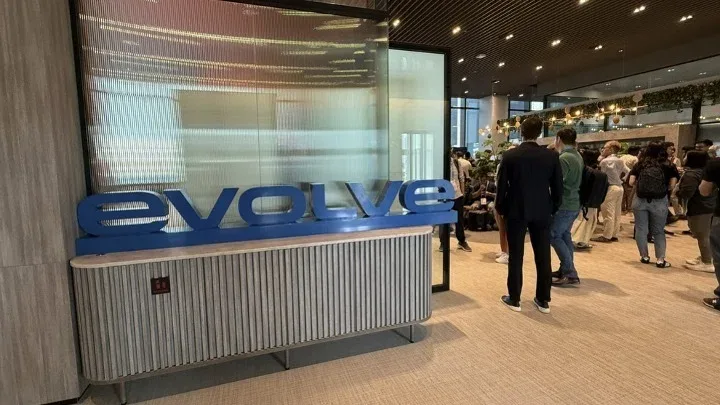
What I felt most strongly at the venue was the high level of interest in "AI × SEO." This is a major topic in Japan, and it seems the situation is the same overseas.
"How can AI be utilized for SEO?" and "Will search traffic be stolen by AI?" At the venue, various perspectives were intersecting as people sought to find expectations, anxieties, and opportunities regarding AI.
I got the impression that this situation is no different in Japan than it is overseas.
AI is not "killing" SEO, but "changing" it.
At the beginning of the conference, there was a presentation by Tim Soulo, CMO of Ahrefs.
Among his points, what stayed with me the most was his statement: "AI is not killing SEO; it is changing it."
With the advent of AI, there are voices pessimistic about the end of SEO, saying things like "traffic will be taken by AIO" or "content will be something created by AI."
However, Tim denied this and emphasized that AI is a "transformation" of SEO.
What is the appearance rate of AIO?Tim showed us some research data conducted independently by Ahrefs.
First, how often is AIO displayed? Surprisingly, after surveying 150 million keywords, it was found that AIO appeared in only 11% of the total.
In other words, traditional search results are still displayed for 88% of keywords.
Furthermore, of the 11% where it was displayed, a full 98% were informational queries (for the purpose of gathering information).
Based on this data, it seems that AIO currently has a strong tendency to be utilized primarily during the information-gathering stage.
What about traffic from AI search engines?Research results were also presented regarding traffic from new AI search engines such as ChatGPT Search and Perplexity.
According to Ahrefs' own data, traffic via these AI chatbots accounts for less than 0.1% of the total.
It seems that traffic from Google Search is still overwhelmingly higher.
The reality of content creationThe reality of content creation using AI was also interesting.
When Ahrefs surveyed over 900,000 pages, 71% were created through 'collaboration between humans and AI'.
It is said that 2.5% of content was created entirely by AI, while 25% was created solely by humans.
I felt it was important that collaboration with humans is the mainstream approach.
The concept of LLMO/GEORegarding LLMO/GEO, which aims to have your brand mentioned on LLMs, Tim stated, 'You should focus on being mentioned rather than on traffic.'
Ahrefs also plans to add research features for tools like ChatGPT in the future, and I feel that we need to pay even more attention to trends in this field.
Panel Discussion
The title of the discussion is 'Navigating SEO in the Era of AI and Reduced Clicks'.
This was truly the core theme we are currently facing.
The moderator was Tim Soulo, and the panelists were Sebastien Edgar (SEOSeb, LLC), YG Yichen Guo (CEO of CapGo.ai), and Glenn Gabriel Bona (TripleDart).
Many practical tips were gained from the content of the panel discussion.
Concerns about traffic decline and Google's positionEven overseas, there is strong concern about traffic decline due to AI Overviews, and it was noted that there are cases where traffic is actually dropping for SaaS companies and e-commerce sites.
I reaffirmed that this is a universal problem.
However, the panelists' views, similar to Tim's keynote, were that 'Google's position as a search engine will likely remain unshaken.'
They stated that Google remains overwhelming, given the difference in the order of magnitude of search frequency.
More importantly, the discussion focused on 'how to deal with a Google integrated with AI,' specifically noting that the emergence of AI Overviews might impact responses to the middle and bottom of the funnel.
Content strategy in the AI eraThe content strategy for the AI era was a topic that was discussed in particular depth during this panel.
Based on data showing that AIO is centered on informational queries, there was a consensus that 'it is a good strategy to strengthen content for the middle and bottom of the funnel, which are closer to conversion.'
As a more advanced strategy, 'differentiation' was discussed in concrete terms.
First, for queries searched by users in the information-gathering stage (top of the funnel), AIO displays will likely increase.
In that case, wouldn't it be more rational to adopt an approach of 'leveraging AI to prioritize speed and volume, and mass-producing at low cost' for articles aimed at attracting this segment, rather than spending significant time and money as we have traditionally done?
It could be called a strategy for comprehensively covering a large amount of information.
On the other hand, what about users who are closer to the purchase or inquiry stage (middle and bottom funnel)?
For this stage, simply providing information is not enough.
You need to convey value to the user and have them make the decision to purchase after being convinced. The panelists expressed the view that 'it is still difficult for AI alone' when it comes to aspects like building trust and moving the user's heart.
What becomes important here is 'human passion,' 'concreteness,' and 'warmth.'
For example, this includes 'personal experiences' from experts with a deep understanding of the product or service, or from people who have actually used it.
Such content holds a unique human value that AI cannot generate.
To create pages with 'warmth' that move people's hearts and encourage a final decision, they argue that we should not leave it to AI, but rather 'invest the cost and build it thoroughly by human hands.'
In other words, 'it is not appropriate to say that making all pages with AI is fine.'
Which pages (which funnels) should use AI for efficiency, and which pages should have human 'passion' and cost invested in them?
I strongly felt that this 'discernment' will be extremely important in content strategy in the AI era.
Of course, this is not to deny AI.
The panel also touched on practical tasks where AI should be actively utilized, such as automatic generation of structured data, competitor site analysis, generation of Excel functions, and localization for multi-language deployment.
By leaving these to AI, humans can concentrate on more strategic tasks—that is, work that should be infused with 'passion.'
What I saw from the panel discussionI believe the important thing is not to fear AI, but to understand its characteristics and 'use it wisely' according to the situation.
AI becomes a powerful weapon in terms of 'efficiency,' such as information gathering and mass production.
However, in areas such as empathy and persuasion—appealing to human emotions, building trust, and encouraging final actions—the human role remains significant.
In particular, 'primary information' and 'passion,' such as personal experiences and expertise, will continue to hold value that AI can never replicate.
The Essence of 'Product Growth' According to Ahrefs
At the conference, the session titled 'How marketers can help companies achieve Product-Market Fit' by Constance Tan, a product marketer at Ahrefs, was also a tremendous learning experience for me.
Constance is an experienced marketer who has supported the growth of many websites at Ahrefs for over six years.
Why is 'Product-Market Fit (PMF)' the most important factor?Constance emphasized that 'the most important thing for scaling a business is achieving Product-Market Fit (PMF).'
Rather than focusing on capital or talent, it is crucial to first ask, 'Is our product truly meeting the needs of our customers?'
I understood this to be the starting point for growth.
The Path to Achieving PMF: Customer Voice and Market UnderstandingConstance provided several concrete tips for achieving PMF.
Customer complaints are a gold mine and provide valuable hints for product improvement.
She stated that it is important to 'ask customers for honest feedback' and 'read more customer complaints and competitor solutions.'
She also mentioned that researching SERPs, market data, and monitoring mentions are effective ways to understand the actual language customers use and the true needs behind it.
Furthermore, she emphasized the importance of an attitude of 'investing in customer success'—not just through tools, but also through content—so that customers can achieve 'value beyond' the product itself.
I feel that Ahrefs' commitment to providing valuable content, such as blogs, YouTube videos, and research reports, rather than just offering tools, is a true manifestation of the philosophy: 'Be invested in your customers' success.'
The use-case pamphlets distributed at the venue are surely a practical example of this.
I believe that demonstrating 'how to use features to drive business growth for clients' is also a significant form of value provision.
Summary
The 'Ahrefs Evolve Mini' held in Singapore provided me with a great deal of learning and insight.
While AI is transforming SEO, I feel that this is not an 'end,' but rather a 'change' that demands new strategies and value creation.
I heard that the main conference will be held in the United States in October. I have high expectations for that event as well, and if I am able to attend, I would like to provide another report.