This article is current as of 2025/11/12.
Please keep in mind that due to the nature of online games, specifications may change in the future.
Also, please note that this game contains many mistranslations and discrepancies between descriptions and actual gameplay behavior.
コンテンツの発展のために、本記事の内容は全て転載可能とします。
ただし、転載する際は下記のことを守っていただければと思います。
・執筆者の詳細がわかるように記載すること
・転載によって発生した問題に対し執筆者は責任を持たないこと
1. Introduction
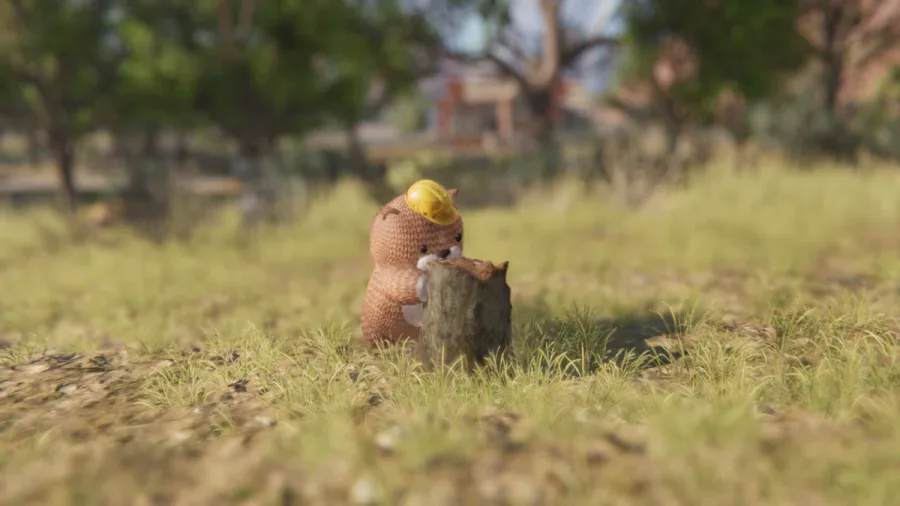
This article provides an explanation of Deviations, which are an extremely important element in the game "Once Human."
The content covers a wide range of topics, from the basic specifications of Deviations to an explanation of fusion.
2. Basic Specifications of Deviations
Deviations are mysterious entities that exist within the world of this game.
By utilizing Deviations, players can gain an advantage in the game.
Deviations generally have the following characteristics:
・Classification: Type of Deviation
・Ability Level and Activity Level: Performance of the Deviation
・Deviant Energy and Activity: Operation of the Deviation
・Preference: Support for the Deviation
・Traits: Elements for selecting the best Deviations
We will explain these in order.
All Deviations are classified into the following three types:
・Combat
・Territory
・Creation (also referred to as production, creation, etc.)
All Deviations have
・Ability Level
・Activity Level
・Fusion Count
as fixed stats.
Here, we will explain Ability Level and Activity Level.
※ For Fusion Count, please refer to section 4-Fusion Pod.
Ability Level and Activity Level are numerical values representing the performance of a Deviation, ranging from 1 to 5 until they exist.
The higher the number, the better the Deviation, with a Deviation having Ability Level 5 & Activity Level 5 being the best.
As a shorthand for Deviation levels, it is extremely common to list the values in the order of Ability and Activity, such as "Lone Wolf 43" or "Gel 54."
In the image above, it would be Uusa-Uusa 23. The specific specifications for these stats are as follows.
Basically, 5/5 is the most desirable for a Deviation.
…However, a 5/5 for the Deviation you want is rarely obtained through normal gameplay, and even if you do get one, it almost always comes with negative traits. This is strictly within the realm of hardcore grinding.
Even if you have a 5/5, it can easily be overturned by play skill, enemy behavior RNG, or differences in MODs, so the author's personal opinion is: if you aren't competing for seconds in Time Attacks, isn't a 4/3 or 5/1 fine?
Also, some Deviations collect different resources depending on their Deviant Level, so in those cases, Deviant Level 5 is not necessarily the best (Paper Doll and No. 37).
In 2-2, we touched on Deviation performance, but Deviant Level and Activation Level are basically fixed values.
On the other hand, each Deviation has
・Deviant Energy
・Activity Level
, which are parameters (numerical values) that change in real-time within the game. These relate to the time and efficiency with which a Deviation actually operates.
Deviations are like a type of life form, so naturally, they have environments they like. That is their “Preference.”
This is displayed when you place a Deviation in a containment unit.
The conditions are mainly as follows:
・Lights (3 types: red, blue, green)
・Temperature (low temperature, high temperature. Actual environmental temperature doesn't matter much needs verification. Does it change due to the influence of temperature control towers?)
・Electricity
・Toys (dolls, etc.)
・Flowers (hydrangeas, etc. Saffron, etc. are X)
・Crops (corn, etc.)
・Music (radio, jukebox)
Meeting these conditions increases the Deviation's Deviant Energy recovery speed (discussed later). You want to meet them as much as possible.
The most important and deepest selection element when looking for an excellent Deviation.
Traits are options randomly assigned to all Deviations, leading their performance in either a good or bad direction.
Some traits have levels, and powerful traits are displayed in gold (so-called gold traits).
Some Deviations have fixed traits.
As an example, here are some general-purpose traits
These traits are not assigned freely, but follow certain rules. I will describe those rules here.
There are 5 types of trait slots, and a maximum of one can be assigned (or can be assigned) to each slot.
Excluding when obtaining a DeviationThe traits assigned vary depending on the type of Deviation (combat, etc.).
Shiny Deviations always possess unique traits.
Even with traits of the same name, the effects may differ depending on the type of Deviation (combat, etc.).
I will explain them one by one.
Deviation traits exist in five slots: "Common," "Combat," "Territory," "Creation," and "Mutation."Each trait is classified into these five types, and only one can exist in any given slot. Additionally, each trait can be distinguished by its icon.
Is only the "Chaos" trait special?
Below, I will list the traits for each Deviation in the actual Fusion Pod.
I will explain each slot.
Based on the above, I will introduce several Deviations.
1. Butterfly Emissary - Shimmering Blue
Common Slot: Reserve Energy, Combat Slot: Shimmering Blue Weakness Master
Shimmering Blue is a trait unique to the variant.
2. Paper Doll - Witch's Treasure
Common Slot: Paper Doll - Witch's Treasure, Territory Slot: Idler
In this case, the variant-specific trait is in the common slot.
3. Quantum Snail - Lunar Omen
Common Slot: Quantum Snail - Lunar Omen, Stimulate Vitality 2, Attack Power -2
This is an immediate rule violation. As you can see, only when you obtain a Deviation,
・variant-specific traits
・traits such as common or combat slots
・traits exclusive to dimensional containment
can coexist. Such Deviations are valuable because they cannot be created in a Fusion Pod.
4. Chaos - Dimensional Big Cat
Common Slot: Stimulate Vitality 2, Mutation Slot: Moon Raid, Mystery Slot: Chaos
Although this is a bit of a brag, since Chaos Deviations cannot be used for fusion, it is unknown what kind of slot the Chaos trait belongs to.
By the way, as of now, this trait is not functioning. I am currently inquiring about it.
!!!!Big Cats are great!!!!
Because this is an extremely important element, I will describe it in a separate section.
The energy recovery speed is related to the following elements:
・Activation Level
・Containment environment preferences
・Traits
・Deviation: Butterfly's Dream
All of these buffs and debuffs are calculated additively.
I will explain them in order.
First, each Activation Level 1 increases the Abnormal Energy recovery speed by 5%. At Activation Level 5, the recovery speed is +20% or 25% (there are various theories on which is correct).
Next is the containment environment preference.
If you satisfy the preferences of each Deviation, the recovery speed will increase by that amount. This value differs depending on the preferences of each Deviation. Basically, if you satisfy all of them, it will be about 20%.
Next, there are traits that affect recovery speed... or rather, there are many.
What you should be especially careful about is “Stimulate Vitality”.
This looks like a buff at first glance, but it decreases the recovery speed of Abnormal Energy. For combat Deviations where activity level is irrelevant, this becomes a debuff. The debuff trait Melancholy also does not have a particularly negative effect on combat Deviations. As such, there are many traits that look good at first glance but are actually landmines, so you should understand the content of the traits well.
Finally, there is Deviation: Butterfly's Dream.
Butterfly's Dream has a behavior where it restores abnormal energy to other Deviations while it is active (playing the piano).
This also affects combat Deviations; at Butterfly's Dream ability level 5, it increases energy recovery speed by approximately 50%.
Because the behavior of Butterfly's Dream is quite unstable and its active duration is difficult to track, there are various theories, but I have verified many times that Butterfly's Dream definitely speeds up the energy recovery of combat Deviations.
In fact, when measured under the conditions of Lunar Prediction Lone Wolf 45 Inner 1 with:
・Activation Level 5 (Recovery Speed +25%)
・All preferences met (Recovery Speed +23.5%)
・Butterfly's Dream 53 active (Recovery Speed +50%)
・Characteristics are Inner 1 (Abnormal Energy 130)
the active time was 131.8 seconds and the dormant time was 61.8 seconds, and it was observed that approximately 2.1 abnormal energy was recovered per second. Calculating the recovery speed buffs mentioned above,
25+23.5+50=98.5%,
which means
approximately double the recovery speedis obtained. There are some odd points here and there, but even so, the difference between 1.5 times and 2 times is extremely large, and it is
too large a difference to be considered an error. This is nothing but proof that Butterfly's Dream is having an effect.I would like to believe that this result and the buff from Butterfly's Dream are likely correct, as I have performed this with other Deviations and different activation levels and obtained similar results.If you have any doubts, please try measuring the time while Butterfly's Dream is active.
3. How to Obtain Deviations
Up to this point, I have explained the status of Deviations.
In this section, I will describe the methods for actually obtaining Deviations.
There are two paths for actually acquiring Deviations:
・Contain a Deviation floating wrapped in a bubble
・It goes directly into your bag
There are two acquisition paths.
In the former case, there is a point to note.
The first point is that there are two cases for bubble-wrapped Deviations: only the Deviation's name and when the Deviation name + player name is attached.
If it is just the Deviation's name, it is available to anyone and is first-come, first-served. On the other hand, Deviations that an individual has caused to appear through specific means, such as ore mining, can only be obtained by that person. I want to be careful about this. The second point is that
the acquisition probability depends on the tier of the arm equipment and the ability level of the Deviation.
A sad phenomenon occurs where a Lv5 appears but you couldn't acquire it! So, prioritize your arm equipment when updating your gear
(Of course, if you are an Element build, prioritize Sensory Intensity for the mask, and if you prioritize temperature resistance or HP, prioritize the torso and waist first)
※You can also increase the probability with food buffs, but it is not a realistic method
As a more detailed classification, the methods for obtaining Deviations are classified as follows
・World Exploration
・Silo
・Monolith
・Scavenging Containment Boxes
・Anomalous Phenomena
・Special Methods
※The acquisition method in the scenario "Otherworldly Containment" is omitted
Territory-type Deviations are often obtained through world exploration.
There are various conditions, such as mining specific ores or finding them floating at fishing spots.
Representative examples are listed below.
By the way, for those that appear when harvesting with tools, the rarity of the tool increases the ability level of the Deviation that appears.
(Advanced Rock Drill, Tungsten Axe, etc. Gold axes, etc., are unknown)
There are dungeons called "Silos" in this game.
Inside a Silo, you clear it by using specific keycards, solving gimmicks, annihilating enemies, etc., and defeating the boss at the very end.
Different Deviations appear for each Silo along the way and when defeating the boss.
Furthermore, upon the first clear, a unique Deviation is guaranteed to appear.
The Deviations that appear for each Silo are almost fixed, and their ability level is determined by the difficulty of the Silo. Also,
the Deviation that appears upon the first clear has fixed stats and type, and appears independently for each difficulty. This first-time bonus Deviation will continue to appear until you take it, so when looking for other Deviations or high-stat Deviations, be sure to secure the first-time Deviation.
Also, some silos (especially on the Manibus side) have what are commonly called "hidden bosses," which are bosses located in passages off the regular route. When defeating a hidden boss, a fixed Deviation can also appear. The Deviant level and other stats at this time are the same as the content above; the first time is fixed, and thereafter it is random.
Below are examples of silos.
Please use this as a reference, as changes in appearing Deviations have been confirmed due to the addition of 4 new Deviations in the 10/31 update.
In the scenarios "Manibus," "Silver Wilderness," and "Long Dream," you can challenge dedicated dungeons called Monoliths where you fight bosses (Great Ones) (in Manibus, this is required for scenario progression).
In each Monolith, the corresponding Deviation appears when the boss is defeated. The stats of these Deviations change with difficulty just like in silos, and for each difficulty, they appear with fixed stats the first time. Also, as long as you don't take the first-time bonus Deviation, it will continue to appear thereafter, so make sure to secure it even if you don't need it.
Below are examples of Deviations that appear in each Monolith.
3-4. LEA Research Lab and BlackfellThere are special dungeons in "Manibus" and "Snowy Wilderness," known as the "LEA Research Lab" and "Blackfell," respectively.
Unlike regular monoliths or silos, these are high-difficulty dungeons that proceed in stages and do not have difficulty scaling based on the number of players.
You will definitely want to secure the special Deviation "Butterfly's Dream" from the "LEA Research Lab."
There is nothing special in "Blackfell," so you don't need to worry about it.
Every base that Transcendants will inevitably visit.
Actually, you can also secure Deviations there.
There is one containment unit where you can obtain Deviations at each base on the Manibus side. This containment unit is an absurd entity that
・Drops almost all Deviations regardless of the scenario
・Drops color variants
・Drops 5/5s
and so on.You can collect from it only once a day so please be sure to scavenge it. Sometimes you might even get a "Huh!?" kind of Deviation.
By the way, this containment unit does not exist at bases on the Snowy side. Instead, they are found in specific settlements.
Why do they treat the Snowy scenario so unfairly?
Since March 2025, this game has introduced"Anomalous Phenomena (Visional Wheel)" to specific servers, causing special phenomena to occur at certain times within the game.
There are Deviations (specifically, color variants) that can only be obtained during these Anomalous Phenomena.
As of November 2025, the current Anomalous Phenomenon is "Moonlit Feast," and during this event, you can obtain "Omen of the Moon" series Deviations.
(The one before this was the "Retrograde Star" series)
During an Anomalous Phenomenon, special items and treasure chests that can be opened using them appear, from which you can obtain Anomalous Phenomenon-exclusive Deviations.
3-7. Special MethodsBeyond the above, there are various other ways to obtain Deviations.
・Defeating Exterminators in "Snowy Wilderness"
・Defeating Eternal Sleepers (kin) and clearing invasion events in "Long Dream"
・Chaotic Deviation fusion in "Otherworldly Containment"
・Obtaining Inverted Deviations in "Inversion War" (an ordeal)
・Drops from specific elites (e.g., "Artisan's Hand" from Scorcher)
・Fusion of specific Deviations
・Various event distributions (Halloween, Lunar New Year, collaborations, etc.)
Honestly, I haven't fully grasped it all, so see for yourself from here on out!
4. Fusion Pod
A device added in the September 25, 2025 update that allows you to fuse Deviations.A device that allows you to create your own preferred Deviation based on two Deviations and up to three fusion materials. With the arrival of this device, the environment for min-maxing Deviations has changed significantly.
The specifications of the Fusion Pod are too complex to understand at first glance, so I will explain them step by step.
However, I want you to remember just these phrases.
"The probability of fusion is basically 50%"
"If you have two of the same, it's 100%"
The Fusion Pod cannot be built from the start; it requires unlocking via Memetics.
The location of the Memetic is near the bottom of the "Crafting" category. The required materials are very light.
Unlike regular structures, the Fusion Pod has various restrictions.
・Only one can be placed per territory
・Only the territory owner can operate it (even if various permissions are granted, others cannot operate it. In other words, it has the same specifications as a personal storage box)
・References Deviations in your inventory and Deviation storage cases
In short, it is a structure that only the individual can operate.
Also, when fusing, there is a specification that
・It takes 10 minutes to complete the fusion
・Items used as fusion materials will not be returned
applies.
When you open the Fusion Pod, a screen like this will appear.
Since it is completely unclear, I will add various annotations here.
Now, I will explain based on the image above.
4-2-1. Specifying Parent DeviationsFirst, select the two base Deviations by clicking (tapping) the + parts on the left and right of the image above.
Here, for convenience, we will call the two Deviations "Parent A" and "Parent B" respectively.
Basically, you can choose any Deviation as a parent, but the following Deviations cannot be used.
What should be noted here is the number of fusion attempts.
As I mentioned briefly in section 2-2, all Deviations have a number of fusion attempts. This indicates the number of times it can be specified as a parent in the Fusion Pod, and the count decreases by 1 when a fusion is performed. Currently, the upper limit for fusion attempts is 1, or for Deviations that cannot be fused. In other words, it can only be used as a fusion parent once.
Once you specify the parents, various information will be displayed.
As a sample for this time, I have specified the following Deviations as parents.
Once you have specified the parents, the fusion pod UI will display proper information as shown in the image below.
Here, I will explain each display UI and its meaning in order from the left.
4-2-3. Calculation of fusion materials and trait granting probabilityFinally, adding to the fusion materials. The content becomes complicated all at once from here, so please check it while actually playing the game.
You can select up to 3 of the following as fusion materials
Please note that the materials used for fusion will not be returned.
An example of inputting the following fusion materials with the parents specified in 4-2-2 is shown:
・Bear (Animal)・Diner Table x2 (Furniture)・Wish Box (Trait: Inner Expansion 2 & Old Folks are Treasures of the House)
.
In the image above, the parts that were influenced and the materials that caused the influence are connected by lines of the same color.
Deviation fusion is influenced by the following input as fusion materials:
・Type and traits of the deviation・Number and type of furniture・Number and type of animalsIt is influenced by all of these. Traits whose probability increased from a state of 0 fusion materials are displayed in green, and traits whose probability decreased are displayed in red.
Since I think you won't understand anything even if you look at the image above, I will provide a concrete explanation. First, I will explain the simple one,
"Bear". The "Bear" grants the
mutation trait "Power Play", and also changes the appearance of some deviations. The granting probability this time is 33%. Next, "Diner Table" x2
. Table-type furniture grants the mutation trait "Knights of the Round Table"
, and also changes the appearance of some deviations. The granting probability this time is 66%.
Here, I want you to recall the first phrase.
“The probability of fusion is basically 50%.”
However, this time, the results are skewed to 33% and 66% rather than both being 50%. I will trace the reasons for this in order.
First, we remove the “Diner Table” and include only the “Bear” in the fusion materials.
As shown in the image, “Power Play” became the base probability of 50%.
In this way, the probability of a newly granted trait is basically 50%. This is the meaning of “The probability of fusion is basically 50%,” and it is a very important point.
Next, we add two “Diner Tables” and remove the “Bear” instead.
As shown in the image, “Knights of the Round Table” probability became 100%.
In this way, if you put in two of the same thing, or if the same trait overlaps twice, the probability becomes 100%. This is the meaning of “If there are two of the same thing, it is 100%.”
Now, let’s look at the mutation traits in the first image.
This was the result of using two Diner Tables and one Bear as fusion materials.
The result deviates from the two initial phrases.
The reason for this is that “Power Play” and “Knights of the Round Table” are the same mutation trait category.
As explained in 2-5, only a maximum of one trait per category can exist. In other words, these two traits compete.
Thus, when there are traits competing in the same category, the probability is calculated using the following formula:
<Probability of trait α granted by material A in competing category X>
100 ÷ (Total number of parents and materials granting traits within category X) × Number of material A or parents added
I don't think you understand what I am saying, so let's apply it to the example above.
First, let's organize the number of each material and trait.
“Power Play”: 1 “Bear”
“Knights of the Round Table”: 2 “Diner Tables”
The traits in the mutation category compete with two items, and the total number of materials is 1 + 2 = 3.
We will apply this to each trait.
As a result of the calculation above, the probability of “Knights of the Round Table” is 66.6%, and the probability of “Power Play” is 33.3%. Honestly, I don't think you understand, so finally, let's calculate the probability of being granted a trait by a Wish Box.
First, let's organize the traits for each Deviation.
The common slot has three competing traits.
Even if the trait name is the same, if the level is different, it is treated as a separate trait.
On the other hand, the territory slot has only one trait.
Now, let's use the formula from earlier.
<Probability of trait α granted by material A in competing slot X>
100 ÷ (Total number of parents and materials granting traits within slot X) × Number of material A or parents input
to calculate.
First, for the common slot, the traits in this slot are granted by the two parents and one Wish Box material, so there are a total of three entities. Therefore, the probability per input is 100 ÷ 3 = 33.3%.
Since there is only one parent granting each trait, the result is that every trait is granted with the same probability.
Next, let's look at the territory slot.
This is extremely simple; since there is only one 'An Elder is a Treasure of the Home', there is no competition. Therefore, following 'The fusion probability is basically 50%', the grant probability becomes 50%.
Finally, to help with understanding, I will provide a more complex example.
I will list the information for each Deviation.
First, before the traits, please look at the prediction for the Deviation that will be born.
'The fusion probability is basically 50%'... but it has become 66.7%.
This is because the fusion materials include the same Bunny.
Fusion materials basically do not affect the type of Deviation that is born, but if you include the same type of Deviation in the fusion materials like this, the probability fluctuates.
In this case, because there are 2 parents + 1 Bunny material for a total of 3 entities, it becomes 100 ÷ 3 × 2 = 66.7%. If a Paper Doll is in the fusion materials, the probability of a Bunny being born is
・2 parents + 1 Bunny material + 1 Paper Doll for a total of 4 → 100 ÷ 4 × 2 = 50%
. Conversely, if you fill all materials with Bunnies, the probability of a Bunny being born is
・2 parents + 3 Bunny materials for a total of 5 → 100 ÷ 5 × 4 = 80%
. In reality, since you use the same Deviation for the two parents, this is a technique you don't need to worry about too much.
Now, let's focus on the trait probability.
This is how the calculation works.
By now, you probably understand the gist, but in short,
• Divide by the total number of Deviations with the same slot trait, and the probability doubles for each duplicate
is how it feels.
Here, I would like to focus on Deviations without traits.
First, let's look at the image below.
Even though 3 Deviations are used as fusion materials, for some reason, the probability of inheriting traits increases by 30%.
This is a special specification that occurs when the following conditions are met:
• No competing traits exist within the slot = only one trait within the slot
• Include a Deviation without traits as a fusion material
When these conditions are met, the probability of inheriting the corresponding trait increases by 10% for each Deviation without traits.
Actually, the three Deviations included as fusion materials in the image above all have no traits. Therefore, the probability of inheriting non-competing traits (Bunny - Divine Beast & Lazybones) has increased by 10×3=30% probability.
You might use this specification if you really want to inherit useful gold traits like Psychic Boy or Sharpshooter.
So far, I have explained the trait changes of Deviations in fusion.
Then, the question naturally arises: are there changes to the more important Ability Level and Activity Level of the Deviation?
The answer is Yes.
When Deviations are fused, their Ability Level and Activity Level change.
*Adjustments were made so that the Activity Level would not decrease. However, a bug occurred after that update where it would decrease, and it was subsequently fixed. Also, since there are reports of values like Activity 6, it might be better not to trust it too much
The following shows the results I verified myself.
This is data from before the adjustment to prevent the Activity Level from decreasing, and the sample size is small, but
• Ability and Activity may fluctuate by ±1
• Rarely, it may fluctuate by 2
is how it appears.
Honestly, with this sample size, there is no statistical significance, so please just think of it as 'this kind of data exists'. If you are fusing to find a good Deviation, you should assume that 5/5 is a prerequisite.
5. Specifications for Dimensional Storage
Adjustments might be made, so I'll leave it for now!
Skill types are almost the same as the trait specifications.
6. Afterword
It ended up being super long, but I have included enough content that even someone starting Once Human from scratch can gain the knowledge of a 2000-hour player.
If you have any questions, feel free to ask on X or Discord.
X: https://x.com/ashinaga_BG
Discord: discord.gg/j53ACmScz2