February 9th, the second Meat Day of this month.
No, meat doesn't matter, it's Friday! Memories of Friday.
Back in the days of a one-and-a-half-day work week.
There was a program that set my internal clock for 8:00 PM on Friday nights.
"Taiyo ni Hoero!"
It's a Showa-era detective drama. Before the lukewarm manuals and work-style reforms of the post-yutori era, and even before the appearance of 24-hour fighting businessmen, this was just a standard detective drama. They fired guns, and detectives died in the line of duty. And then there were the nicknames given to the assigned detectives by Chief Todo, played by Yujiro Ishihara. If it were today, it would be considered dangerous "harassment," but that didn't matter; "It's too inappropriate!" is what Showa-era detective dramas are all about.
Even so.
Since Yujiro in "Seibu Keisatsu" is a section chief, that's fine (or is it?), but in "Taiyo ni Hoero!" his title is unit chief. Despite being just a middle manager, he had that dignity and the connections to keep the main headquarters in check. This is the mysterious power of Showa-era detective dramas!
Why were the strange nicknames that the detectives were forced to carry like crosses accepted by viewers at the time, and why were they glued to this program? I thought about it on my own. And here is what I found.
The music touches the soul.
The children and grandchildren of adults who were touched by this opening theme are now touched by "Detective Conan." That music has a strong pull on people.
All the detectives from "Taiyo ni Hoero!" to "Taiyo ni Hoero! PART 2" appear in the footage, and it makes an old guy like me nostalgic. The music is by the same person as Conan. You kind of get it, right?
Also, the screenwriters properly depicted human drama against the backdrop of social satire and serious historical contexts. Even the parts where you think, "That wouldn't happen," are stories with enough depth to convince you. Nicknames aren't really a big problem. I can't help but feel that way!
Let me introduce you to some harassment-style nicknames that people in the Reiwa era wouldn't believe. If you want to laugh, go ahead and laugh.
Shunsuke Todo / Boss: Yujiro Ishihara
Despite having the ability to command at the main headquarters, he remains the unit chief of the First Investigation Division at Nanagari Police Station because of his uncompromising personality regarding investigations. In the early series, he often went to the scene himself, but from the middle onwards, he began to command from his desk (partly because Yujiro was seriously ill, and he was absent for a long time until the final episode). In the beginning of PART 2, which is set one year after the final episode, there was a scene where it was mentioned that he had been promoted to the main headquarters.
Seiichi Yamamura / Yama-san: Shigeru Tsuyuguchi
The chief-level detective in the First Investigation Division, a master of deduction who acts as the command tower assisting Todo. Known as "Yama-san the Closer," he has the insight to read even the folds of a person's heart through his long life experience. Immediately after his promotion to unit chief of the First Investigation Division at Chiyoda Police Station was decided, he was shot by a yakuza member in retaliation and died. He died in the line of duty.
Taro Nozaki / Cho-san: Tatsuhei Shimokawa
Worked his way up from a police box officer. The origin of "Cho-san" is a casual reason, stemming from his time as a police sergeant/detective, as his police career was longer than Todo's. Like Yamamura, he is a chief-level detective in the first unit. He transferred to become a police academy instructor in the middle of the series and returned in PART 2.
Makoto Ishizuka / Gori-san: Raita Ryu
His nickname comes from his pushy (gori-oshi) nature. His shooting skills are among the top three in the Metropolitan Police Department. In October 1982, he died in an ambulance while being transported after being shot by a drug addict immediately following a shootout with a yakuza group involved in a stimulant manufacturing case. He died in the line of duty.
Kimiyuki Shima / Denka: Akira Onodera
Because of his noble appearance, his nickname is Denka (His Highness). In July 1980, he swerved to avoid a truck that had crossed the center line, fell off a cliff, and the car exploded and caught fire. He died in a traffic accident.
Nobuko Uchida / Shinko: Keiko Sekine (now Keiko Takahashi)
When she first appeared, she was a policewoman in the Juvenile Division of Nanagari Police Station. In episode 38, she was transferred to the Investigation Division and officially assigned to the First Investigation Division. She got the nickname "Shinko" from "Oshinko" (pickles) because she helped at the small restaurant run by her father, Munekichi Uchida (Hana Hajime). She resigned in August 1974 to marry Jun Shibata (Yusaku Matsuda).
Jun Hayami / Macaroni: Kenichi Hagiwara
His career as a police officer was one year junior to Shinko's. He was nicknamed Macaroni because his long hair, no tie, and three-piece suit appearance with a gun looked like a Spaghetti Western character. He was stabbed to death by a random killer while urinating in public. It seems this does not count as dying in the line of duty because he was not performing his official duties.
Jun Shibata / G-Pan: Yusaku Matsuda
Assigned to the First Investigation Division as Hayami's successor. His nickname comes from his favorite pair of jeans (G-pan). He later fell in love with and became engaged to Nobuko Uchida (Shinko), but in August 1974, just as that was happening, he was shot and killed by a man he had protected with his own body. He died in the line of duty.
Jun Mikami / Texas: Yo Katsuno
Assigned to the First Investigation Division as Shibata's successor. He was nicknamed Texas because his ten-gallon hat made him look like a Texas cowboy. After his promotion to the main headquarters was decided, he went alone to the scene of a gun manufacturing group's deal in September 1976 and died after a shootout. He died in the line of duty.
Ryo Taguchi / Bon: Jun Miyauchi
He was nicknamed Bon because he was a naive and flustered rich kid (bon-bon) from Osaka. On Friday, July 13, 1979, he was shot while protecting a woman involved in a case and died while calling the first unit from a phone booth. He died in the line of duty.
Ryuichi Taki / Scotch: Masaya Oki
Transferred from the Johoku Police Station to the Nanagari Police Station First Investigation Division as the successor to the late Mikami. He was nicknamed "Scotch bastard" because he preferred British-made goods and had an arrogant attitude. He disliked teamwork, ignored his superiors' orders, and always preferred to work alone. He transferred to the Yamada Police Station in March 1977. He was dispatched back to the Nanagari Police Station in March 1980. A chronic illness caused by a past gunshot wound to his chest recurred. In January 1982, he participated in the investigation of a gun manufacturing case but coughed up blood. He died of illness.
Hajime Iwaki / Rocky: Ryo Kinomoto
A mountaineer who is good at rock climbing, utilizing his experience as a member of the mobile rescue team. He dreamed of climbing the Rocky Mountains, which became his nickname. After a two-year relationship with Reiko Hayase (Naomi Hase), a policewoman in the Traffic Division, they married in August 1980. In August 1982, while climbing the Rockies as he had long desired, he joined the first unit in pursuit of a suspect and participated in the investigation. He was shot by the suspect and died.
Jun Godai / Sneaker: Shinji Yamashita
Shortly after arriving in Tokyo, he was feeling self-destructive when he was helped by Taguchi (Bon: Jun Miyauchi), and he became a detective because he admired him. He loved the sneakers he bought at that time, which became his nickname (they were surprisingly durable). Upon learning that his benefactor Taguchi had been shot to death, he took leave and was conducting an independent investigation within the jurisdiction of the Nanamagarisho, which was not his own, when he encountered members of the First Investigation Division. His unauthorized investigation outside his jurisdiction was seen as a problem and he was about to be dismissed, but thanks to Todo's intervention, he was assigned to the Nanamagarisho First Investigation Division (is this the chief's authority? It's a mystery). His younger sister died as a bystander in a shooting incident, and in order to fulfill her dying wish of "wanting to build a sea ranch in Okinawa," he resigned in September 1981 (Showa 56). He returned to his hometown of Okinawa.
Akira Saijo / Doc: Masayuki Kanda
After dropping out of medical school, he became a police officer after happening to see a "Police Officer Wanted" poster. He gave himself the nickname, "Call me Doc."
Junji Takemoto / Lager: Toru Watanabe
His father was also a detective and a colleague of Nozaki, but he died in the line of duty. He got his nickname because he played rugby in high school. It was discovered that he was suffering from traumatic osteosarcoma due to severe knee pain. Even after returning to work, his colleagues were concerned about the possibility of a recurrence. In August 1985 (Showa 60), he died while investigating a bus hijacking incident bound for the Tsukuba Expo, after trading shots with the culprit. He died in the line of duty.
Masayuki Hara / Gypsy: Kunihiko Mitamura
Because of his lone-wolf personality, he was shunned wherever he went, and he earned the nickname Gypsy because he moved from one local police station to another. He has a rare condition where his heart is on the right side of his chest. In February 1983 (Showa 58), he was notified of a transfer to the Nishi-Tama Police Station, which was a promotion.
Hajime Kasukabe / Bogie: Noriyuki Sera
He was infatuated with Humphrey Bogart and asked to be called Bogie, which became his nickname. In April 1984 (Showa 59), because he let a shooter and his fiancée escape abroad of his own volition, he conveyed his intention to resign to Todo via the police radio while driving, and tried to settle things with the organization behind the incident alone, but was stabbed to death.
Toshizo Igawa / Toshi-san: Takeo Chii
His tenacity for investigation was second to none, and he earned the nickname "Toshi-san the Snapping Turtle" because once he latched onto something, he wouldn't let go. After Yamamura died in the line of duty, he took charge of investigations as the chief of the First Division.
Reiko Iwaki (née Hayase) / Mommy: Naomi Hase
When she first appeared, she was a policewoman in the Traffic Division of Nanamagarisho. In 1980, she married So Iwaki (Rocky). In 1981, she gave birth to twins, a boy and a girl. In 1982, So died in the line of duty in Canada. In March 1983 (Showa 58), she was assigned to the First Division. She earned the nickname Mommy because she is a mother of two.
Makoto Sawamura / Blues: Seiji Matano
His father was a pianist. The nickname was decided because he wouldn't respond unless called Blues. In the final episode, he faced a crisis where he was almost killed in the line of duty, but his life was saved by Todo and the other detectives of the First Division.
Yu Mizuki / Mycom: Yoshizumi Ishihara
Assigned in November 1984. He was an intellectual who introduced a Mitsubishi personal computer and used it for investigations. His nickname came from "microcomputer."
Koichi Shimazu / Duke: Kenichi Kaneda
A solitary and excellent detective. He earned the nickname Duke (meaning Duke) from his impression and his name. In October 1986 (Showa 61), he was selected as an overseas trainee for the Metropolitan Police Department and left with a position at the main headquarters.
Jun Dazai / DJ: Koji Nishiyama
Assigned to the Nanamagarisho First Investigation Division from the Katsushika Shibamata Police Station box. He carries a job information magazine just in case he gets fired as a detective (police officer). His initials became his nickname.
Hyogo Tachibana / Keibu (Inspector): Tetsuya Watari
Todo's junior from his time at the Johoku Police Station. He arrived from the Metropolitan Police Department's First Investigation Division as a temporary acting chief until Todo, who was recuperating from illness, returned. His rank became his nickname.
Asako Takamura / Kocho (Chief): Tomoko Naraoka
She was assigned to Nanamagarisho as the successor to Todo, who was promoted to the Metropolitan Police Department, and became the chief of the First Investigation Division. Her rank is Inspector. Her nickname is her job title.
Osamu Kita / Osamu-san: Tetsuya Terao
A detached individualist. He dislikes stereotypical styles and has a free-spirited personality, calling his superior, Takamura, "Obasan" (old lady) behind her back. I don't think it's a nickname.
"Taiyo ni Hoero!" has two sequels.
"Nanamagarisho Sosa Ichikari" was produced and broadcast in three works from 1997 to 1999.
Cho-san and Shinko appeared, but the other detectives were all new.
I don't think there were any more eccentric nicknames. It's the times, I guess.
The scripts were unique. They were handled by talented people, but there was also a work (episode 79) where an anonymous submitted script was adopted. The original author remains unknown because the intention was to remain anonymous without seeking compensation. There were also about five scripts written by Nobuyo Oyama, the voice actor for the first Doraemon on TV Asahi.
Also, there were guest appearances by unexpected people. Episode 84 was Masatoshi Nakamura's first television appearance. It also seems that Toru Watanabe secretly acted as a substitute for Yujiro Ishihara in some scenes.
The year after he died in the line of duty in the drama, Masaya Oki shook off the security guards and jumped to his death on June 28, never to return.
However,
there is no doubt that
the nicknames were all pretty lame.
Right?
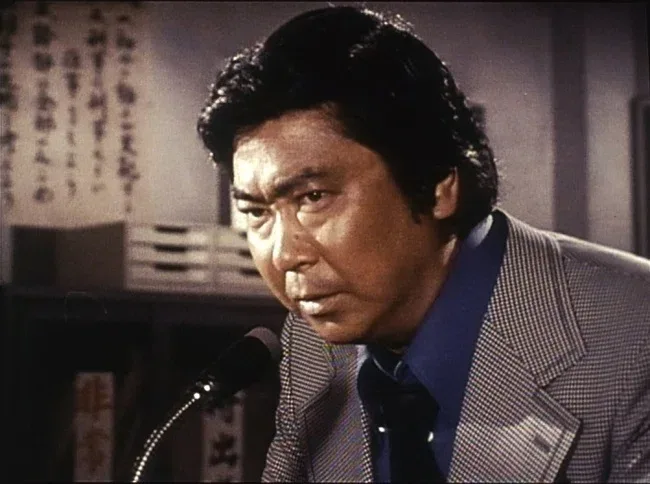
Recent detective dramas don't have flashy gunfights.
Sometimes, I miss "Taiyo ni Hoero!"
It doesn't have to be as flashy as "Seibu Keisatsu." I want to watch a drama with heart.
Maybe today's scriptwriters can't write things like this.