Hello, I am Morizo, and I share information on learning English.
Have you ever heard the English phrase "I beg to differ" in debates or business-related videos?
Since beg means "to plead" and differ means "to be different," a literal translation results in the strange phrase "I plead to be different." In fact, this is a slightly formal and polite spoken expression used when disagreeing with someone's opinion, and it is not often found in textbooks.
In this article, I will clearly explain the meaning, usage, nuances, and similar expressions of I beg to differ, along with actual examples of its use.
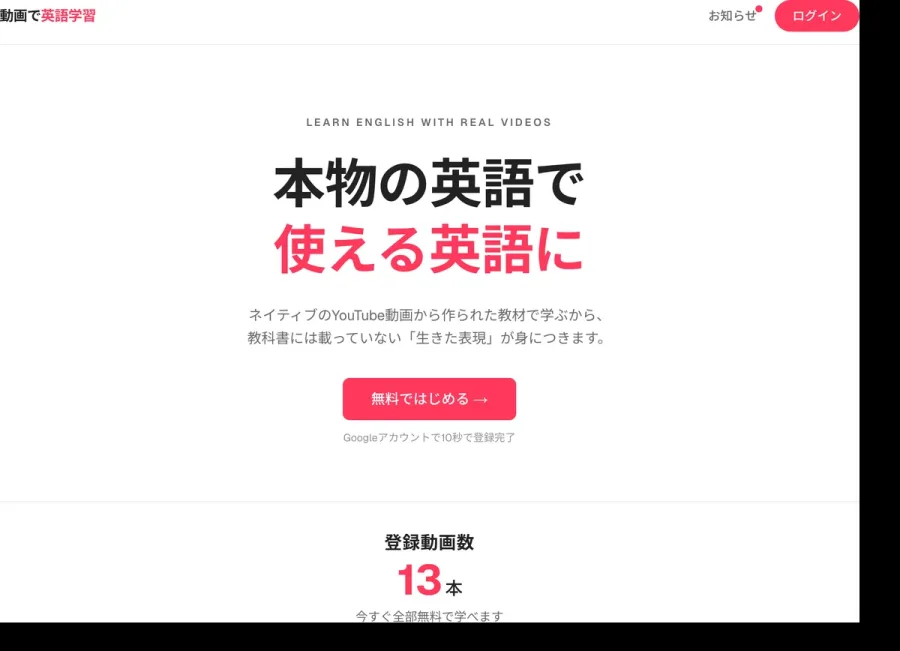
I have also released a free service called "English Learning with Videos (Beta)" where you can learn such expressions in a quiz format using teaching materials created from native YouTube videos. Please feel free to try it out.
▶ https://youtubelearning-peach.vercel.app/
The meaning of I beg to differ
I beg to differ = "I cannot agree with that," "I don't think so" (polite disagreement)
This is an expression used when you want to convey "I have a different opinion" while maintaining politeness, rather than directly denying the other person's opinion or claim. beg originally means "to ask for (permission)," and I beg to differ literally carries the nuance of "please allow me to differ." This indirect way of speaking creates an effect that softens the disagreement.
It is softer than I disagree. and is the perfect expression to use when you want to voice a dissenting opinion while still showing respect for the other person. It is often used in business meetings or discussions when you want to clearly state your opinion while avoiding conflict.
The gap with the original meaning of beg
beg is a verb usually used with the strong meaning of "to plead or implore."
I beg your pardon. (Could you say that again? / I beg your pardon.)
I beg you to reconsider. (Please reconsider.)
Compared to these, the beg in I beg to differ is not actually "pleading," but rather a formal phrasing used to create politeness. In Japanese, it has the nuance of a humble preamble, similar to saying "If I may be so bold as to say..."
This phenomenon of "the original strong meaning fading away and becoming established as a set phrase" is often seen in English idioms. I beg to differ is one such example, and because there is a gap between the strength of the literal words and the softness of how it is actually used, it is an expression that is easy to misunderstand if you don't know it.
How to use I beg to differ and example sentences
It is mainly used in situations where you politely disagree "in response to what the other person has said."
I beg to differ. I think the plan needs more work.
(I don't think so. I think this plan needs more work.)Well, I beg to differ on that point.
(Well, I have a different opinion on that point.)A: This is clearly the best option.
(This is clearly the best option.)
B: I beg to differ. Have you considered the cost?
(I beg to differ. Have you considered the cost?)
You can use it alone at the beginning of a sentence, or limit the scope of your disagreement by adding something like 'on that point.' It is also useful as a lead-in when you want to gently interrupt someone.
Nuance differences from 'I disagree'
There are several ways to express disagreement, which vary in formality and strength.
I disagree.(I disagree.) -> Direct and straightforward. A versatile expression that can be used in both business and casual settings.
I beg to differ.(I cannot agree with that.) -> Sounds slightly old-fashioned and polite. Suitable for debates and formal discussions.
With all due respect, I don't think that's right.(With all due respect, I don't think that's right.) -> Even more polite, and can be used with superiors.
Actually, I'm not so sure about that.(Actually, I'm not so sure about that.) -> Quite soft, suitable for situations where you want to avoid conflict.
'I beg to differ' is positioned in the medium to slightly high range on the scale of politeness. Since it can sound sarcastic if overused, the key is to use it selectively depending on the situation.
Points to keep in mind when using it
It can sometimes be used sarcasticallyWhile 'I beg to differ' is inherently a polite expression, it can sound sarcastic depending on how it is said and the tone used. If you say it while raising your eyebrows or emphasizing it slowly, it may convey the nuance of 'I am honestly exasperated by your opinion,' so you need to be careful with your tone of voice. Don't just assume it's 'safe because it's formal' by looking at the text alone; listening for the intonation used in actual conversations will deepen your understanding.
Handling it in business emailsWhile it is a natural expression to use orally, it can sound somewhat old-fashioned or overly dramatic in written communication like emails. If you want to express disagreement in a business email, modern and neutral phrasing such as 'I have a different perspective on this' is often preferred. It is safer to be aware of the differences between spoken and written expressions.
Who to use it withAlthough 'I beg to differ' is polite enough to be used with superiors, it is an expression intended for 'discussions between equals.' In situations with a clear hierarchy (such as from a subordinate to a boss), it may be safer to choose an expression that emphasizes even more respect, such as 'With all due respect, I have a different view.'
How to respond in conversation: If someone says 'I beg to differ' to you
If someone says 'I beg to differ' to you, how should you respond? It is helpful to know a few ways to acknowledge the disagreement while continuing the conversation.
Fair enough, but let me explain why I think this way.
(Fair enough, but let me explain why I think this way.)That's a fair point. Let's look at it from both sides.
(That's a fair point. Let's look at it from both sides.)I hear you, but I still think...
(I understand what you are saying, but I still think...)
'I beg to differ' is not an expression meant to incite conflict, but rather a gateway to a calm discussion. If the person being told this also avoids getting emotional and accepts it for a moment with a response like 'Fair enough,' it becomes easier to continue a constructive conversation.
Native expressions with similar meanings
Let's also learn expressions that, like 'I beg to differ,' allow you to politely convey a dissenting opinion.
| Expression | Meaning |
| I see it differently. | I see it from a different perspective |
| I'm not sure I agree. | I'm not sure if I agree (slightly reserved) |
| That's not quite how I see it. | That's not quite how I see it |
| With respect, I have to disagree. | With respect, I have to disagree |
All of these are useful expressions in situations where you want to get your point across while avoiding conflict. Being able to use a few of these in conversation allows you to advance a discussion without it becoming monotonous.
Situations where 'I beg to differ' is actually used
For example, in a travel vlog about Norway by an American influencer, there was this line while they were talking about a local Mexican restaurant while walking through the city.
This is a scene where the speaker clearly asserts their opinion after anticipating the reaction of those around them who might think, 'Why go out of your way to eat Mexican food in Norway?' It is impressive how they add persuasiveness to their opinion by inserting such a slightly formal-sounding expression even in casual conversation.
The best way to retain these 'expressions that aren't in textbooks but are actually used by native speakers' is to learn them as a set with the scenes and tones in which they are used in actual videos. Once you realize that even formal expressions are surprisingly used casually in daily conversation, the hurdle to actually using them drops significantly.
Summary
beg to differ = A polite counter-argument expression meaning 'I cannot agree with that' or 'I don't think so'
'beg' originally has the strong meaning of 'to plead,' but here it is a formal phrasing used to create politeness
More formal than 'I disagree' and suitable for business or debate situations
Similar expressions include 'I see it differently' or 'With respect, I have to disagree'
Used casually even in everyday conversation when you want to add persuasiveness to your opinion
'Living English' like 'I beg to differ' can be mastered in its entirety—including pronunciation, tone, and usage—by learning from actual scenes in YouTube videos.
We have also released a free service called 'English Learning with Videos (Beta)' where you can learn these expressions in a quiz format using teaching materials created from native YouTube videos. Please feel free to try it out.
▶ https://youtubelearning-peach.vercel.app/