One of my students recently asked me about how to use "よろしくお願いします yoroshiku onegaishimasu" in Japanese. This phrase is quite tricky because its meaning changes depending on the situation, and it doesn’t have a direct translation in English. Many learners feel unsure about when and how to use it.
For example, when you use "yoroshiku onegaishimasu" in a self-introduction, it means “Let’s build a good relationship.” However, when you say it to ask for a favour, it works as a polite request.
Since this phrase is used in so many different situations, understanding when and how to use it naturally is important. In this article, I will explain the main situations where you can use "yoroshiku onegaishimasu".
What Does "Yoroshiku Onegaishimasu" Mean?
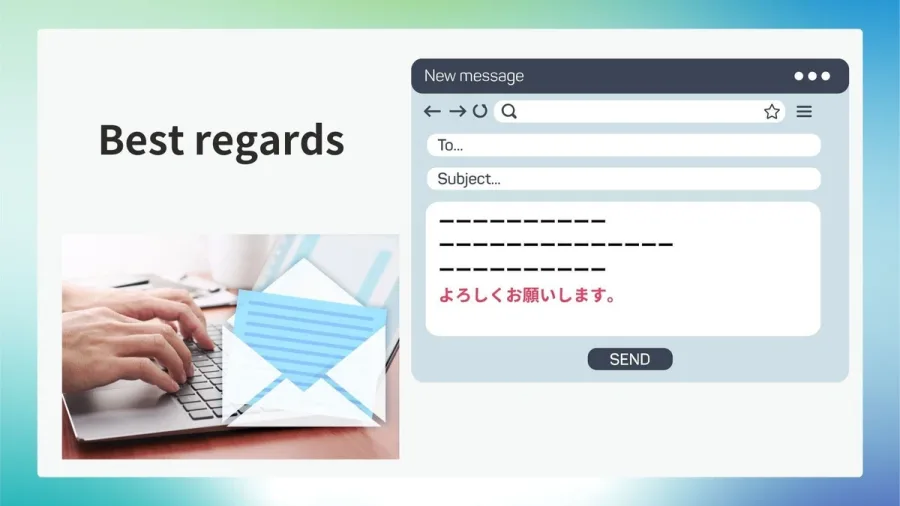
To understand this phrase, let’s break it down into two parts.
️"よろしく Yoroshiku": This means “properly” or “appropriately.” It is used when you expect or hope that someone will handle something in a good way. This is why the meaning of "yoroshiku" can be quite vague!
️"お願いします Onegaishimasu": This means "to request or ask for something." It is used when you are politely asking someone to do something for you.
By combining these two words, "yoroshiku + onegaishimasu" expresses a polite request or expectation for the other person to take care of something. However, it does not directly tell the person what to do, and it is not a strong request. Instead, it is a polite and indirect way to ask for cooperation.
Why is "Yoroshiku Onegaishimasu" Hard to Translate?There is no exact translation of "yoroshiku onegaishimasu" in English. Depending on the situation, you need to use different English expressions. Here are some examples:
Self-introduction → “Nice to meet you.”
Asking for a favour → “Please take care of this.”
Ending an email → “Best regards.”
Since the meaning changes depending on the context, translators must choose the best phrase for each situation. This is where professional translators use their skills!
Common Situations Where You Can Use "Yoroshiku Onegaishimasu"
This phrase is used in many different situations in Japan. Let’s look at some examples.
In a Business Setting① Meeting someone for the first time
When you start a new job or meet a business partner, you say this to show that you hope for a good relationship.
Example: “たいちと 申(もう)します。これから よろしく お願(ねが)いします。”
(“I’m Taichi. I look forward to working with you.”)
② Closing an email
In business emails, this phrase is often used at the end to sound polite.
Example: “よろしく お願い(ねが)します。”
("Best regards.")
③ Asking for someone’s help or making a request
If you are asking a colleague or a business partner to do something, you can use this phrase.
Example: “この 仕事(しごと)を 手伝(てつだ)って くれませんか。 よろしく お願(ねが)いします。”
(“Could you help with this task? I’d appreciate it.”)
① Asking a friend for a favour
In informal situations, you can also say this phrase.
Example: “明日(あした)の 飲(の)み会(かい)、よろしく お願(ねが)いします。”
(“Take care of the party tomorrow!”)
② Before starting something together
Before a game or event, people say this to create a good atmosphere.
Example: “試合、よろしくお願いします!”
(“Let’s have a good game!”)
Summary
How was it? To start using "yoroshiku onegaishimasu" naturally, why not focus on two key situations, greetings and making requests? Of course, you can also try using it when writing emails to Japanese friends or your Japanese teacher.
For expressions like this, logical explanations can help, but the best way to learn is by observing real conversations and written texts. Try to notice when native speakers use "yoroshiku onegaishimasu" in different situations. For example, in class, when does your teacher say it? Paying attention to these patterns will help you develop a natural feel for when to use it.
But don’t worry too much! Even if you use it incorrectly, it won’t create a bad impression or make anyone feel uncomfortable. So, just go ahead and use it as much as possible! Get feedback from native speakers and improve little by little. Keep going! you're doing great! ✨
Thank you for reading!