Hello everyone.
I am Shiromaru, and for about six years from 2019 to 2025, I lived in Wakkanai, the northernmost point of Japan, after moving from Yokohama, where I was active as “Shiromaru’s Northernmost Diary”. In Wakkanai, I shared local information through social media posts, web magazines, and e-books. This article is a guide that condenses all that content into a compact format.
What kind of place is Wakkanai?
I’m thinking of going to Wakkanai...
I want to live in Wakkanai!
For those of you thinking this, reading this will tell you everything you need to know about Wakkanai!!
*The information provided is current as of the spring of 2025, so please forgive any changes that may occur in the future.
◆ ◆ ◆
Geography of Wakkanai
[Overview]
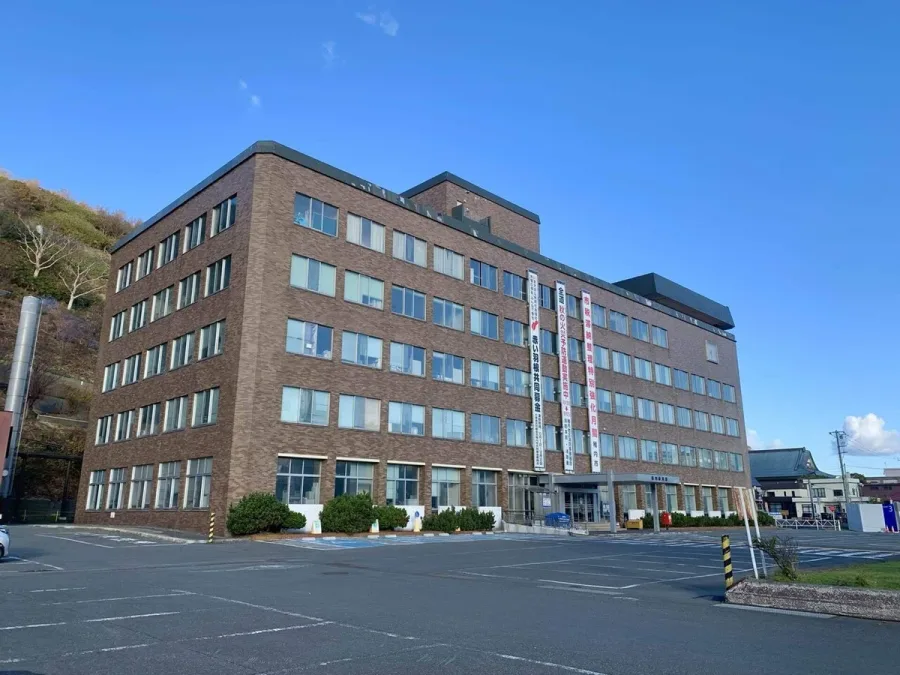
Wakkanai is the northernmost city in Japan, with a vast area of 761 square kilometers—larger than the 23 wards of Tokyo—where 29,890 people (as of March 2025) live. You might think it has a small population for its size, but since the Soya region is a sparsely populated area where no other municipality besides Wakkanai has a population exceeding 10,000, it serves as the central city for the entire surrounding area.
The city trees are the “Sakura” (cherry blossom) and “Nanakamado” (rowan), and the city flower is the “Hamanasu” (rugosa rose), which is the same as the flower of Hokkaido.
・ ・ ・
[Industry]
The main industries of Wakkanai are “fisheries,” “dairy farming,” and “tourism.”
In terms of tourism, it has a certain level of fame for being the northernmost point in Japan, and many travelers from all over visit, aiming for the edge of the north. My impression is that it doesn't have much of an inbound tourism vibe, and the customer base consists largely of individuals, car and motorcycle enthusiasts, and railway fans. It is also a region where traditional group travel is popular, so during the season, large hotels are often booked by travel agencies, making it difficult to make reservations.
・ ・ ・
[Access]
Wakkanai is accessible by car (bus), train, and airplane, and Soya Bus local buses run within the city.
・ ・ ・
[Climate]
The climate in Wakkanai is cool throughout the year; it is cool in summer and super cold in winter.
Even though I say it's cold, the temperature in winter rarely drops below -10°C, and the surface temperature is overwhelmingly lower in inland cities.
However.
Wakkanai, surrounded by the sea on three sides, is characterized by strong winds, and the blowing, raging winds significantly lower the sensible temperature. It is generally said that for every 1 meter per second increase in wind speed, the sensible temperature drops by 1°C, so Wakkanai, where winds of nearly 10 meters per second blow frequently, is quite cold. It's not just cold... it's painful.
And,
because it is cold in winter,
it is very comfortable in summer.
In Wakkanai, the temperature rarely exceeds 25°C even in midsummer, so you can live normally without air conditioning. Since it has become common for temperatures to exceed 30°C in summer in cities like Sapporo, the only truly cool places in Hokkaido that function as summer resorts are the edges like Wakkanai, Erimo, and Kushiro to Nemuro.(In the last few years, the maximum temperature in Wakkanai has often exceeded 30°C, marking midsummer days, so its absolute coolness is wavering.)
Sightseeing in Wakkanai
When it comes to sightseeing in Wakkanai, surely it has to be Cape Soya, right?
At the tip of Cape Soya, located at 45 degrees 31 minutes 22 seconds north latitude, stands the 'Monument to the Northernmost Point of Japan', which is modeled after a ray of the North Star and marks the end of the long Japanese archipelago that stretches from north to south.
The Soya Strait is only about 42km wide at its narrowest point, so Sakhalin is right under your nose. Even on a cloudy day, you might be able to see it if the horizon is clear, so don't give up and keep your eyes peeled!
Closer to Russia than to a Starbucks or an Aeon... that is Wakkanai.
・ ・ ・
If you visit the northernmost land, I definitely want you to visit the Soya Hills that spread out to the south of Cape Soya!
The Soya Hills have a photogenic spot that represents Wakkanai. Here it is↓
The White Path is a road that stretches from the west side of the hills toward Soya Bay, and it is designated as a city tourist spot as a footpath course. The reason for its whiteness is that it is paved with scallop shells, which are also a specialty of Wakkanai. It is accessible by both car and motorcycle, but since it is a narrow, unpaved road, please refrain from entering with large vehicles or vehicles not suited for off-road use.
(If you are visiting the Soya Hills/White Path area, early morning to morning is recommended)
・ ・ ・
I have introduced the northernmost area of Japan so far, but in fact, Cape Soya is about 30-40km away from Wakkanai Station, so there is quite a distance even within the same city of Wakkanai. It is not like the northernmost point is right in front of the station, so please plan your sightseeing with plenty of time.
For those who don't have much time but want to go sightseeing in Wakkanai... I recommend the one on the left, not the Cape Soya side of the two peninsulas, "Cape Noshappu".
Noshappu is about 5km away from Wakkanai Station, and there are a decent number of buses, so it is less difficult to visit than Cape Soya. In the surrounding area, there is the "Noshappu Cold Water Aquarium (with an attached science museum)," the "Wakkanai Lighthouse," which boasts the second-highest tower height in Japan at 42.7m, souvenir shops, and restaurants.
・ ・ ・
There are also places to see right near Wakkanai Station.
・ ・ ・
If you came to Wakkanai by car, please also stop by the 'Yuhi-ga-oka Parking' located next to the entrance/exit of the city area and the Ororon Line.
・ ・ ・
I will also introduce some deep tourist spots in Wakkanai, chosen by Shiromaru based on my own personal bias.
[Wakkanai Deep Spot No. 1]
McDonald's Route 40 Wakkanai Store
For those who know the 'Shiromaru Northernmost Diary' account, you might already be familiar with this, but it is the northernmost McDonald's store in Japan. If you're wondering why a national restaurant chain is a tourist spot,
It's the existence of this guy.
In the parking lot of the Route 40 Wakkanai branch, there is a sign indicating the northernmost point and a Ronald McDonald sitting on a bench with a smile, making it a popular photo spot. In the Shiromaru Northernmost Diary, I often posted fixed-point observations of Ronald, calling him the 'Northernmost Clown of the Day'.
[Wakkanai Deep Spot No. 2]
Tsugaru Domain Soldier Memorial Monument
If you turn off the main road on your way to Cape Soya, there is a place called Soya Park.
Actually, there is a historical connection between Wakkanai and coffee. There is a story that when soldiers from Honshu domains were dispatched for northern defense at the end of the Edo period, they drank coffee to survive the harsh Wakkanai winter. Some theories suggest that this may have been the first time ordinary Japanese people consumed coffee.
In Wakkanai, a 'Coffee Festival' is held every winter. Why not enjoy a cup of coffee while reflecting on the surprising history associated with this northernmost land? ️
[Wakkanai Deep Spot No. 3]
Safe Return Road
[Wakkanai Deep Spot No. 4]
Onuma Bird House
At 'Onuma', located a little away from the city center, there is a facility for bird watching.
・ ・ ・
Finally, I would like to step outside of Wakkanai for a moment and touch upon Rishiri Island and Rebun Island.
Rishiri Island is a steep, circular island centered around Mount Rishiri (elevation: 1,721m), one of Japan's 100 famous mountains and the northernmost one at that. Rebun Island is a long, north-to-south island known as the 'floating island of flowers' for its alpine plants. While the airport on Rishiri is still in operation, in most cases, you will likely land on the islands by ferry from Wakkanai.
In the summer, the number of ferry services increases, so you can visit both islands from Wakkanai on a day trip and return. I recommend the regular sightseeing buses operated by Soya Bus, which are synchronized with the ferry schedule; they will take you around the island's famous spots with a guide, so you don't need to bring your own car or arrange a rental car.
◆ ◆ ◆
Wakkanai Gourmet
When it comes to travel, it has to be local gourmet! Let me introduce you to the specialties of Wakkanai. First up is...
Let's start with the seafood, which is synonymous with Hokkaido. The famous seafood that represents Wakkanai includes the following members.
They are all delicious, but first, I want to recommend sea urchin. The reason is that I originally didn't like sea urchin.
I apologize for the confusion. In short, the level of Soya's sea urchin is so high that even people who don't like it can eat it deliciously. Sea urchins raised on high-quality Rishiri kelp have no off-flavors, and their unique flavor comes through directly as umami. Once you've eaten the real thing, you can never go back to the sea urchin at cheap conveyor-belt sushi restaurants.
There are two types of sea urchin in Hokkaido: the 'Murasaki Uni' (common name: Nona), which has a refreshing taste and is relatively inexpensive, and the richer and more luxurious 'Ezo Bafun Uni' (common name: Ganze). The season for both in Soya is summer. I recommend the former for those who 'don't like sea urchin that much' and the latter for those who 'love seafood!'
As it is a luxury ingredient, a bowl of sea urchin rice in Soya can sometimes cost nearly 10,000 yen depending on the market price, but if you have come all the way to the northernmost point, I think it is worth paying the high price.
Examples of restaurants where you can eat▼
・ ・ ・
Speaking of Wakkanai seafood worth mentioning,"Tako-shabu" (octopus hot pot) is also a must.
Examples of restaurants where you can eat▼
・ ・ ・
For those who say, "I've been to Wakkanai many times" or "I'm tired of eating seafood in other parts of Hokkaido," I recommend the B-grade gourmet dish,"Charmen".
Charmen, written with the characters for "stir-fry" and "noodle," is a variation of ankake yakisoba (starchy sauce fried noodles). It is a soul food of Wakkanai where Chinese noodles are boiled, then stir-fried, and topped with a thick sauce full of ingredients.
Each restaurant has its own unique flavor and ingredients, so comparing them is also fun
Examples of restaurants where you can eat▼
・ ・ ・
I'd also like to introduce ramen, which is essential for local gourmet food
When people hear "Hokkaido ramen," I think many imagine miso ramen, perhaps due to the influence of Sapporo. However, what you shouldn't underestimate in this northern land issalt ramen.
Examples of places to eat▼
・ ・ ・
I'd also like to introduce some rather unique gourmet spots. First up is this one↓
This mysterious, visually striking, and delicious-looking lump is the Sloppy Joe from "Deno's" located just a short walk from Wakkanai Station. It is a representative Wakkanai jumbo-sized gourmet dish consisting of an 18cm diameter hamburger topped with plenty of cheese and meat sauce.
Not limited to Deno's, restaurants in Hokkaido generally tend to serve large portions, and I have rarely felt that a meal was "not enough" when eating out in Hokkaido.
・ ・ ・
This soup curry is from Petit GARAKU, a sister store of the popular Sapporo restaurant GARAKU. Although the old location was hit by a fire in 2024, it is currently operating at a new location in Chuo 2-chome.
How about some specialty soup curry in the northernmost land of Wakkanai?
And finally...
This is the "Deer Bread" sold inside Kitacara, which is directly connected to Wakkanai Station. As I will discuss later in the Wakkanai life section, Wakkanai is a town with a very high probability of deer appearing in urban areas. Eating deer in a deer town is also quite interesting, isn't it(?)
This bread doesn't actually use real venison, but there are places in Hokkaido where you can eat authentic game meat, so if you are interested in delicacies, please give it a try
There are still many northernmost gourmet foods that I haven't been able to cover, but I will omit them here as the article would become too long. Bow.
◆ ◆ ◆
Life in Wakkanai
Soya is a scenic tourist destination with plenty of famous gourmet food, but things change when you actually live there. Shiromaru, who moved to Wakkanai alone from Yokohama and spent six years there, will introduce the northernmost tip from the perspective of daily life. *These are strictly personal opinions.
・ ・ ・
First of all, Wakkanai has convenience stores, supermarkets, home centers, clothing stores, and so on, so you won't have any trouble living a normal daily life.
While there is almost nothing to worry about in daily life while living in Wakkanai, the options for shopping and dining out are inevitably limited. If you want to "do specialized hobby shopping" or "go to events like sports games or concerts," you have to rely on online shopping, or travel long distances to Asahikawa or Sapporo... or in the worst case, outside of Hokkaido. There are many cases where people are forced to face inconveniences in terms of medical care and business, and it is not uncommon for citizens to spend half a day escaping northern Hokkaido every time they need to visit a hospital or go on a business trip.
(If you fall into these categories and also hate traveling, it might be better not to live in Wakkanai...)
・ ・ ・
Regarding housing, if we take rentals as an example, I would say it's neither good nor bad.
For reference, my Shiromaru House in Wakkanai, where I lived alone, was a 1DK apartment with rent of a little over 30,000 yen plus about 5,000 yen for parking. It's quite cheap compared to the Tokyo metropolitan area, but since most people in Wakkanai own a car, the money saved on rent is offset by car maintenance costs and disappears (crying). However, for someone like me who loves driving and wants to incorporate a personal car into their lifestyle no matter where they live, it's killing two birds with one stone. (There are also plenty of scenic driving courses.)
As is true for all rural areas, not just in Hokkaido, it is not the case that "the more rural it is, the cheaper the rent." If it is too rural, rental prices can be exorbitantly high, or it can be difficult to find a house because there are few properties available for immediate move-in for people who have moved from elsewhere. Depending on the municipality, they may provide housing as part of relocation support, so if you get stuck, try inquiring.
・ ・ ・
When living in the snowy country of Hokkaido, the harsh natural environment in winter is an unavoidable challenge. As mentioned in the geography section, although the snowfall and cold in Wakkanai are not as severe as in the inland areas, the wind is strong, and it is a region where poor visibility and traffic disruptions due to blizzards occur frequently.
・ ・ ・
Wakkanai is a place where the distance between human life and nature is particularly close even for Hokkaido, and it is a land where the rate of wild animal sightings in urban areas is high.
I think this is super great news for some people, but there are no cockroaches lurking in kitchens and the like in Wakkanai. Since there are also few mosquitoes, cicadas, etc., people who are bad with bugs might want to live at the edge of Hokkaido...?
There is also little pollen.
Photos of the 'deer' I met during my life in Wakkanai are summarized in the article here▼.
◆ ◆ ◆
Conclusion
Wakkanai is the central city of the Soya region, located at the northernmost point of Japan, with a population of about 30,000 and the infrastructure to support that many citizens. It is a border town where you can see Sakhalin right across the Soya Strait, and it is characterized by strong winds and cool temperatures throughout the year.
While Wakkanai offers magnificent scenery and a close connection to nature, the downside is that because there are no large towns nearby, you are forced to travel long distances whenever you have errands to run. If you were to move here to live, some people might find that "the winter is tough" or "it's boring because there's nothing here."
If you look at Wakkanai from the perspective of moving there, I think it is suitable for people who:
・Like the outdoors and nature
・Like to live by being resourceful even if it's somewhat inconvenient
・Like to find their own hobbies within the current environment
are the types of people who would be suited to living here.
For those who want to try moving to a rural area (country living), I think it's a good idea to first try living in a place with a population of 10,000 to 50,000 like Wakkanai to decide whether you want to "live in a more urban area" or "live in an even more rural area." A preliminary visit is very important.
・ ・ ・
Wakkanai is the northernmost town in Japan.
Located at the apex of the long, north-south Japanese archipelago, it is a special place where you can directly experience an environment and scale that feels un-Japanese, in a high-latitude zone exceeding 45 degrees north latitude. Visiting Wakkanai and burning the edge of your own country into your eyes will undoubtedly be a lifelong travel memory that you will never forget. I hope you will visit at least once.
Also,
The journey to Wakkanai is endlessly wonderful, so for those who like riding trains or driving cars or motorcycles, it is the perfect final destination for a trip. It is possible to arrive in 2 hours by direct flight from Haneda Airport, but if possible, I would like you to take your time traveling by land and experience the travel sentiment and distance to the northernmost point with your own skin!
If you like it, please try living here(?)
(The End)
For your reference, I've linked an article about the Ororon Line, which Shiromaru absolutely loves, below▼
◆ ◆ ◆
(~ ˙꒳ ˙ )~ P R O M O T I O N C O R N E R (~ ˙꒳ ˙ )~
[Promotion #1]
The e-book "Shiromaru's Northernmost Diary," which chronicles life in Wakkanai, is currently on sale from KADOKAWA. It explains the content of this article plus more in an easy-to-understand way with manga and text. If you are interested, please check it out▼
[Promotion #2]
Since November 2024, I have been serving as an official influencer for Teshio Town, which is in the same northern Hokkaido region as Wakkanai. As a special edition of the Northernmost Diary, I am posting manga and articles introducing Teshio▼
[Promotion #3]
Starting in the spring of 2025, I will be serializing "Shiromaru's Hokkaido Drive ~Shiromaru-san has a strange sense of distance~," themed around driving in Hokkaido, on HBC's web magazine "Sitakke." The site also features the Northernmost Diary that I previously posted on X. Thank you for your support▼
Finally, I'll also post my main tool, my X account. Please follow me▼
#Hokkaido
#Wakkanai
#RegionalRelocation