Kyoto, the 'thousand-year capital' that continues to the present day. On the eve of the creation of Heian-kyo, the beginning of this city, the nation had once bet on a different capital. There was 'another capital' that was shaken by assassinations, vengeful spirits, and floods, and disappeared after only 10 years.
Hello everyone. I am Dyla, who loves world history, art, and travel, and aspires to become an honorary citizen of Kyoto.
I usually work as a producer for temple and shrine events in Kyoto, run a company in Shinjuku, and take photos here and there.
5-Minute Kyoto History As part of this series, I will be writing about Heian-kyo, the Muromachi Shogunate, the end of the Edo period, and more, with a fun perspective, in 5-minute reads that make you say, 'Huh, so that's the history of Kyoto!'.
The second installment is themed 'The Road to the Heian-kyo Capital'.
The Heian-kyo capital relocation had a prequel
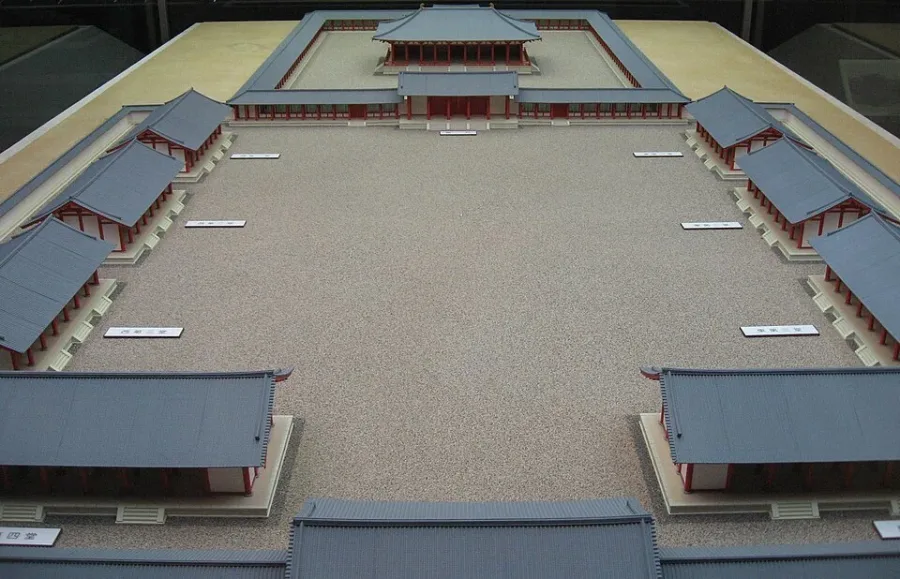
We tend to think that the history of Kyoto begins with '794, the Heian-kyo capital', but in fact, just before Heian-kyo was built, there was a phantom capital that existed for only 10 years southwest of Kyoto.
Its name is 'Nagaoka-kyo'.
It was a major project of Emperor Kanmu, who had just ascended to the throne, and it was supposed to be a wonderful move to replace Heijo-kyo, or Nara, but it was an outrageous case filled with everything from assassinations to natural disasters.
And in the end, it became the prequel to the Heian-kyo relocation, where they decided, 'Let's move the capital somewhere else after all.'
Let's look at the biggest national project failure in ancient and medieval Japan.
Let's stop Nagaoka-kyo.
Let's build Heian-kyo.
What was the reality of 'The crying Emperor Kanmu's Nagaoka-kyo' that existed before '794, the Heian-kyo capital'?
To begin with, who was Emperor Kanmu, who started the Heian period?
In 781, Prince Yamabe, son of Emperor Konin, ascended the throne as Emperor Kanmu.
At the time, bloodline was considered crucial for being chosen as the next emperor.
Not only did one's father have to be the emperor, but one's mother also needed to be from a family of imperial relatives or the Fujiwara clan.
However, Prince Yamabe, the future Emperor Kanmu, although having an emperor as a father, had a mother from a family of immigrant descent, which disqualified him from the criteria, and as the child of a consort of slightly lower status, he originally had no right to succeed to the throne.
Yet, for some reason, the other sons with rights to the throne were eliminated one after another through coups and the like, and he luckily got the chance to become emperor.
However, someone with such thin legitimacy also has a weak foundation. The early Kanmu administration seems to have been fragile.
In particular, the attempted rebellion in the year following his accession by a prince named Hikami no Kawatsugu, who was of the bloodline of Emperor Shomu and had been considered the strongest candidate for succession despite losing the struggle to Emperor Kanmu, was a major incident.
Emperor Kanmu and his entourage, with their weak origins and many enemies around them, thought as follows.
"If things continue like this, we will lose to the legitimacy of Emperor Shomu's bloodline. But if we take inspiration from the world's strongest nation, Tang China, won't that show that those people are old and that we are new and legitimate?"
...One of the things often seen during dynastic changes in ancient China is "relocation of the capital.".
The place chosen was Nagaokakyo.
Emperor Kanmu and his officials, who decided to relocate the capital to make the public aware of the dynastic change by the powerful, designated the area located southwest of present-day Kyoto City as the site for the next capital.
Its name was "Nagaokakyo." It is said to have been in the vicinity of present-day Muko City, Nagaokakyo City, and Oyamazaki Town.
Nagaoka-kyo is often thought of as just a prelude to Kyoto/Heian-kyo, but it was by no means a small, temporary city.
It was over 4km wide from east to west and over 5km long from north to south.In terms of size, it was comparable to the later Heian-kyo.
Moreover, Nagaoka-kyo had two clear advantages in its location.
These werewater transportandbeing far from Heijo-kyo, or Nara.
First, regarding water transport.
Near Nagaoka-kyo was a key transportation hub where the Katsura, Uji, and Kizu rivers converged and flowed toward the Yodo River. (*It is said that the shape of the rivers was slightly different from today.)
Furthermore, there were ports like Yamazaki-tsu and Yodo-tsu, making it easy to bring in goods from the Seto Inland Sea and the Naniwa area, which were junctions for distribution from the western regions where prosperous cities existed outside of the Kyoto and Nara areas at the time.
To build a capital, you need timber, food, taxes, and various other supplies. In short, Nagaoka-kyo was quite excellent as a logistics center, and Emperor Kanmu secured this location.
Incidentally, the capital at the time, Heijo-kyo (Nara), also had rivers and could engage in trade, but it was obstructed by mountains, so compared to that, Nagaoka-kyo's water transport was overwhelmingly superior.
Looking at it from a historical perspective, even over the following 1,000 years, rulers based in Kyoto, such as Taira no Kiyomori, Ashikaga Yoshimitsu, and Toyotomi Hideyoshi,all controlled water transport and managed their politics based on trade.
Next, regarding being far from Heijo-kyo, or Nara.
Well, as represented by the Dōkyō incident,the capital at the time, Heijo-kyo (Nara), suffered from severe collusion between temple powers and politics.
Therefore, Emperor Kanmu and his officials needed to move the capital far enough away from those temple powers. Being just a little distance from Nara would not suffice.
As a supplement, Emperor Kanmu seems to have viewed this as a major problem, and even after the later relocation to Heian-kyo, he prohibited the construction of new temples in the capital for a very long period, with the exception of To-ji and Sai-ji.
For these reasons,Nagaoka-kyo was a very rational urban plan to 'create a new capital that secured water and land routes while distancing itself from the entanglements of Nara.'
Nagaoka-kyo's concept was not bad. In fact, it was excellent.
And so, the development of Nagaoka-kyo proceeded at breakneck speed.
The construction of Nagaoka-kyo began with incredible speed, starting with the suspension of key positions in the construction of Heijokyo in 782, which was essentially the signal to stop Heijokyo.
Two years later, in May 784, Fujiwara no Tanetsugu and others inspected the Nagaoka area.
Then, the following month, these individuals, including Fujiwara no Tanetsugu, were appointed as 'Zonagaokagu-shi'—what we would call urban development PMs today—and the construction of the capital began.
And in November of the same year, Emperor Kanmu moved to the Nagaoka Palace.
It was an unprecedented speed. Even Mori Building, one of the largest urban development groups in modern Japan, took 20 or 30 years to build Azabudai Hills, so regardless of public works, this was breakneck speed for urban development.
Moreover, this relocation was quite serious.
The government ordered the entire country to send all kinds of supplies and upcoming taxes (including labor taxes) to the Nagaoka Palace. There was pressure from Emperor Kanmu and his court that they 'had no intention of returning to Nara'.
However, this momentum-filled national project became embroiled in a massive incident after just one year.
—It began on September 23, 785. PM Fujiwara no Tanetsugu was assassinated.
The National Project Nagaoka-kyo Relocation, A Massive Flameout
On September 23, 785, the project manager for the Nagaoka-kyo urban development plan, Fujiwara no Tanetsugu, was shot with an arrow at the site and assassinated.
He was not only a key person as the PM, but also someone deeply trusted by Emperor Kanmu himself, so the imperial court was in an uproar.
People from the Otomo clan were punished, including being beheaded as those involved in the incident, and the suspicion even extended to Prince Sawara, Emperor Kanmu's younger brother and the Crown Prince.
After being imprisoned, Prince Sawara died of starvation while protesting his innocence on the way to being exiled to Awaji Province. One theory suggests he was forced into starvation by people in the imperial court.
In other words, immediately after the capital construction of Nagaoka-kyo began in earnest, a series of incidents caused a domino effect of unfortunate events, including
"The assassination of PM Fujiwara no Tanetsugu"
"The downfall and subsequent death of Crown Prince Sawara"
.
From this point on, Nagaoka-kyo became enveloped in an unsettling atmosphere.
After the unsettling death of Crown Prince Sawara, misfortunes occurred one after another around Emperor Kanmu.
"The death of Emperor Kanmu's mother"
"The deaths of Emperor Kanmu's consorts"
"The illness of Emperor Kanmu's son, the Crown Prince"
Not only that, butan epidemic began to spread throughout Nagaoka-kyo itself.
And according to divination, the cause of this illness was determined to be"the curse of Crown Prince Sawara".
Thus, Nagaoka-kyo became burdened withthe memory of political incidents and the fear of vengeful spirits.
Furthermore, what plagued Nagaoka-kyo wasflooding.
In 792, the same year as the Crown Prince's illness, Nagaoka-kyo experienced successive heavy rains and floods.
In June, violent thunderstorms and floods caused the south gate of the Ministry of Ceremonial to collapse.
In August, heavy rains caused the Katsura River and others to overflow, and Emperor Kanmu inspected the flood damage.
Originally, Nagaoka-kyo's strength was its convenient water transport, but being close to water meant that while it was convenient, it alsocarried the danger of flooding and rising water levels that could not be controlled with the flood control technology of the time.
It was the tragic aspect of Nagaoka-kyo thatits strength as a logistics city also became its flood risk.
A massive project failure, fueled by what was called a curse from his late brother, Crown Prince Sawara, manifesting as "family misfortune," "family illness," "epidemics," and "major floods."
The following year, Emperor Kanmu decided to abandon Nagaoka-kyo andrelocate the capital to the next site.
And so, to Heian-kyo
In 793, the year after his son's illness and a major flood, Emperor Kanmu ordered an inspection of the site at Uda Village, Kadono District, Yamashiro Province.
Although Emperor Kanmu never once visited Nagaoka-kyo while it was being built, he visited this new site many times, precisely because he could not afford another failure.
The following year,794, Emperor Kanmu relocated the capital to this site.
This location was highly regarded for its topography, surrounded by mountains and rivers.
Mountains and rivers form a natural fortress like a collar and sash.
In other words, the mountains and rivers surround it like a collar and sash, naturally forming a fortress-like terrain.
If Nagaoka-kyo was a capital where "water transport was convenient, but the flip side was that the rivers were prone to flooding," this site was described as a "capital protected by mountains and rivers."
And this new capital was named"Heian-kyo", meaning a capital of peace and tranquility.
No more assassinations.
No more vengeful spirits.
No more floods.
No more national project disasters.
Please, just be peaceful and tranquil.
That name, born of such prayers, would lead to the Heian period, which lasted for nearly 400 years, and eventually to the "thousand-year capital" of Kyoto.
Summary
The history of Kyoto is often told as beginning with the relocation to Heian-kyo in 794.
However, before that, there was the relocation of the capital to Nagaoka-kyo in 784.
Nagaoka-kyo was a full-scale capital with excellent transportation and logistics.
However, due to events such as the assassination of Fujiwara no Tanetsugu, the death of Prince Sawara and his vengeful spirit, a series of misfortunes, and floods, it was abandoned after only 10 years.
After that, Emperor Kanmu newly constructed Heian-kyo.
In other words, Heian-kyo was a fresh start, a capital built to overcome the failures and ominous memories of Nagaoka-kyo.
"794, the Heian-kyo capital." But before that, there was "The crying Emperor Kanmu's Nagaoka-kyo."
Just before Kyoto became the capital for a thousand years, there was a national project that went up in flames and disappeared in just 10 years.
See you next time.
The theme of #3 is "Rajomon." Let's explore whether the Heian-period person who named Rajomon lacked a sense of style?!
To Be Continued…
Previous ArticleYamakawa Shuppansha, 'Detailed Study of Japanese History'
Yamakawa Shuppansha, 'Detailed Study of World History'
Yamakawa Shuppansha, 'Glossary of Japanese History'
Yamakawa Shuppansha, 'Glossary of World History'
Chuko Shinsho 'The Story of Kyoto's History: Two Thousand Years of the City of Flowers'
Chuko Shinsho 'Kyoto's Mountains and Rivers: The Thousand-Year Capital Conveyed by "Sanshi Suimei"'
Chuko Shinsho 'Kyoto's Shrines and Festivals: History and Space in a Thousand-Year City'
Iwanami Shinsho 'Kyoto'
Iwanami Shinsho 'The History of Kyoto: The Thousand-Year Capital'
Iwanami Shinsho 'Walking Through the History of Kyoto'
Iwanami Shinsho 'The Relocation to Heian-kyo (Series: Japanese Ancient History 5)'
Iwanami Junior Shinsho 'Kyoto Historical Site Tour'
Kodansha Gendai Shinsho 'Kyoto Otherworld Travelogue'
Chikuma Shinsho 'Lectures on Ancient History: From Yamatai-koku to the Heian Period'
Asahi Shimbun Publications 'Understanding Events and Culture Simultaneously: The Heian Period'
X-Knowledge 'Architectural Knowledge July 2024 Issue: Detailed Illustrated Scroll of Chinese Buildings and Streets from the Neolithic and Ancient Dynasties to the Qing Dynasty'
X-Knowledge 'Architectural Knowledge May 2026 Issue: Detailed Illustrated Scroll of Kyoto's Buildings and Streets'
Including numerous other papers, government websites, etc.
Thumbnail image source: Wikiwikiyarou 'Reconstruction Model of Nagaokakyo Chodoin (Muko City Cultural Museum)' (2007), Public domain, via Wikimedia Commons *Processed by the author for the thumbnail