I found the following article interesting, so I have summarized it briefly.
1. Introduction
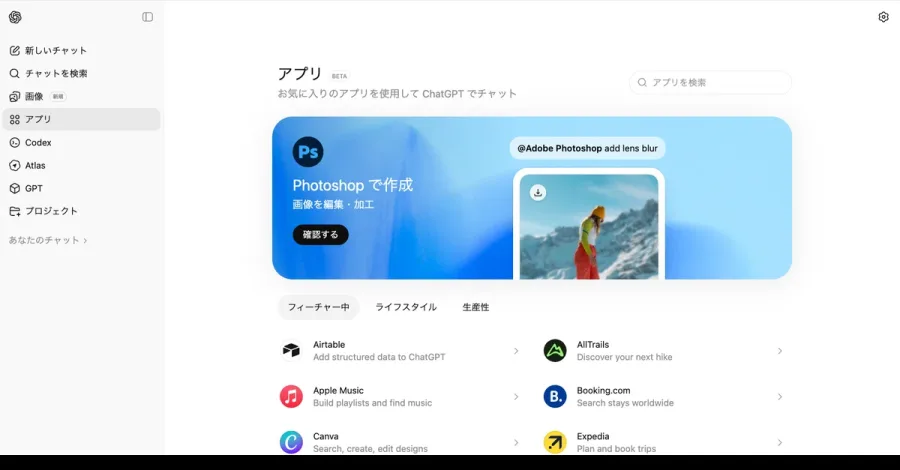
Earlier this year, at DevDay, we introduced a new feature for "ChatGPT" called "apps". Starting today, developers can submit apps to ChatGPT for review and publication by following the app submission guidelines.
ChatGPT apps add new information and functionality to conversations. They enable users to perform real-world actions such as "placing shopping orders," "creating slide outlines from text," and "searching for properties."
Additionally, to help developers create high-quality apps, we have released resources that reflect insights gained since DevDay.
Furthermore, we are introducing an app-specific directory (listing page) within ChatGPT. Users can browse recommended apps and search for published apps. Developers can also use deep links on other platforms to direct users straight to their app page in the directory.
When a user connects to an app, it is triggered when they @mention it by name during a conversation or select it from the tools menu. We are also experimenting with ways to surface relevant and helpful apps directly within conversations using signals such as conversation context, app usage patterns, and user preferences. This will allow users to provide clear feedback.
2. Building, Submitting, and Monetizing Apps
Developing an excellent ChatGPT app begins with a design that captures the user's true intent. By using the Apps SDK, currently in beta, developers can build chat-native experiences and integrate context and actions directly into ChatGPT. The best apps provide clear value by having a well-defined scope, being intuitive to navigate via chat, and either completing real-world workflows that start from a conversation or enabling entirely new AI-native experiences within ChatGPT. To develop high-quality apps, we recommend reviewing the App Submission Guidelines early on. Additional documentation and samples can be found in the Developer Resource Hub.
Once ready, developers can submit their apps for review and track their approval status on the OpenAI Developer Platform. Submissions include MCP connection details, testing guidelines, directory metadata, and settings for available countries. The first approved apps will be rolled out gradually starting in the new year. Apps that meet quality and safety standards are eligible to be listed in the App Directory. Apps that resonate with users may be featured more prominently in the directory or recommended by ChatGPT in the future.
In this initial phase, developers can link from ChatGPT apps to their own websites or native apps to conduct transactions for physical goods. We plan to explore further monetization options, including digital goods, in the future. We will learn from how developers and users build and engage, and will share more details as we go.
3. Safety and Privacy
All developers must follow the App Submission Guidelines regarding safety, privacy, and transparency. Apps must comply with OpenAI's usage policies, be appropriate for all users, and adhere to third-party terms of service when accessing content. Developers must provide a clear privacy policy for all app submissions and should only request information necessary for the app's operation.
When users connect to a new app, they will be informed of the types of data that may be shared with third parties, and the app's privacy policy will be provided for review. Users also retain control at all times. If they disconnect an app at any time, that app will immediately lose access.
4. Future Outlook
Moving forward, we want to provide support for turning ideas into action and build a vibrant ecosystem for developers so that ChatGPT apps feel like a natural extension of conversation. We will continue to improve your experience as we learn from developers and users. We also plan to expand the ChatGPT app ecosystem, make apps easier to discover, and broaden the ways developers can reach and monetize their users.