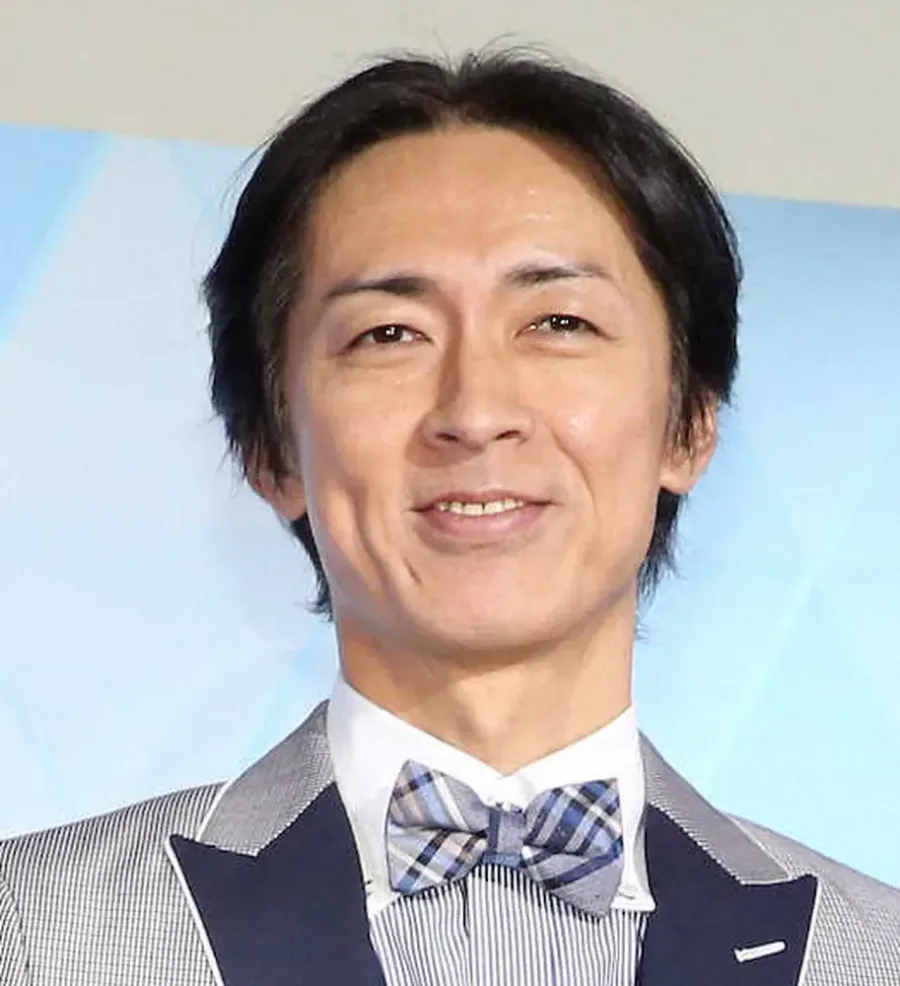
――Please tell us the age you started playing soccer and what got you into it.
I don't remember my exact age, but I think I was 5 or 6. It might not be what you'd call a specific reason, but in Brazil, when boys are born and start walking, playing soccer is usually the first thing they do.
――Were you part of a team?
At first, it wasn't a team; it felt more like just playing with local friends. I think I joined a team when I was around 10 or 11 years old.
――What did you learn after joining a team?
Thinking and moving as a group. And also the fundamental plays. From there, it was a process of figuring out, 'Which position do I want to play?'
――Elsinho, one of your characteristics is that your values for fundamentals and basics are all high. Which had a greater influence on that foundation: joining a team, or the playing you did before that?
Probably the time before I joined a team. The place where I played with my local friends was a dirt field. On a dirt field, the ball bounces, right? I had to control the ball under those conditions, so from a young age, I was playing while being extra conscious of the fundamentals.
――Were all your local friends who played on the same dirt field also good?
Of course, there were good friends, but when people mentioned the good players, my name was usually in the top three. People around me say that I was the best (laughs).
――So you had talent.
Yes (laughs). But I'm just telling you what others said about me; I wasn't saying it myself (laughs).
――You have a strong impression as an SB (side back) now, but which position did you want to play after joining a team?
When I was a child, I wanted to play in midfield. In terms of positions, I wanted to play as an interior or a shadow striker, one step ahead of the defensive midfielder. I dreamed of wearing the number 10 jersey and the captain's armband, and I actually said, 'I want to play there.'
――When did you become an SB, and what was the trigger?
It was after I turned pro at a local club. It was very early in my career. Right after I joined, I was playing in midfield, but the manager told me, 'You don't have the qualities for midfield, but you do for SB.' When he asked, 'Can you play as an SB?', I replied, 'Anytime.' That was the trigger.
――But your true wish was to be in midfield, right?
Yes, that's right.
――Was it fun after you became an SB?
Since it was my first time in that position, the manager gave me three pieces of advice. I think I was able to absorb them well. It was fun to play, and I felt like the position fit me.
As a characteristic of mine, even in the SB position, I tend to participate in attacks from the center. My characteristic matched the tactics the manager at the time was thinking of. Also, I have the image that a midfielder has to build up the game, but after becoming an SB, that pressure disappeared, and I started taking the best parts, so to speak... (laughs). I get involved in the initial build-up and pass the ball, then have the midfielders build it up, and finally, I join the attack and receive it again, something like that (laughs). So it was fun.
――What were the three pieces of advice you received from the manager?
The first was, when you can penetrate deep into the side attack, instead of trying to put in a beautiful cross, put in a fast, low pass between the goalkeeper and the center backs.
The second was, if you lose the ball, come back.
The third was, when carrying the ball during the build-up of an attack, go from the center proactively.
I was advised those three things, and I was able to express them well.
――Watching your play, what is impressive is that your passes are always forward-looking and your gaze is always on the furthest point. How can one acquire that style?
First of all, basically, when you receive the ball, if you look down, the opposing player will proactively put pressure on you. But if you keep your head up, most players will slow down. At the moment the opponent slows down, I look at the whole field. I don't know how to put into words how I acquired that, but I don't miss those gaps, I look forward, and I think about which option is effective. It doesn't always go as I imagine, but I try to handle the ball as calmly as possible and decide whether to pass or not.
――To play with your head up, you need to have the fundamentals and basics to control the ball as you wish without looking at it, right?
That's true. A certain level of basic technique for stopping and kicking is necessary. Also, even if you have the basic technique, there are days when you are in good form and days when you are in bad form. So, not everything goes well all the time, but basically, I think you can do it if you have the foundation.
My way of thinking is that the side holding the ball has the advantage. The opponent should be trying to put pressure on the side holding the ball by making them look down as much as possible. But I know that if the side holding the ball plays with their head up, the opponent will dislike it.
――Playing on a 'dirt' field might have raised your fundamental and basic skills.
It was quite helpful.
――Before you turned pro, were you a famous player locally?
I wasn't famous, but I was known to some extent locally. I also received quite a few requests like, 'I want you to join my team.'
――Please tell us the circumstances that led to you turning pro.
I turned pro at 16. That club held amateur soccer tournaments in various places. I was scouted there. At first, I started playing in tournaments like what you call club youth in Japan, and from there, I turned pro while leaving results.
The region where I lived wasn't that strong in soccer, so I didn't even have the idea of jumping out of that framework and becoming a pro, and even so, I thought it was enough for me. Besides, I didn't come from any club's academy, and I didn't have any special ambition or greed.
But after I actually became a pro, I started going to various places, and that was the first time I started aiming for a big club. I think I started thinking that way when I was 18 or 19.
――You weren't a player who followed the general path to turning pro, were you?
I often talk about that with my family, and I think it's a 'one in a million' case. Normally, for example, you would enter a club team's academy, then the youth team, and then turn pro. There is a Brazilian proverb that expresses something like 'one in a million,' and it was exactly like that. However, it was a world where I had to prove myself, not just luck that fell from heaven, but I also think that such cases are rare. Anyway, it was good. But no matter which club I belonged to, what I was always thinking was the same thing.
'I have to do more than others, I have to prove more than others.'
I kept repeating that. And in about two or three years, my life changed 180 degrees. Right after turning pro, the 'state league' was my main battlefield. I was playing in the third category of that state league, and the team I belonged to was by no means a strong team. But during those two or three years, I crawled up from that state league third division to the Brazilian first division in a way that I was promoted individually. It really wasn't an easy story. I did make an effort.
――There is no doubt that you are 'one in a million.'
Thank you (laughs).
――Does the process leading to that growth and the answer 'the manager in my first year as a pro' in the questionnaire about 'players or coaches who influenced you' on the club website profile have anything to do with it?
That manager is the person who first talked to me and converted my position from midfield to SB. So, I gave that answer to that question.
――In that future, you came to Japan by joining Kawasaki F. Do you remember the circumstances at that time?
Just before joining Kawasaki F, I was playing in the Brazilian second division. It was the timing when my contract was about to expire. Personally, it was a season where I left good records in terms of results and numbers, and I received an offer from Kawasaki F there.
――Did you have any hesitation about the offer from Japan, a country on the other side of the earth from Brazil?
I had no hesitation. Because coming to Japan was my dream. I had talked about such things with my family. So it was an immediate answer. However, at that time, it was also a period just after surgery due to an injury. It didn't take that long until I returned, but Kawasaki F understood that and had expectations for me, so I just went to Japan and played Japanese soccer.
――Why did coming to Japan become a dream of yours?
Simply put, it's because I only ever heard good things about Japan from the people around me. When watching Brazilian news, they would describe going to Japan by saying things like, 'Player so-and-so is going to the Land of the Rising Sun,' and watching that kind of news made me interested.
――After arriving in Japan, were you able to adapt to soccer and life immediately?
I came here prepared, so I personally didn't have any problems. Besides, I have a shy and reserved personality, if you could call it that (laughs), and I'm not the type to go out and talk to people much (laughs). I felt that Japanese people also had a relatively similar image, a temperament where you do your own job properly. So, I didn't have to be particularly careful, and everyone on the team welcomed me, so it wasn't difficult.
However, I was worried about my family. I have two children, and my youngest daughter was only four months old at the time. I was also worried about whether my wife would get used to life in Japan.
――Was your family able to adapt to Japan as well?
My son was five years old at the time, and his smile gave me strength. Even though he didn't understand the language at all, he went to school with a smile every day. My wife also seemed to get used to it, and since my youngest daughter was a baby, I don't think she knew the difference. Because my family got used to life in Japan like that, I only had to focus on soccer.
――You have experienced being a J1 champion and have been named to the Best XI for two consecutive years, spending a wonderful time here. What kind of experience has this been for you?
I have nothing but gratitude for my family. When a foreigner plays overseas, I think that if things aren't going well with their family or home life off the pitch, it will affect their performance in matches. My wife worked very hard on that front, and I think she managed the children and our home life well so as not to worry me. Thanks to that, I was able to focus on soccer, which led to me contributing to the team's championship and being selected for the Best XI.
――After moving from Kawasaki F to Shimizu, you joined Tokushima in the middle of the 2022 season. How are your days in Tokushima?
At first, it took a little time to get used to living in a regional city. But now, both my family and I have gotten used to it, and we are spending good days here.
As for soccer, I played under manager Dani Poyatos (currently at G Osaka) in my first year after joining, and since it was a style I like—moving the ball while in possession—it matched my own characteristics, so I was able to perform well. Last season, I couldn't play much due to injuries, so I can't say much, but the team has many skilled players with individual characteristics, and in conclusion, I think I am at a good club.
――Even so, Elsinho, your scoring ability is truly amazing, even though you are registered as a defender. In Tokushima, you have scored a total of 5 goals in about two and a half seasons (as of August 20th), and a total of 31 goals in your 10th year in Japan. That's just league matches, so if you add cup matches, that's 8 more goals. You are still the 'fullback who takes the tasty chances' (laughs).
(Laughs). As I mentioned at the beginning, I really left the buildup in midfield to the central players, and especially during my time at Kawasaki F, we had Kengo Nakamura and Eduardo Neto, and there were really amazing players in every position. So I just had to run up the side and finish.
Compared to back then, I've become a veteran and have gained a certain amount of experience. With many young players at Vortis and the feeling that I am now in a position where I have to take responsibility, my mindset has changed from the desire to score myself like in the old days to the idea that someone on the team should score. Having said that, I do score every now and then... (laughs).
――Lastly, a little bit of bragging (laughs). Do you have a favorite goal among those you've scored in the J.League?
There are three.
The first is the goal I scored in the 2015 2nd Stage, Matchday 1 against FC Tokyo (2-0 win).
The second and third were in the same match, the 2017 Matchday 28 against C Osaka (5-1 win).
The reason I like those three goals is that I think they were the type of goals you don't often see from a fullback. Of course, that's also because I'm good, right? (laughs). Just kidding, just kidding (laughs). But I do think they were goals you couldn't score without having the mentality of an attacker.
――Finally, do you have any dreams you want to fulfill in the future?
I am satisfied with my life so far. Of course, there is still a lot to do in both soccer and my private life. However, I don't have anything as big as a dream.
But one thing I can say is that when the day comes for me to stop playing soccer, I want to provide the support for my family that they have provided for me until now.
I think the families of soccer players truly live their lives thinking of the player. My children are the same. I haven't been able to go to school events or sports days. My family continues to support me even while sacrificing those things. After the day I retire comes, I want to dedicate everything to my family, especially my children. That is what I think.