Hello, Mahjong beginners.
Are you able to declare Riichi and win with high scores?
I think many of you have gotten used to making four sets and one pair by now.
However, once you reach that point, it can start to feel like a chore, and some of you might feel it lacks a bit of excitement. So, this time, I will introduce three "Yakuman" hands, which are the most powerful and exciting hands in Mahjong.
"Yakuman" is the Exodia of Yu-Gi-Oh
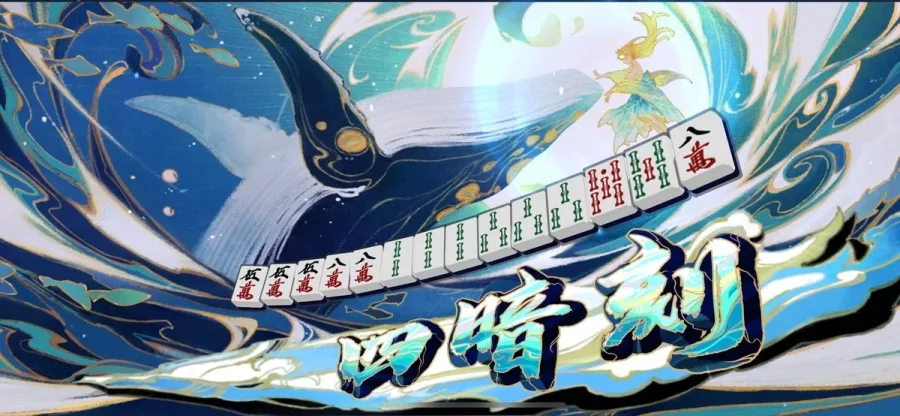
First of all, what kind of existence is a "Yakuman" in Mahjong?
If I were to compare it to a card game, I personally interpret it as being close to "Exodia the Forbidden One" from Yu-Gi-Oh.
Exodia has a seemingly absurd effect where, by having the main body card and the right arm, left arm, right leg, and left leg cards all in your hand, your victory in that game is guaranteed.
However, collecting all five cards is an extremely difficult task; if you imagine the parts being stuck at the bottom of your deck, you can understand how hard it is.
In other words, Exodia is something where the conditions are strict, but if you pull it off, victory is guaranteed.
The "Yakuman" in Mahjong is the same.
Since "Yakuman" literally means "full-value hand," no matter which Yakuman you win with, you receive a massive score of 32,000 points for a non-dealer and 48,000 points for a dealer.
In 4-player Mahjong, if you win by Ron, your opponent will definitely go bust (their score drops below zero). Even if you win by Tsumo, you can create an overwhelming lead over the other players, so just like Exodia, it can make your victory in the game certain.
However, the conditions are all extremely difficult, and the appearance probability for the most common one is 0.049%.
It is no exaggeration to say that the points you receive for a Yakuman are truly a reward commensurate with the difficulty.
The "Four Concealed Triplets" of Donjara
Four Concealed Triplets (Suuankou) is a Yakuman hand formed by collecting four sets of the same tiles (triplets, or concealed triplets).
Those who know "Donjara," where you play by matching the same character tiles, will find it easy to visualize.
Anyway, just remember to collect all the same tiles without any sequences.
In the image, the 5 of Characters and the 2 and 3 of Bamboo are concealed triplets; at this point, Three Concealed Triplets is guaranteed, and if either the 8 of Characters or the 5 of Bamboo comes in, you will have four concealed triplets, completing the Four Concealed Triplets hand.
The appearance probability is 0.0416%.
I won with it once in about my 300th match.
Four Concealed Triplets often presents an opportunity while you are aiming for Seven Pairs, as tiles overlap, making it a Yakuman that is easier to pivot to compared to others.
A hand formed by literally making 7 pairs. Details will be explained in a later Note.
The score is 32,000 points for a non-dealer and 48,000 points for a dealer.
This match was the dealer's turn in the first round of the East round, meaning I won right at the start of the game, so the rest of the match was essentially a foregone conclusion.
Covering all the Dragon tiles: "Daisangen" (Big Three Dragons)
Daisangen is a Yakuman hand that is completed by collecting a trio of each of the Dragon tiles, known as Haku (White), Hatsu (Green), and Chun (Red).
As shown in the image, you collect the Dragon tiles to make three trios of "White-White-White, Green-Green-Green, Red-Red-Red," and then you just need to make one more trio (like 4-5-6) and one pair (like 3-3) with the remaining tiles.
Unlike Suuankou, the arrangement of all the tiles is not specified, so there is more flexibility in the shape, and since this Yakuman can be completed by calling (Pon or Chi), it might seem like the difficulty level is low.
However, the appearance probability is lower than Suuankou at 0.0334%.
The most common pattern is that when you call two types of Dragon tiles thinking "I can do this!", other players who don't want to deal into you will hoard the Dragon tiles, and you end up unable to win.
Even so, if you draw it yourself, it's yours.
If you have many Dragon tiles in your hand and it looks promising, aim for it aggressively.
You might also end up with Shousangen (Small Three Dragons) by using one of the Dragon tiles as a pair.
※A lesser version of Daisangen. Example: "White-White-White, Red-Red-Red, Green-Green", "White-White-White, Red-Red, Green-Green-Green"
The points are, of course, 32,000 for a non-dealer and 48,000 for a dealer.
At this time, I had played about 600 games, and since it was again the dealer's turn in the East 1 round and it was a Ron win, the game ended in one shot.
The ultimate form of anti-Tanyao: "Kokushi Musou" (Thirteen Orphans)
Kokushi Musou is the most unique hand in Mahjong, a Yakuman completed by collecting all types of 1s, 9s, and honor tiles. The pair (head) must also use a 1, 9, or honor tile.
It uses all the tiles you aren't supposed to use in Tanyao, making it truly the ultimate form of anti-Tanyao.
Compared to other Yakuman hands, Kokushi Musou is a hand that you cannot back down from once you decide on it, and it lacks flexibility. The probability is also quite severe at 0.0371%.
However, this Yakuman has a strength. To put it bluntly, it shows its true value when you get a "terrible starting hand".
For example, imagine you received a starting hand like the one in the image below.
It's a starting hand that makes you think, "Ugh... I have no motivation..."
But look closely at the hand. It already has 9 types of tiles needed for Kokushi Musou! Since there are two 1s of Bamboo, you also have a pair.
If you change your perspective, it even starts to feel like a good hand.
In addition, to talk a bit more for advanced players, another advantage is its defensive performance when another player declares Riichi.
Since honor tiles and 1s and 9s are hard to deal into a Riichi, you can think of it as aiming for a huge hand while hoarding those tiles.
The lack of flexibility can also be seen as a positive, because since the shape is fixed, you can just go straight for Kokushi, making it easy for beginners to aim for.
If you get a terrible starting hand or have a lot of 1s, 9s, and honor tiles, please definitely aim for it.
The points remain 32,000 for a non-dealer and 48,000 for a dealer.
I managed to win with a Daisangen about 700 games in, which was roughly 100 games after my first win.
At that time, my form and luck were bad, and I was in a dead-end situation in 3rd place during the South 3 round near the end of the game, but I drew a Kokushi to overturn a point difference of about 20,000 points and took 1st place.
The game ended because the other players' scores went into the negative.
It was truly a come-from-behind win.
Well, after that, I was completely abandoned by luck and ended up losing about 30 games in a row...
Summary
Let's review the three Yakuman hands.
・"Suuankou": Making sets of three with all the same tiles
・"Daisangen": Collecting sets of three for each of the White, Green, and Red Dragons
・"Kokushimusou": Collecting all 13 types of terminal and honor tiles
Those were them.
People say "Mahjong is a game of luck," and I believe the existence of Yakuman is a big reason for that. In extreme terms, no matter how strong a pro is, if a beginner wins with a Yakuman, there's nothing they can do. This is something that would never happen in Shogi or chess.
However, that is exactly why I think Mahjong is interesting.
Depending on your luck, it is an unreasonable romance where you can overturn a difference in skill.
Since there is a clear path to victory even for beginners, the element of luck can be said to be indispensable to Mahjong.
I have been telling a dream story up to this point, but there is one thing I want to emphasize. That is that Yakuman hands do not come out that often.
Therefore, if you intentionally break up your sequence hands to go for Suuankou, or keep holding onto honor tiles to aim for Daisangen when you have few dragon tiles, you will definitely pay the price.
Understand that it doesn't happen often, and if it looks like you can do it, go for it wholeheartedly.
This is the golden rule of Yakuman.
When it is difficult to judge whether you can do it, first try aiming for Kokushimusou.
Since you have a terrible starting hand anyway, there is little risk, and the possibility of being Ronned is also low.
Once you win with a Yakuman, your addiction to Mahjong will increase even more.
Thinking, "I want to taste that exhilaration one more time..."
It has become a bit of a dangerous atmosphere, but let's enjoy Mahjong in moderation, with the mindset that it's a lucky bonus if it happens.
By the way, collections of famous scenes where Yakuman hands appear in pro matches are very interesting because you can see the stunned expressions that pros don't usually show, so I recommend them!