The image generation feature provided by OpenAI's ChatGPT (DALL-E 3) is attracting attention.
This feature generates images based on concepts conveyed in Japanese.
It has become very easy for many people to enjoy generating images.
Moreover, the point that it is "available for commercial use" seems to be frequently emphasized, and it appears that many people find this appealing.
However, what exactly does "available for commercial use" mean?
Can it be used without any concerns, and will no problems arise?
This note is based on information as of November 13, 2023.
Looking at OpenAI's Terms of Use (using Google Translate), it states the following:
"Subject to your compliance with these Terms, OpenAI hereby assigns to you all its right, title and interest in and to the Output. This means you can use the Content for any purpose, including commercial purposes such as sale or publication, if you comply with these Terms. OpenAI may use the Content to provide and maintain the Services, comply with applicable law, and enforce our policies. You are responsible for the Content, including ensuring that it does not violate any applicable law or these Terms."
Reading this, OpenAI states that it assigns all rights to the generated content to the user, and therefore commercial use is possible.
Indeed, it is stated that commercial use is possible.
However, the subsequent sentence is important.
It is casually mentioned that use is conditional upon not violating applicable laws or the Terms of Use.
What does this mean?
What is important when considering this is the point ofexactly whose relationship is being discussed.
There are multiple parties involved in generative AI.
There is the company providing the service, like OpenAI, and its users, of course, but there are also the people who created the materials used for training.
When it comes to commercial use, for example, there will also be people who purchase images from users.
Which of these parties does OpenAI's Terms of Use address?
Needless to say, it is about the relationship between OpenAI and the user.
In other words, OpenAI is simply saying that in its relationship with the user, it will give them all rights, including copyright, and that they are free to use it as long as they follow the laws and the Terms of Use.
The point is thatit does not directly mention the relationship with the copyright holders of the materials used for training.
It means that it knows nothing about the relationship with the copyright holders of the materials used for training, and that you should use it at your own risk.
This is natural when you think about it; there is no way OpenAI can grant permission to use or arbitrarily assign copyrights on behalf of third-party copyright holders of the materials used for training.
OpenAI's Terms of Use does not say a single word about there being no issues regarding the relationship with the copyright holders of the materials used for training.
So, what happens to the relationship with the copyright holders of the materials used for training?
Regarding this point, the Terms of Use state, "You are responsible for the Content, including ensuring that it does not violate any applicable law or these Terms."
In short, it is saying that if the generated content infringes on copyright, you are the one who bears the responsibility, because OpenAI has told you to check the applicable laws and Terms of Use, and OpenAI does not permit use that violates these.
Therefore,if the generated content infringes on a third party's copyright, the person who generated and used the image is highly likely to be the one held responsible.
OpenAI's Measures Against Copyright InfringementThat said, it is not as if OpenAI has not considered copyright at all.
They have implemented certain measures; for example, when I entered a prompt asking to create a certain manga-style character, I received a response saying it could not be created.
In short, it seems that settings are in place to not respond to prompts that have the potential to infringe on third-party rights, such as copyrights.
Then, if such measures exist, can it be said that there is almost no possibility that the generated content will infringe on third-party rights in reality?
Unfortunately, thisanswer is also NO.
A Warning from Real ExamplesI have heard of a case like this.
An image that looked exactly like a character from a certain manga was generated, even though neither the name of the manga nor the name of its author was entered into the prompt even once. That is the case.
The image had a level of similarity that would likely make anyone recognize it as that character.
The fact that such an image was output makes it clear that ChatGPT has learned about that character.
In that sense, the generated image could be said to rely on an image for which a third party holds the copyright.
Therefore, it is highly likely that the image infringes on copyright.
What is frightening is that even though neither the name of a certain manga nor the name of its author was entered into the prompt at all, an image that is highly likely to infringe on copyright was generated.
This serves as a real-world example that it is possible to unintentionally infringe on the rights of a third party.
Therefore, just because ChatGPT has certain safeguards in place, you cannot assume that images generated using ChatGPT do not infringe on copyright.
Using them carelessly could lead to being held liable or causing trouble.
When using images generated with DALL-E 3 for commercial purposes, there is a possibility that you may also cause trouble for the customers to whom you provide the images, so it is advisable to investigate whether there is any copyright infringement before using them.
In reality, I do not think it is easy to confirm the presence or absence of copyright infringement.
The methods described below are simply ones that I have thought of at this moment, and it cannot be said that checking with these methods is sufficient.
However, I will introduce two of them with the intention that they might be of some reference.
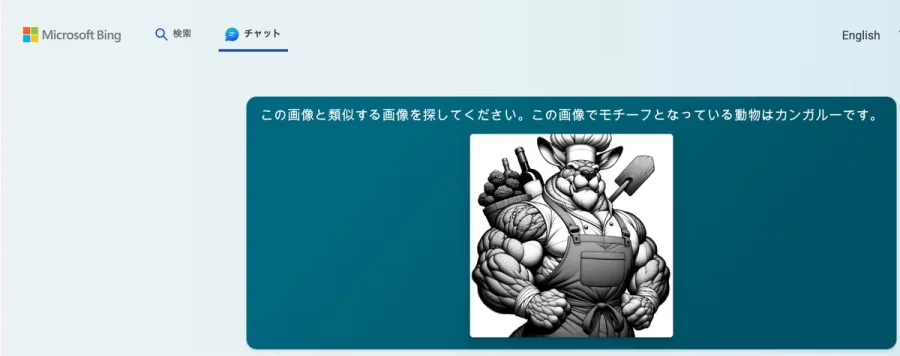
One method is to try asking Microsoft Bing.
Since you can upload images, the idea is to upload the generated image and ask if there are any similar images.
Another method is to try checking with Google Lens.
When you select a specific image from your smartphone using the Google app, similar items will be displayed.
I would like to believe that both methods can be expected to have a certain effect on investigating copyright infringement, but please be aware that I do not think they can confirm that there is absolutely no copyright infringement.
Summary: Careful commercial useAs described above, it cannot necessarily be said that images generated using ChatGPT's DALL-E 3 do not infringe on copyright, and careless use may cause trouble.
When considering commercial use, careful judgment will be required, including at least investigating the presence or absence of copyright infringement yourself.
This article was created with the support of generative AI.