This Note is a continuation of the following Note.
I decided to split it up because I was told the Note was too long and difficult to read.
How to increase the number of BlendShapes
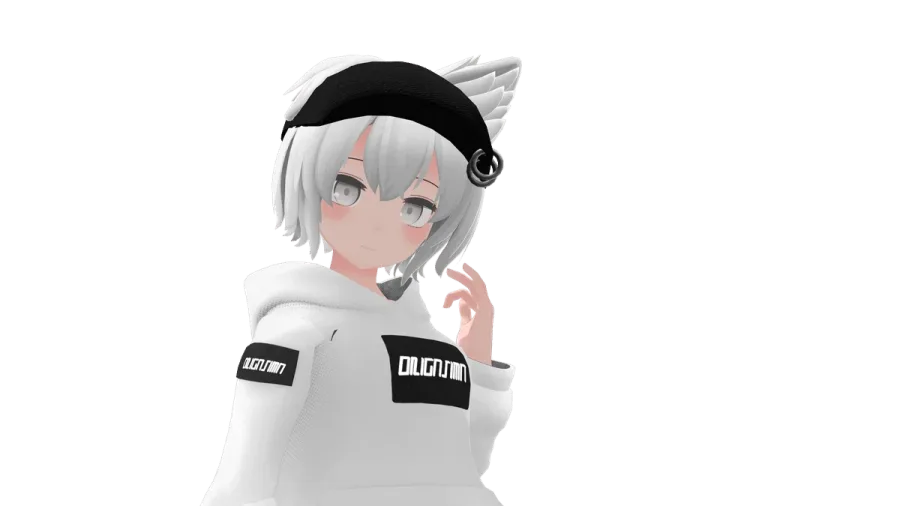
Since this method involves repurposing existing BlendShapes, the fewer existing BlendShapes you have, the more difficult the setup becomes.
Therefore, I will introduce a way to increase the number of BlendShapes here.
That said, selecting and moving mesh vertices is essentially the work of a modeler.
Here, this is strictly a method to increase the variety by highly editing existing BlendShapes.
How to handle BlendShapes that need to be split into left and rightDepending on the BlendShape, some do not have Left/Right versions prepared and can only move both sides simultaneously...
In this case, you can split it by using BlendShapeEditor (not the Simple version).
Once imported, you can open it from "Tool" in the top menu. (Not Tools)
How to handle cases where you want to operate a BlendShape in the opposite directionDepending on the existing BlendShape, sometimes only the opposite BlendShape to the one you want to move is provided.
What I faced this time was the upper eyelid. I wanted to raise it upwards, but the only BlendShape provided was one that lowers it downwards at 100%.
In that case, you can handle it with the inverse function of BlendShapeEditor, which I mentioned earlier.
Preventing the tongue from clipping through the mouth when sticking it outWhen sticking out the tongue, the tongue may come out before the mouth opens, causing it to clip through the mouth.
In that case, the Connect and Blend & Connect functions should be available for use.
More detailed instructions on how to use BlendShapeEditor are summarized below.
How to deal with teeth separating when making an "ee" mouth shapeWhen making an "ee" mouth shape, even though your teeth are clenched in reality, the avatar's teeth may separate and stay half-open.
In most cases, this can be improved by preventing JawOpen from opening up to about 25%.
To work even more efficiently
Although this is my own workflow, I will introduce a part of it.
For the sake of explanation, I changed the expressions from the beginning, but in my case, I don't actually start tweaking expressions right away; I first note down all the necessary BlendShape values.
While taking notes, I perform splitting or Inverse edits on the necessary BlendShapes, and once all the notes are ready, I start implementing them onto the avatar.
At the stage of checking and noting down expressions, I use FaceEmo.
I have used other tools as well, but the editing interface is very easy to use, so I use FaceEmo to note down the BlendShape values.
However, since there are many BlendShapes, managing the notes is also difficult.
So, I created a Google Spreadsheet to serve as a notepad.
Please feel free to use it.
The part that takes the most time is definitely the stage of noting down the facial expressions.
I expect it to take around two hours to set up one avatar.
Avatars with fewer types of BlendShapes tend to take longer.
If the number of existing BlendShapes is very small, or if you are not satisfied with the quality,
Since this method involves repurposing existing facial BlendShapes, it is difficult for avatars with very few BlendShapes.
In that case, I recommend using Haï's FaceTra Shape Creator (paid) to specify the mesh and create completely new BlendShapes.
I haven't used it myself, but since this tool creates new BlendShapes for face tracking, it should be capable of higher quality than the method in this article, which repurposes existing expressions, if you master it.
The following article is helpful.
A brief explanation
In VRCFT, the names of the BlendShapes to be recognized are fixed.
The following link is a list of those names.
If there is a BlendShape name that it recognizes, VRCFT uses it to change the facial expression.
This time, instead of the naming convention above, I am using the ARKit/PerfectSync naming convention established by Apple.
The reason is that it keeps the number of BlendShape settings to a minimum, and personally, it works well enough on the Quest Pro, and it can also be repurposed for software that supports PerfectSync.
If it supports PerfectSync, you can convert the avatar created using the method in this note into a VRM, use an iPhone as a camera, and use it like a VTuber.
Once you have created a 3D model with BlendShapes for ARKit/PerfectSync, you can use VRCFT - Jerrry's Templates to convert it for VRCFT and make it usable in VRChat. This alone will make it usable in VRChat.
This process is non-destructive.
The differences in BlendShape names and the number of setting items used in QuestPro, PerfectSync, and VRCFT are listed in the spreadsheet below.
VRCFT - Jerrry's Templates will convert PerfectSync to a degree that is acceptable for use with QuestPro.
Conclusion
Thank you for reading until the end.
As an aside, there is a tool that allows you to exchange only BlendShapes.
I think you can also use it to distribute the FaceTracking BlendShape settings created in this note to friends who use minor avatars.
If you found this article helpful, I would be happy if you could react by clicking the like button. (It seems you can do this even if you are not registered on Note.)