*Contains spoilers. Please be aware.
Touching the 'Origin of a Genius'
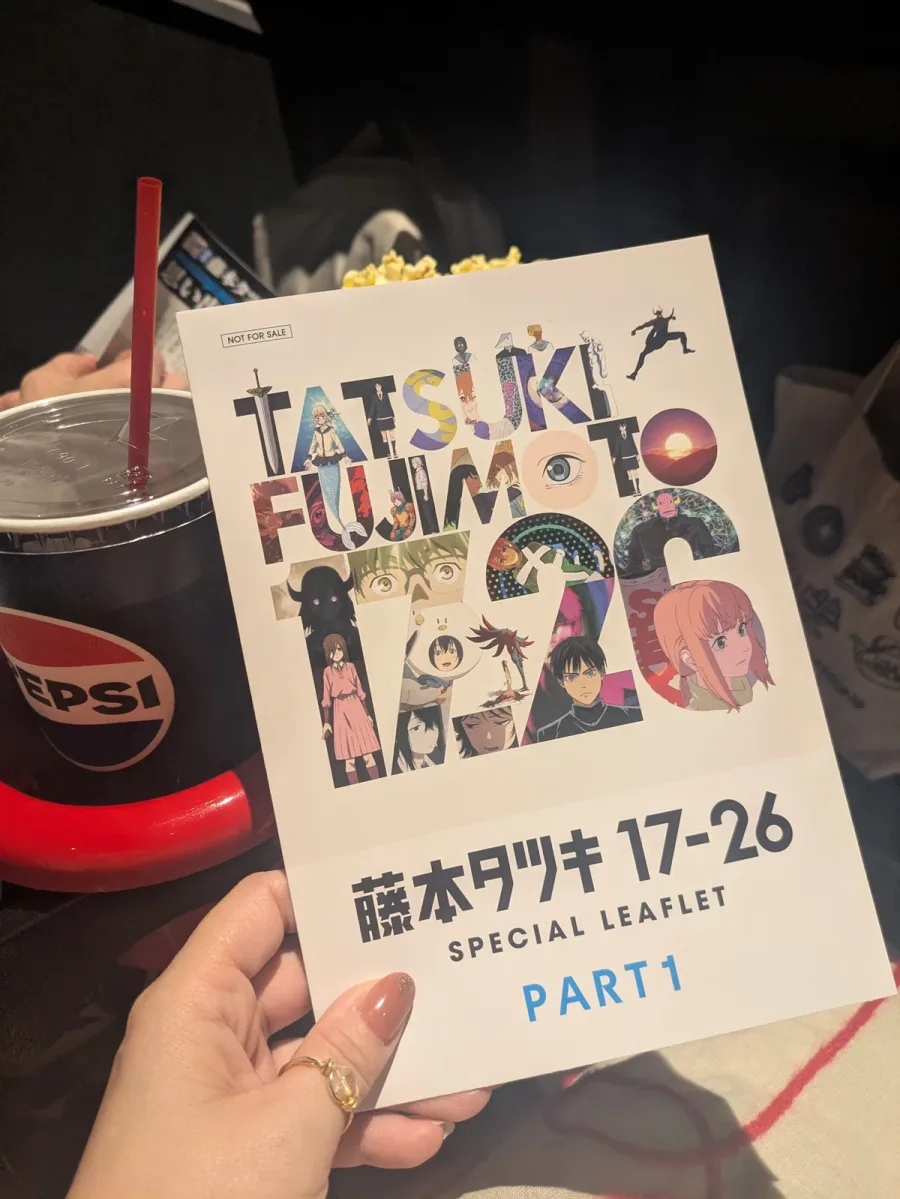
'Tatsuki Fujimoto 17-26' is an unprecedented project where six studios and seven directors each take on a short story collection drawn by manga artist Tatsuki Fujimoto between the ages of 17 and 26. Just knowing this information makes it impossible not to have high expectations...!
In this Part-1 viewing, I would like to delve into four short stories to explore the 'initial impulse' and the 'fundamental essence' that runs through Fujimoto-sensei's body of work, which are connected to current hits like 'Chainsaw Man' and 'Look Back'!
The Impact of Part-1! The 'Light and Shadow' of Initial Impulse
1. 'There Were Two Chickens in the Garden': A Prototype of 'Tatsuki-ism' Where Initial Impulse ExplodesThe absurd and pure intensity I felt through the manga was vividly sublimated by gaining voice and movement. What was particularly impressive was that the 'vitality' of the entire work had increased significantly.
And in the depiction of 'pain' and 'impulse' during the final 'battle' and 'bizarre situation,' I strongly feel the glimmers that lead to the battle scenes in the later 'Chainsaw Man.' At 17, 'Tatsuki-ism' is already exploding! It was truly a work that serves as an origin.
2. 'Sasaki-kun Stopped the Bullet': A Famous Line Questioning the 'Possibility' of Adults and ChildrenBecause the expression became more realistic through animation, the message contained in the work hits home even harder.
Especially the line spoken by Mr. Kawaguchi in the career counseling scene.
How much potential is lost when adults easily turn children's dreams into '0%' by saying, 'That's realistically impossible' or 'You can't do it'? The preciousness of an adult who doesn't dismiss but rather 'affirms' and accepts the pure passion of someone like Sasaki-kun, who talks about his dream of 'becoming an astronaut to meet his father on the moon.' How many such adults are there? No wonder he looks like a god. I wonder if Mr. Kawaguchi also had someone who accepted his dreams without making fun of them?
I want every dream to be supported first. It was a work that made me wish for that strongly.
3. 'Love is Blind': Cruelly Pure IntensityAs the title suggests the theme itself, this state of 'blindness' was expressed more intensely through the use of color, lighting effects, and the depiction of eyes.
The breath of life, which is pure to the point of running wild, makes one feel an 'extraordinary purity.' While the sight of them enjoying their youth makes my heart flutter, the danger of it also tightens my chest...! Shion Wakayama's range of expression for 'Osu!' was also wonderful, and the pacing was excellent, not leaving the audience behind within the short runtime, along with a meticulously crafted structure. It was a rare comedy work.
Shikaku, who grew up being abused after actions driven by curiosity led her parents to think, 'Even though she's my own child, she's scary.' It vividly depicts the pain of having one's actions condemned by others in childhood as 'something alien'.
In this work as well, Yuger 'affirms' Shikaku's words and actions as 'interesting,' and for the first time, accepts her existence just as it is. For Shikaku, meeting Yuger must have been an irreplaceable salvation and a source of happiness. The 'affirmation''kindness of accepting the heretical' is exactly what makes this a wonderful work that, deep within its dark and chaotic worldview, and combined with the power of the performances by Kana Hanazawa and Tomokazu Sugita, makes one feel a deeply endearing humanity.'kindness of accepting the heretical' is exactly what makes this a wonderful work that, deep within its dark and chaotic worldview, and combined with the power of the performances by Kana Hanazawa and Tomokazu Sugita, makes one feel a deeply endearing humanity.
The starting point where the 'pain' and 'hope' of ages 17 to 26 intersect
Through the four works in Part-1, I was able to vividly re-experience the themes of 'pain,' 'impulse,' and 'absurdity' that Tatsuki Fujimoto has consistently depicted since his early days.
At the same time, the 'hope of not giving up' depicted in 'Sasaki-kun~' and the 'kindness of affirming the heretical,' a 'light of salvation' seen in 'Shikaku' may also have been important themes in his early works.
Which work moved you the most? Please let me know your thoughts in the comments!