[Free Newsletter] Are you struggling with structures for the 1st-class architect exam? ⇒Go from struggling with structures to "understanding"! Receive easy explanations of Q&A and calculation problems for free
Hi, I'm Director Zero!
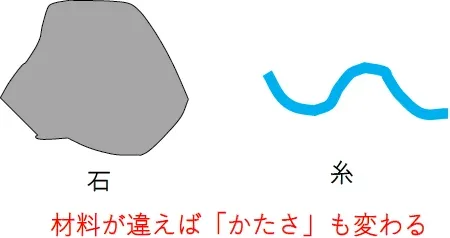
Have you ever felt it strange that "even with the same material, just by changing the shape, the ease of deflection" is completely different"? The main character that explains that difference is the second moment of area.
The second moment of area is an important value that represents whether a member is difficult to bend (resistance to bending), and it appears widely in everything from deflection calculations, stiffness, vibration, to buckling.
If you read this article, you will clearly understand the meaning, formulas, and way of thinking about H-beams regarding the second moment of area!
Recommended Study Materials
[Recommended by the Manager!] Save 50% with a set! All 90 calculation problems from the past 15 exams explained ⇒Understand the flow of calculations and how to solve them! 1st-Class Architect [Structure] Calculation Problem Explanation Collection
What is the Second Moment of Area
The second moment of area is, in a word,
a value that represents "the difficulty of bending (resistance to bending force) of a material (member)".
Second moment of area is large → Difficult to bend (hard to deflect)
Second moment of area is small → Easy to bend (easy to deflect)
Here is the point. The difficulty of bending a member is not determined only by the material. It is also determined by the shape.
Read from 100 yen! No internet required! Click here for PDF articles that are easy to read even when printed Read anytime, anywhere! No ads! PDF version of learning articles on structural mechanics for architecture students
Two factors that determine the difficulty of bending
The "difficulty of bending" of a member is mainly determined by these two factors technically.
Young's modulus (E): The stiffness of the material itself
e.g.) The value changes for rubber, wood, iron, etc.
Second moment of area (I): The "difference in stiffness" created by the cross-sectional shape
e.g.) The difficulty of bending changes between a rectangle and an H-beam
Even with the same iron, if the cross-sectional shape changes, I changes. That is why it happens that "even beams that look similar deflect differently."
Relationship between the second moment of area and deflection
The second moment of area is used when judging how much it can withstand bending moments, and it appears in many scenes such as
member stiffness calculations, vibration characteristics, and buckling.
Among these, the most important is deflection calculation.
The formula for deflection often includes EI, and the larger I is, the smaller the deflection becomes.
Formulas for the Second Moment of Area (Basic Forms)
I will organize the formulas that are frequently used.
Rectangle: I=bh³/12
Circle: I=πd⁴/64
Cylindrical (pipe): I=π(d⁴-d1⁴)/64
Here are the meanings of the symbols.
b: Width of the rectangle
h: Height of the rectangle
d: Outer diameter of the circle/cylinder
d1: Inner dimension of the cylinder (inner diameter)
I am selling a set of all PDF teaching materials related to structural mechanics (5350 yen ⇒ 3480 yen)
[Value Set] Structural Mechanics Teaching Materials (13 files in total)
Derivation of the Formulas
You can just memorize the formulas, but it is stronger to understand them from the definition. The second moment of area is originally defined using the "distance from the axis."
The calculation flow is as follows.
Write the definition formula for the second moment of area
Confirm the definitions for both the x-axis and y-axis
Break down the target cross-section into infinitesimal areas
Use the definition formula to perform integration
Find the value for the xaxis of a rectangular cross-section
Convert to the centroidal axis for use in bending calculations
Utilize symmetry, calculate half and double it
Obtain the second moment of area Iu about the centroidal axis
Furthermore, in practical work and stress calculations, the second moment of area about the centroidal axis (the axis passing through the member's centroid) becomes important.
The concept of I for shapes away from the axis and the parallel axis theorem are effective
To generalize slightly, the second moment of area for an axis at a shifted position can be found by rearranging the original definition formula. The flow is that it is easier to handle when shifted to a coordinate system with the centroid as the origin.
The calculation flow is as follows.
Set the reference coordinate axes (x, y)
Express the second moment of area using the definition formula
Translate the coordinate axes (u, v)
Establish the relational expressions between the original and new coordinates
Substitute into the definition formula and transform the equation
Find the second moment of area for each of the x and y axes
Set the new origin to the centroid (x0, y0)
Obtain the formula for the second moment of area about the centroidal axis
Organize the second moment of area about an arbitrary axis into a calculable form
We are selling a complete set of PDF teaching materials on structural design (3550 yen → 2480 yen)
[Value Set] Structural Design Teaching Materials (12 files in total)
Simple calculation example: Second moment of area of an H-beam
Here is an example problem. Imagine an H-200×100×5.5×8 H-beam.
Since the web is located in the middle with respect to the neutral axis, you can use the standard rectangular formula.
I=bh³/12
Therefore
I=bh³/12=5.5×(92*2)³/12=2855189
I of the flanges (top and bottom plates)The flanges are separated from the neutral axis. Therefore, the concept of "I of a shape separated from the axis" (the parallel axis theorem) applies.
Calculate for one flange, then double it.
Flange: 14754132
Web: 2855189
Thus, for the entire H-beam
I=14754132+2855189=17609321 mm⁴
Converting the units to cm⁴
I=1760 cm⁴
※ In practice, this includes the R-sections, so it is often cited as a nominal value of I=1810. Since our calculation result matches closely, we can confirm that the value is reasonable.
Why the I of a Truss Beam and its Upper/Lower Chord Members are Important
Next, you can apply the same line of reasoning to the second moment of area of a truss beam.
When using H-beams for the upper and lower chord members, we do not consider the connecting members here, but rather calculate I using only the upper and lower chord members.
Single H-beam: I=1810cm⁴
Cross-sectional area: A=8x100x2+5.5x96x2=2656mm²
Distance: y=1000/2=500mm
Therefore
This arrangement significantly increases the cross-sectional performance (I).
This is the point that connects to the intuition that "placing materials further away makes them stronger against bending."
Summary
The second moment of area I is a value that represents "resistance to bending (bending stiffness)".
Resistance to bending is determined by a combination of the material's E (Young's modulus) and the shape's I (second moment of area).
I is essential for deflection calculations. For H-beams and trusses, I increases by "moving the material away from the axis."
A Closing Word from Director Zero
Next, let's organize the differences with the "section modulus"!
If you can learn to write out I and Z as a set, you will become much stronger.
[Information on our Free Email Newsletter]
Apart from the note articles, I distribute a free email newsletter titled "Easy Talks on Architectural Structure (Structural Mechanics) for Beginners!"
・Explaining first-class architect structural problems one by one with true/false questions
・The flow of how to solve calculation problems
These are delivered to your email twice a week.
Recommended for the following people:
・Those aiming to obtain a first-class or second-class architect license
・Students studying in the department of architecture
・People with concerns such as:
"I cannot understand calculation problems (structural mechanics)..."
"I am self-studying, so I don't know how to learn"
"I have been bad at structural mechanics since I was a student"
"The explanations in commercially available problem books are too short to understand"
You can register simply by entering your email address in the form below and sending it. Registration is free, and of course, you can unsubscribe at any time.
Recommended Study Materials
[Administrator Recommended!] Save 50% with this set! All 90 calculation problems from the past 15 exams explained ⇒Understand the flow and methods of calculation! First-Class Architect [Structure] Calculation Problem Explanation Collection
Reference
#FirstClassArchitectExam
#FirstClassArchitectWrittenExam
#SecondClassArchitectExam
#FirstClassArchitectExamSelfStudy
#FirstClassArchitectExamPastQuestions
#SecondClassArchitectWrittenExam