The intent behind this post
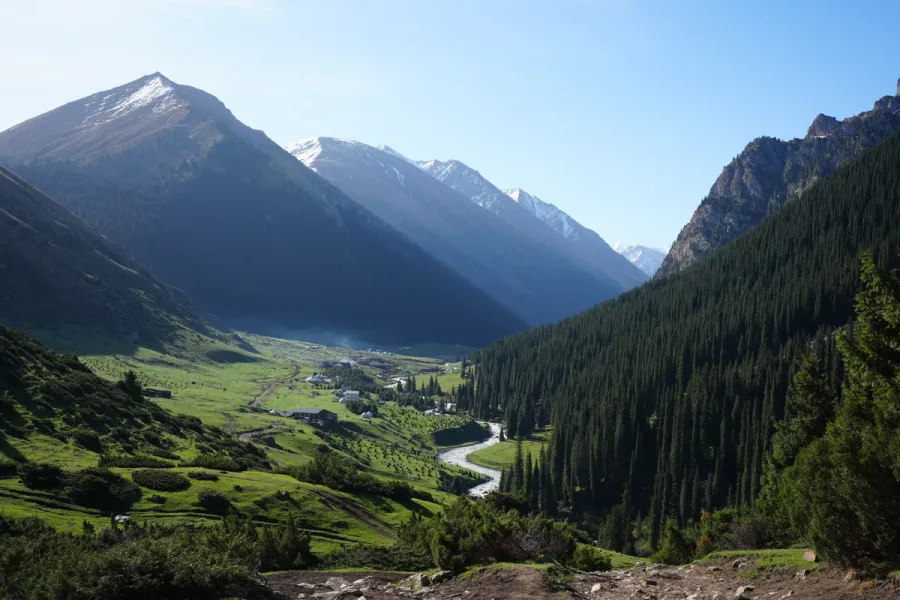
When I travel, I am often the one in charge of logistics. I am the type of person who researches everything in great detail before leaving, from accommodations to transportation and local transit. However, for this trip to Central Asia, I was quite surprised by the difficulty of that "research" itself. There is almost no information in Japanese, and even when looking for information in English, I found only Reddit or Facebook posts that made me want to ask, "How many years ago was that?" In the end, I managed to piece together the itinerary by connecting fragmented bits of information.
Given that background, I decided to record this article both as a personal memo and to share information with others who might travel the same route in the future. Although there will be many photos, I hope it conveys some of the local atmosphere and the feel of traveling there. This article is organized in the flow of information obtained during pre-trip research -> how it actually went -> lessons and reflections, so I hope you enjoy it including those aspects.
Purpose of this trip: (1) Tent camping and mountaineering in Altyn-Arashan.
(2) Learn about the culture of the first 'Stan' country.
Overall Schedule
5/2 (Sat) Depart Narita 14:20, Arrive Almaty 22:40 (via South Korea)
5/3 (Sun) Almaty → Karakol bus travel
5/4 (Mon) Mountaineering
5/5 (Tue) Mountaineering
5/6 (Wed) Mountaineering
5/7 (Thu) Karakol → Bishkek arrive PM
5/8 (Fri) Bishkek → Almaty arrive PM
5/9 (Sat) Almaty → Depart on late-night flight
5/10 (Sun) Arrive Narita 15:50
Including flights, this trip was a total of 9 days and 8 nights.
As you can see, it was an itinerary with a lot of travel overall, but I feel that even that time was part of the charm of this trip. Sometimes, while being swayed on the same bus as the locals for 5 to 6 hours, I would blankly gaze at the endless grasslands. Such casual moments were the real thrill unique to this trip.
Rather than efficiently visiting destinations, I feel that the essence of this trip was savoring the travel itself.
I will touch on the details of transportation and logistics later.
Flights
IN
5/2 (Sat) 14:20 NRT
I Tway Airlines TW224 2h50m
17:00 ICN
19:25 ICN
I Eastar Jet ZE135 7h15m
22:40 ALA
OUT
5/9 (Sat) 23:40 ALA
I Eastar Jet ZE136 6h 25m
10:05 ICN
13:20 ICN
I Jeju Air 7C1105 2h30m
15:50 NRT
I booked the flight tickets about 4 months before departure.
When checking on Skyscanner, the routes were mainly via China or South Korea. While routes via China have long layovers of around 10 hours in Urumqi, Shanghai, or Beijing, at the time, China Southern Airlines was around 90,000 yen round-trip, which was quite cost-effective. However, due to my profession, I thought that transiting through the Uyghur region might affect future overseas visa acquisitions, so I chose the route via South Korea this time.
Although the cost via South Korea is slightly higher, the layover time is short, and the travel is much easier. My outbound flight this time was also a transfer in Korea, but the actual connection time was about an hour. Since it was during Golden Week, I was a bit anxious, but thanks to the SES (Smart Entry Service) available to Japanese citizens, I was able to pass through immigration smoothly and transfer without issue.
[Reference]
China Southern Airlines Uyghur Transit Hotel
YANDEX APP
Well, having arrived at the airport safely, the next thing to worry about is how to get to the hotel. It seems to be common in 'Stan' countries that Yandex Go is the mainstream, not Uber. However, when I tried to register while still in Japan, the SMS for phone number verification just wouldn't arrive.
It seems that after recent updates, SMS verification sometimes does not work well with Japanese phone numbers. In the end, I bought a physical SIM at the airport after arriving in Almaty and obtained a local number. Even then, the SMS didn't arrive, and when I was troubled, the guy at the SIM card counter told me, "That happens often," and taught me about another ride-hailing app called InDrive instead.
As a result, I managed to get to the hotel safely using InDrive. Note that this app only accepts bank transfers or cash payments, so I recommend withdrawing some cash at the airport. By the way, when I tried again the next morning, the SMS arrived for some reason, and I was able to use Yandex Go without any problems.
Accommodation on arrival day
Since I planned to head to Karakol by bus the next day, I chose accommodation as close to the bus terminal as possible. This time, I stayed in a room in what is called a "Gated Apartment," which is a complex of multiple apartments.
The reservation was made via Booking.com, and payment was in US dollars. Since I hadn't withdrawn much KZT cash at that time, this was quite helpful. It was closer to a local living space than a typical hotel, and the room even had a kitchen and a washing machine.
[Reference] Apartment
https://www.booking.com/hotel/kz/2kh-komnatnaia-kvartira-vozle-trts-grand-park.ja.html
Almaty - Karakol Bus
Before 2025, due to road conditions, it seems the common route from Almaty to Karakol was to go via Bishkek. However, with the development of new roads, there is now a direct bus operating between Almaty and Karakol.
Among the transportation methods I used on this trip, this bus was the only one that supported online booking. The fare was 8,000 KZT per person (about 3,000 Japanese yen). However, including the border crossing with Kyrgyzstan, the total travel time was about 7 hours.
Note that there is only one direct bus per day. It departs from Sayran Bus Station at 10:00 AM, so to make this bus, I had to arrive in Almaty the day before via South Korea.
At the border between Kazakhstan and Kyrgyzstan, it was certainly not an atmosphere where one could take photos, but there was definitely a unique sense of tension. The style is to get off the bus and cross the border on foot, carrying all your luggage. Since locals are inevitably prioritized, we foreigners were left for last. As a result, it took nearly 2 hours to pass through.
We made our way to Karakol while taking breaks at simple rest areas that only had small shops and toilets along the way.
Arrival in Karakol
I arrived in Karakol around 6:00 PM (1-hour time difference).
I used Yandex to get from the Karakol Avtovokzaly, where the bus arrived, to my accommodation. And the place I stayed in Karakol, including the facilities and the owner (hereinafter referred to as "the old man"), was definitely one of the top 3 most memorable stays of this trip. Originally, I had planned to camp in Altyn-Arashan, so I had half-given up on the idea of staying in a yurt. It was in that context that I happened to find "Arista Yurt Camp" on Booking.com.
What's interesting about this place is that they have set up yurts within the premises in the middle of the city. Imagine a space where the old man has built several yurts in his garden as a full-blown hobby. It seems they operate not only as an accommodation but also as a tour company during the season. Although the toilets, showers, and dining area were shared, each guest was assigned a yurt, which was more comfortable than I had expected. As a result, I ended up returning to this place after the climb, staying for a total of 2 nights.
I think climbers will understand, but the first thing you want to procure when you arrive at your destination is a gas canister. I wanted to get one in Almaty, but the timeline was tight, so I decided to get it in Karakol. I found a few shops that seemed to sell them, so I'll introduce them here.
・EcoTrek-Trekking 116 Abdrahmanov, Karakol, Kyrgyzstan
・Extreme Shop Gold 154 A363, Karakol, Kyrgyzstan (A ski shop?)
We intended to buy them at these shops, but we found the following poster on the wall of the old man's house.
Since accommodation fees had to be paid in cash, I asked, "Is it okay to pay in dollars?" but in Kyrgyzstan, it seems that exchange fees are high unless you have 50 or 100 dollar bills, so they wouldn't accept the 20 dollar bill I had. Therefore, I decided to use a card that supports cash advances to withdraw cash from a local ATM. It seems "MBANK" is a major bank, and I was able to use the ATM without any problems even on a Sunday. The atmosphere of the city as a whole was quite calm, and I rarely felt any sense of poor security, even around the ATMs. Even when walking at night, there was no strange tension, and it was a city where I could spend time with peace of mind.
Although I had brought some Montbell meals from Japan, I went to a supermarket called "Globus" to procure water and snacks. As for the cost of living, honestly, I didn't get the impression that it was such a cheap country, and my feeling was that it wasn't much different from Japan. In fact, there were times when I felt that some things were more expensive than in Japan.
Departure for Altyn-Arashan
We took a local bus from the city of Karakol to the entrance of the trekking trail. We departed from the Ak-Tilek Bazaar Bus Station. Since it is a bus stop inside a local market, we had lunch at a nearby restaurant before heading out. There is no timetable, and it departs once it is full, and the fare is very cheap at 50 som (a little under 100 yen) per person.
The means of transportation is the familiar Sprinter-type minibus.
There is no such thing as a ticket counter, and the fare is paid directly to the driver in cash. This time, we boarded the #350 bound for Ak-Suu. Along the way, it dropped off local people one after another in the city, and finally dropped us off near the trailhead.
However, English is surprisingly not understood here. I struggled even just to convey our destination, and in the end, I managed to communicate by translating into Kyrgyz using Google Translate.
[Reference]
Altyn-Arashan Mountaineering Plan
Initially, we planned for 4 days and 3 nights, but since we had more energy than expected on the 3rd day, we returned to the city all at once, so it became 3 days and 2 nights. The plan we actually followed is described below using AllTrails data.
5/4 (Mon) Depart Ak-Suu, set up tent at 2,500m altitude
5/5 (Tue) Ak-Suu Lake attack day
5/6 (Wed) Descent to the city
Considering the mountaineering experience, physical strength, and distance of the entire group, we considered an elevation difference of over 1,000m per day to be a risk, so we made this schedule.
First of all, as a premise, the peak season for the mountaineering route we walked this time is from early June to around September, and early May during Golden Week when we visited was completely off-season.
The original ideal was a traverse-style route that goes through in a U-shape, entering from one side, passing through the lake, and exiting to the other side. However, since the peak point exceeds 4,000m in altitude, there is a high possibility that snow will still remain during this period, and we could not decide which side to enter from until the day of the climb. So, when I consulted the old man at the inn mentioned earlier, he said it was doubtful whether the trailhead on the opposite side (hereinafter, green route) was even open. Also, I heard that the red route has better scenery and there are shops along the way, and there is relatively more traffic, so we finally decided to choose the red route this time.
In addition, if you have time in your schedule, it seems quite interesting to start from a city further back than Ak-Suu and walk by extending the "vertical part" of the U-shape even further. For reference, Kraig Adams' video is very easy to understand regarding the atmosphere of the route.
[Reference]
Mountaineering Day 1: Departure from Karakol
Arrived at the trailhead in the early afternoon by shuttle bus. There is a fork in the road with signs for Ak-Suu Resort and Altyn Arashan, but naturally, proceed toward the latter. After about 2km, you will see a hut where you pay the entrance fee.
When entering the mountain, you will be given a receipt-like stub after paying the ticket fee, and it is best to keep this safe. The mountaineering route this time is U-shaped, and it merges with hikers coming from the other route along the way. Therefore, it seems they check at each trailhead to ensure you have paid the entrance fee on the other side, and I was asked to show my ticket by staff even while on the trail.
In fact, some hikers I met along the way had already paid at the other trailhead, but because they didn't have their stub and couldn't prove it, they had to pay again on the spot. The amount itself is only about 400 yen, so it's not a huge problem, but to avoid unnecessary hassle, you definitely need to keep your ticket.
There are groups that travel not only by car but also on horseback. This means an unbelievable amount of horse manure is scattered along the path, so I recommend wearing rain pants or other gear that can be washed off with water. At the time, it was raining heavily, and manure and mud were splashing all over my legs, which was the worst...
Although I brought a water filter this time, since we were downstream, I was honestly scared of the river water, which was right next to horse manure, so I walked carrying 2L of water per person that I bought at a supermarket. Looking back now, a major regret is that I should have bought more water here. The route continued downstream for a while after this, and there were almost no points where I could safely replenish water.
The destination for the day was about 5km past the camping area. As usual, I just kept walking along the river. By that time, I had been walking non-stop for nearly 5 hours in heavy rain, and everyone was almost silent. We didn't even have the energy to talk. Still, we managed to walk the last 5km before the sun went down. Another regret is that our departure from Karakol was a bit late. As a result, it became a race against time. If we had left early in the morning and taken our time with breaks along the way, I think we could have enjoyed the scenery and the air more.
That day, we quietly ate Mont-bell meals and rested early.
Mountaineering Day 2: Ak-Suu Lake Attack DayThe rain had stopped beautifully by the next morning. I wanted to travel light for the ascent, so I left the tent set up and left behind any unnecessary gear.
Five hours into the trek, the snow began to increase gradually as I gained altitude, and the temperature dropped sharply in tandem. Partway through, I put on the crampons and gaiters I had brought from Japan, but the snow depth was greater than I had imagined. The ground became completely covered in snow, and the route became difficult to discern. After calmly considering the remaining time, my physical strength, and my equipment, I decided that reaching the lake would be difficult, so I turned back halfway this time.
On the way down, I found snowmelt water flowing in an area with no people, so I collected some. Since there were no horses nearby, we each filled up 2L and returned to base camp.
The descent was fast, and since I was able to get back to base camp around 5 o'clock, I spent the remaining time enjoying the bonfire area at the campsite.
According to the original plan, I wasn't going to walk the full 20km back in one go, but rather pitch a tent for one more night on the way and return to Karakol the next day.
However, since I felt sufficiently satisfied with this tent stay, the mood shifted to 'let's just head back to the city today.' As a result, I returned to Karakol that same day and decided to stay another night at the old man's guesthouse. I will omit the details of the return journey itself, as it is basically just retracing the path I came from. I had intended to return to the city from the trailhead using Yandex or the local bus I took to get there, but a driver heading toward Karakol happened to pass by. After a brief price negotiation, I ended up being driven to the city in his car.
Karakol to Bishkek
I departed from the same bus terminal where I got off the bus from Almaty to Karakol. According to the old man, the earliest bus is around 7 o'clock. There is no timetable here either; it's a 'depart when full' style.
I bought a ticket at the counter inside the bus terminal. The ticket you buy is linked to the bus currently parked there, so you have to buy it that day and board immediately. It seemed like the number of passengers was coordinated between the reception and the driver.
The driver was absolutely insane, completing a journey that is supposed to take 5 hours in just 4 hours, but we arrived safely in Bishkek. It is important to note here that you actually need to take a taxi for another 40 minutes from the Bishkek bus station to the city center. As of May 2026, the road was under construction, so even though I called a Yandex, no matches were found after waiting 10 minutes because drivers didn't want to deal with the traffic into the city. I had no choice but to negotiate the price with the familiar "Taxi Taxi!?" uncles, managed to secure a ride, and arrived at our accommodation. Below are recommended accommodations in the city center.
In Bishkek, we mainly did some city sightseeing and spent time relaxing.
[Reference]
https://www.booking.com/hotel/kg/koisha.ja.html
Bishkek
(The "You should at least go here" corner)
Bishkek → Almaty
Departing from the same bus station as the way there. This bus runs every two hours starting from 8:00 AM. It takes about 40 minutes from the city due to traffic, so leaving with plenty of time from the city is recommended.
Tickets are purchased locally and paid for in cash. By the way, we got caught in traffic and barely managed to buy tickets for the 12:00 PM bus.
Shortly after departure, there is the Kazakhstan border, and you have to change buses. (Make sure to take all your luggage off the bus! Unlike the Almaty → Karakol route, the bus changes). We also had a long meal and toilet break, arriving in Almaty in about 5 hours.
Almaty
We stayed for a little less than 2 days because our flight the next day was a late-night one.
On the day of arrival, I chose accommodation based on proximity to the bus station, but this time I chose based on access to the city. It is best to look for accommodation around MegaPark, a large shopping mall, as the area around it is lively.
Summary
If you only take snapshots of the stunning scenery, this Central Asian trip could surely be summarized more beautifully. However, what remains strongly in my memory are the moments that were a bit inconvenient and gritty: the time we spent walking in silence through heavy rain, the mountain trails covered in horse manure, the local buses where no English was spoken at all, and the ride-hailing negotiations that somehow worked out every time.
Even so, or perhaps precisely because of that, this trip was interesting. Between the buses that didn't run on time, the weather that changed suddenly, and the local people who were laid-back yet somehow kind, I feel like I was able to experience the very atmosphere of Central Asia. Although I couldn't reach Ak-Suu Lake this time due to the snow, strangely enough, I don't feel like it was a 'failed trip' at all. If anything, I feel like I've just been given a reason to come back.
There was definitely a kind of travel here that you cannot find through convenience and comfort alone.
Keep Backpacking
End