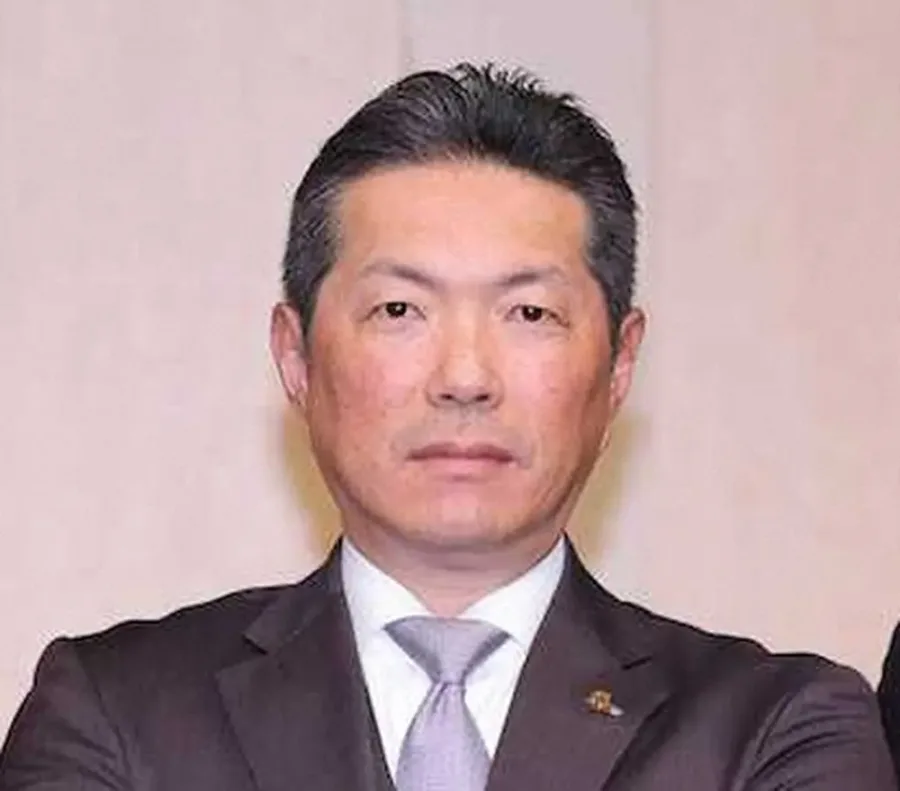
On August 11, 2026, news of a death swept through the business world. It was revealed that Hiroshi Okuda, former president of Toyota Motor Corporation and the first chairman of the Japan Business Federation (Keidanren), had passed away on August 8 due to old age. He was 93.
Upon hearing this news, the first title that likely came to mind for many business people was probably "the man who pushed Toyota to become number one in the world." That is a correct understanding. However, it is not enough. This is because the essence of the person known as Okuda lay in the fact that he remained a "foreign object" until the very end, both within the organization of Toyota and within the community of the Japanese business world.
He joined Toyota Motor Sales in 1955. While working in the accounting department, he clashed with his superiors and was assigned to Manila, Philippines, in the 1970s. It is said that, given the atmosphere within the company at the time, this was a personnel move bordering on demotion. That man became the president of Toyota in August 1995, standing at the top for the first time in 28 years as someone from outside the founding family. And at his inauguration, he declared: "I have the pride that if Toyota changes, Japan will change."
In this article, we will carefully trace, along with numbers and a timeline, what the manager Hiroshi Okuda destroyed, what he created, and what homework he left for Japan. This is not just the corporate history of one company, Toyota. It is a story about all of us—how Japanese companies faced, or failed to face, the "lost 30 years."
1. What the obituary conveyed
First, let us organize the facts reported by various media outlets.
Hiroshi Okuda passed away on August 8, 2026, due to old age. He was 93. The news of his death was reported simultaneously around August 11 by Kyodo News, the Nihon Keizai Shimbun, NHK, and others. The Nikkei Electronic Edition published a memorial article on August 12 titled "Toyota's Hiroshi Okuda Dies: Promoted Globalization, Laid the Foundation for the World's Largest Automaker."
His date of birth was December 29, 1932. He was born in Tsu City, Mie Prefecture. He graduated from the Faculty of Commerce at Hitotsubashi University in 1955 and joined Toyota Motor Sales that same year. At the time, Toyota had a two-company structure consisting of Toyota Motor Co., Ltd., which handled manufacturing, and Toyota Motor Sales Co., Ltd., which handled sales; the two companies merged to become the current Toyota Motor Corporation in 1982.
He became president in August 1995. He stepped down in June 1999 and subsequently served as chairman. He became the first chairman of the Japan Business Federation (Keidanren), which was established in May 2002 through the merger of Keidanren and Nikkeiren. His term lasted approximately four years, until May 2006.
If you only list his titles, he looks like a typical business leader who held top positions at major companies and economic organizations representing Japan. However, the substance of his career was far from typical.
2. From a boy in Mie to a debt collector in Manila
The first half of Mr. Okuda's career was the exact opposite of smooth sailing.
After graduating from Hitotsubashi University, he joined Toyota Motor Sales and worked in the accounting department. He was good with numbers and had a personality that would not overlook things that didn't make sense. While that is a virtue for an accountant, it is not necessarily a welcomed trait for an organization man in a large Japanese corporation. Clashes with his superiors continued, and around 1972, he was ordered to be stationed in Manila, Philippines.
Being stationed in Manila at that time had a completely different meaning than overseas assignments today. The Philippines in the early 1970s was politically unstable, coinciding with the period when martial law was imposed under the Marcos regime. The job given to Mr. Okuda was to turn around Delta Motors, a company that was assembling Toyota cars locally, and to collect overdue payments.
In other words, Mr. Okuda was not doing glamorous strategy planning at the Japanese headquarters; he was doing the job of collecting money from people who had fallen behind on payments in the field in Southeast Asia. Whether one calls this misfortune or a "crucible" changes how one evaluates him afterward. It is said that Mr. Okuda himself later described this period with the words, "Luck comes to those who work hard."
This experience determined the later management style of Okuda. It was not management that kneaded numbers in a conference room at the Japanese headquarters, but management that negotiated with the other party in the market field to collect payments. He was a manager who learned with his body the obvious principle of business: that not a single yen comes in unless the other party is convinced.
3. The man discovered by Shoichiro Toyoda
The turning point came in the late 1970s.
Shoichiro Toyoda, who was the vice president of Toyota Motor Co., Ltd. at the time, visited the local subsidiary in Manila. It is said that Shoichiro, who saw Mr. Okuda's work there, highly evaluated him, saying, "He is a truly interesting man." And in 1979, Mr. Okuda was called back to the headquarters.
This has two important meanings.
The first point is that Mr. Okuda was a 'non-founding family talent discovered by the founding family.' Although Toyota is a company with the Toyoda family at its apex, the founding family itself possessed the function of pulling in talent from outside the family. Mr. Okuda is a symbolic figure of this. It is likely because of this relationship that Mr. Okuda was later able to repeatedly speak frankly to the founding family.
The second point is that what Shoichiro valued was not 'practical ability' but 'interestingness.' There are plenty of excellent accountants at headquarters. Running around Manila to collect payments and sticking to one's principles even when clashing with superiors—Shoichiro saw that such a tangible human being was a necessary presence for the organization.
After returning to headquarters, Mr. Okuda climbed the ladder steadily. He became a director in 1982, a managing director in 1987, a senior managing director in 1988, and an executive vice president in 1992. Then, in August 1995, he assumed the position of president. The man who had been chasing down delinquent payments in Manila had become the head of Japan's largest manufacturing company.
4. August 1995, the year Japan lost the most confidence
We must remember what kind of year 1995 was, the year Mr. Okuda assumed the presidency.
In January, the Great Hanshin-Awaji Earthquake occurred. In March, there was the Tokyo subway sarin attack. In April, the yen surged to the 79 yen to the dollar range, dealing a devastating blow to export companies. Five years had passed since the collapse of the bubble economy, and there was not even a glimmer of a solution to the non-performing loan problem. It was the period when the country of Japan had lost the most confidence since the war.
Toyota was no exception. For the fiscal year ending March 1995, consolidated sales were 8.121 trillion yen, and consolidated operating profit was 255.7 billion yen. This resulted in an operating profit margin of about 3.1 percent, a level that was unsatisfactory for a leading Japanese manufacturer. The strong yen hit hard, exposing the weakness of a profit structure dependent on domestic production.
The first message Mr. Okuda delivered after becoming president in that situation is the quote introduced at the beginning.
'I have the pride that if Toyota changes, Japan will change.'
A president of a single company speaking about his company's transformation in connection with the transformation of the entire country. It might sound a bit exaggerated now, but considering the relationship between Toyota and Japan at the time, this was not an exaggeration but a declaration of responsibility. And Mr. Okuda would go on to put these words into action over the next four years.
5. The enemy called 'Mikawa Monroeism'
The first target Mr. Okuda aimed at was not an external enemy, but the internal atmosphere.
A Nikkei obituary describes Mr. Okuda's greatest achievement as 'revamping the inward-looking management style known as Mikawa Monroeism and steering toward globalization.' This term 'Mikawa Monroeism' is the key to understanding Toyota at the time.
Monroeism refers to the isolationist foreign policy advocated by the United States in the 19th century. It refers to a stance of not interfering in the affairs of other countries, while also demanding that others not interfere in one's own. Mikawa refers to the Mikawa region of Aichi Prefecture, where Toyota is based.
In other words, Mikawa Monroeism referred to a corporate culture in the company town centered on Toyota City, Aichi Prefecture, where things were decided solely by keiretsu, local ties, and internal logic, and changes in the outside world did not penetrate. Quality is the best in the world, the production system is the best in the world, so it is fine as it is. It is that kind of self-sufficient atmosphere.
Mr. Okuda described it as an atmosphere where 'you can get by without trying very hard.' Even while all of Japan was suffering from the collapse of the bubble, there was a complacency toward stability within Toyota. What Mr. Okuda tried to destroy was not the performance, but that very atmosphere itself.
It is said that at the press conference when his appointment as president was decided, Mr. Okuda made remarks to the effect that 'I respect the Toyoda family, but I will conduct personnel affairs fairly.' A person assuming the top position of a founding family company mentions the fairness of personnel affairs even before taking office. This was a significantly bold expression of intent.
He also set his hands on reviewing the seniority system. He shifted the criteria for executive personnel from seniority to ability and promoted the selection of young talent. The significance of Japan's largest manufacturer executing this in the mid-1990s, when many Japanese companies were talking about reviewing the seniority system but failing to do so, is not small.
6. Steering toward globalization
In parallel with destroying the inward-looking atmosphere, Mr. Okuda accelerated toward the outside.
He aggressively pushed for the construction of factories in the United States, Europe, and Asia. This was not merely an expansion of production capacity. As domestic production became unprofitable due to the strong yen, it was a shift in the very structure of manufacturing where products are made where there is demand. To create a corporate constitution that is not swayed by exchange rates, the only way is to complete production and sales within each currency zone. This was a decision typical of an executive who learned the reality of local business firsthand in Manila.
The effect is reflected in the numbers. When Mr. Okuda took office as president, the consolidated sales for the fiscal year ending March 1995 were 8.121 trillion yen. By the fiscal year ending March 2006, when he stepped down as chairman of the Japan Business Federation (Keidanren), consolidated sales had reached approximately 21 trillion yen, and consolidated operating profit had reached approximately 1.7 trillion yen. Global sales volume grew to 7.974 million units.
In 11 years, sales increased 2.6 times, and operating profit reached a level more than 6 times higher. Of course, this growth is not entirely the personal achievement of Mr. Okuda. It was made possible by the management of his successors, Fujio Cho and Katsuaki Watanabe, and the strength of the front lines. However, there is no doubt that Mr. Okuda was the one who made the first strike to set that direction, break the inward-looking atmosphere, and push the company outward.
And now, in the present. For the fiscal year ending March 2025, Toyota's consolidated sales reached 48.0367 trillion yen, and consolidated operating profit reached 4.7956 trillion yen. Compared to the fiscal year ending March 1995, this is a scale of approximately 5.9 times in sales and over 18 times in operating profit. Global sales volume for the Toyota and Lexus brands was 10.274 million units. Production consisted of 3.35 million units domestically versus 6.65 million units overseas, with the overseas production ratio reaching 66.5 percent.
This means that two-thirds of the production of a company once called the 'Mikawa Monroe Doctrine' is now overseas. This ratio clearly shows where the ship that Mr. Okuda steered in 1995 has been carried over the course of 30 years.
7. 1997, The Gamble Called Prius
The most widely known symbol of the Okuda era is the launch of the first-generation Prius.
The first-generation Prius was launched in December 1997. The price was 2.15 million yen, and the 10-15 mode fuel economy was 28.0 kilometers per liter. The development period is said to have been about four and a half years.
It is necessary to understand the meaning of these figures in the context of that time. In 1997, the fuel economy of gasoline vehicles in the same class was typically in the 10 kilometers per liter range. The figure of 28.0 kilometers per liter was something that skipped a step beyond common sense.
However, as a management decision, it was also an extremely dangerous gamble. The hybrid system is a collection of technologies that automobile companies did not previously possess: motors, batteries, engines, and the software to control them in coordination. Development costs were enormous, and at a price of 2.15 million yen, it was clearly not profitable. The largest automaker in Japan released a product that lost money the more it was sold.
Furthermore, the launch timing of December 1997 has another meaning. In the same month, the third session of the Conference of the Parties to the United Nations Framework Convention on Climate Change, known as COP3, was held in Kyoto, and the Kyoto Protocol was adopted. In the same month that the world began to seriously steer toward reducing greenhouse gases, the world's first mass-produced hybrid passenger car was released from Japan.
Whether this was a coincidence or an intended timing is a matter of debate. However, as a result, Toyota ended up monopolizing the position of 'the manufacturer leading the world in environmental technology' for a quarter of a century.
The fruits of that continue to this day. In the fiscal year ending March 2025, Toyota and Lexus electrified vehicle sales reached 4.732 million units, accounting for 46.1 percent of the total. It is calculated that about half of all Toyota vehicles sold worldwide are electrified in some form. As the trend toward pure electric vehicles shows a backlash, the fact that Toyota has continued to refine the hybrid option for nearly 30 years has, in the end, become its greatest strength.
The decision to bring it to market in 1997, despite being prepared for losses, is supporting profits in the 2020s. In terms of the length of the time horizon for management decisions, there are not many examples as easy to understand as this.
8. 1999, F1 Participation and Shareholder-Oriented Management
In 1999, his final year as president, Mr. Okuda made two more moves.
One was the announcement of participation in F1. In a press conference held in Minato Ward, Tokyo, in January 1999, Mr. Okuda revealed Toyota's entry into F1. This was not merely a motorsport activity; it had an aspect of cultural policy, dragging an inward-looking corporate culture into the arena of the world's highest-level competition. Placing himself in a position where he would be constantly asked about results in front of the world's media can be said to be the most understandable declaration of war against the Mikawa Monroe Doctrine.
The other was shareholder-oriented management. For Japanese companies in the late 1990s, the concept of shareholder-oriented management was a newly imported value. At a time when many executives were defending the Japanese-style management of 'employees and business partners first, shareholders second,' Mr. Okuda placed dialogue with the capital markets at the center of his management.
This shift was quite heretical at the time. However, if a company is to build factories overseas, raise funds overseas, and have overseas investors hold its shares, it cannot escape accountability to shareholders. Globalization and shareholder orientation were, for Mr. Okuda, two sides of the same decision.
At the same time, during this period, Mr. Okuda had also become a figure viewed with caution by the world. A memorial article in the Nikkei noted that as global sales grew rapidly, the content of his statements was constantly watched by the U.S. auto industry, with people asking, 'What did Okuda say?' During the U.S.-Japan automotive negotiations, there was even an issue where wiretapping of Mr. Okuda and others was discovered.
Statements made by the head of a single Japanese company became a subject of monitoring for industries in other countries. This means that Mr. Okuda had already become a figure in international politics as a business leader.
9. 2002, The Merger of Keidanren and Nikkeiren
Mr. Okuda, who stepped down as president to become chairman in June 1999, shifted the focus of his activities to the entire business community.
The culmination of this was the inauguration of the Japan Business Federation (Nippon Keidanren) on May 28, 2002. Mr. Okuda became the first chairman of the new organization, which was born from the merger of the Japan Federation of Economic Organizations (Keidanren) and the Japan Federation of Employers' Associations (Nikkeiren).
This merger had a significance that went beyond mere organizational restructuring. Until then, Keidanren had handled industrial policy and trade issues, while Nikkeiren had handled labor issues and wage negotiations separately. Merging the two meant creating a system that would treat 'industrial issues' and 'employment issues' as a single entity rather than separating them.
The greatest challenge facing Japanese companies in the 1990s lay precisely at that intersection. If labor costs were suppressed to maintain international competitiveness, consumption would cool and deflation would deepen. If employment were protected, companies would become unable to move. Without an organization capable of handling this dichotomy, the business world could not make unified policy recommendations.
Behind Mr. Okuda's leadership in the merger was a clear intention that the Japanese business community should become a substantive party in the policy-making arena. From an organization that issues requests to a party that creates policy—Nippon Keidanren changed its character during this period.
'Dynamism of diversity' and 'empathy and trust.' These were the principles upheld at the time of its inauguration. The idea of drawing strength from diversity, rather than being a community solidified by a single set of values, is a way of thinking characteristic of a business leader who broke the 'Mikawa Monroe Doctrine.'
And the breadth of his overseas connections supported this position. According to a Nikkei obituary, Mr. Okuda had close ties with figures such as former U.S. Treasury Secretary Robert Rubin and Russian President Vladimir Putin. He was a business leader who could speak directly to the international community, rather than just a domestic coordinator. It was because of this internationalism and capability that he was appointed as the first chairman.
10. January 2003, The Content of the Okuda Vision
The core of Mr. Okuda's work as chairman of Nippon Keidanren was the long-term vision published in January 2003, titled 'Aiming for a Japan Full of Vitality and Appeal.' It is known as the Okuda Vision.
This concept, which looked 22 years ahead from that time to 2025, was groundbreaking in that it squarely addressed population decline. Here is a summary of the main recommendations.
Regarding the consumption tax, he proposed that the tax rate, which was 5 percent at the time, should be raised to 16 percent. For the head of the business world to advocate for a tax increase seems surprising given the general image of business groups as profit-oriented organizations. However, Mr. Okuda's logic was clear: to sustain social security, financial resources are needed. Without financial resources, neither companies nor the country can function. Therefore, his argument was not to run away from the discussion of the burden.
Regarding the acceptance of foreign labor, he proposed expanding acceptance, including permanent residency, as a response to population decline and labor shortages. In 2003 Japan, the fact that a top business leader openly proposed a policy close to immigration had significant weight. At the time, this drew considerable criticism.
Regarding corporate tax, he called for a review of the tax burden with an emphasis on the international competitiveness of companies. Regarding social security, he indicated the idea of reforming expenditures and revenues in an integrated manner and setting the consumption tax as the main source of revenue. Measures to combat the declining birthrate were also regarded as important as a foundation for future labor and social security.
According to the Nikkei obituary, the number of recommendations compiled during the four years Mr. Okuda served as chairman reached approximately 200. That is a pace of 50 per year. This volume is evidence that the business organization was seriously trying to become a party to policy formation.
11. 'Japan is a Runner Lapped by Others'
Among Mr. Okuda's words, this phrase is the most frequently cited.
'Japan is a runner lapped by others. The reason deflation remains serious is that structural reform has not progressed.'
The Nikkei obituary notes that Mr. Okuda continued to sound this alarm immediately after taking office as chairman of Nippon Keidanren.
The expression 'a lap behind' has two implications. One is the recognition that Japan has not fallen off the global track, but is lagging behind while running on the same track. The other is the point that it is most dangerous to be running without realizing that you are lagging behind.
Japan from 2002 to 2003 was in the final phase of dealing with non-performing loans. Deflation was severe, stock prices were sluggish, and companies were curbing both capital investment and hiring. In that situation, for a top business leader to publicly declare that 'Japan is lagging behind' was also a criticism of the group to which he belonged.
Mr. Okuda repeated this. The Nikkei's obituary notes that his outspoken words and actions stimulated and influenced Japanese corporate executives who were tired of the prolonged recession and had lost confidence.
Words do not move the economy. However, words can change the attitude of executives, that attitude can change investment decisions, and investment decisions can move the economy. The role Mr. Okuda played was of that kind.
12. Running alongside the Koizumi reforms
Mr. Okuda's time as chairman of the Japan Business Federation (Nippon Keidanren) almost overlaps with the period of the Junichiro Koizumi administration.
The 'from government to private sector' path advocated by Prime Minister Koizumi and Mr. Okuda's structural reform theory were in the same direction. As a private-sector member of the Council on Economic and Fiscal Policy, Mr. Okuda was directly involved in the policy-making process. The Nikkei's obituary notes that Mr. Okuda had a strong pipeline to Prime Minister Koizumi and had influence over policy decisions as a private-sector member of the Council on Economic and Fiscal Policy, which served as the driving force for reform.
The Council on Economic and Fiscal Policy is a deliberative body established within the Cabinet Office, where the Prime Minister serves as chair, and cabinet ministers and private-sector members discuss the basic policies for economic and fiscal management at the same table. Private-sector members submit original policy drafts, which are then decided by the Cabinet as the 'Basic Policies for Economic and Fiscal Management and Structural Reform.' This process was different from the way policy had been formed in Japan until then.
Previously, it was common for each ministry to create a draft, for 'zoku' (tribe) politicians and industry groups to coordinate it, and for it to be finally endorsed by the Cabinet. In this new process, private-sector members were involved from the beginning and debated directly with the Ministry of Finance and the Ministry of Health, Labour and Welfare. Mr. Okuda was one of the main players in this new circuit.
Mr. Okuda also supported symbolic policies of the Koizumi reforms, such as the privatization of the postal services. Regarding the disposal of non-performing loans, he also took the position of demanding strict handling for the normalization of the financial system and corporate revitalization.
During this period, the Japan Business Federation revived the mediation of political donations based on policy evaluation. Keidanren had stopped mediating corporate donations in 1993, but it resumed based on the Okuda Vision, creating a mechanism to encourage member companies to donate after evaluating the policies of each political party.
There was strong criticism of this from the time. It was pointed out that behind the pretext of promoting policy-oriented politics, it was a move to strengthen influence over policy through corporate donations. This criticism has a legitimate basis. Because the business world becoming a party to policy formation is always adjacent to the danger that its influence will be exercised outside of democratic procedures.
The reason Mr. Okuda's evaluation does not become a simple heroic tale is because of this part. The will to advance reform and the exercise of political influence as a means to that end. These two cannot be discussed separately.
13. 23 years since the Okuda Vision: What was realized and what was not
23 years have passed since the Okuda Vision was published, as of today in 2026. I will examine what happened in Japan afterward to the contents proposed at that time.
Regarding the consumption tax, the increase to 16 percent has not been realized. In reality, it was raised in stages: to 5 percent in 1997, 8 percent in 2014, and 10 percent in October 2019, and it remains at 10 percent today. It remains at about two-thirds of the level Mr. Okuda thought was necessary in 2003.
Regarding the acceptance of foreign labor, it has progressed more than when it was proposed. The system has been gradually developed, with the expansion of the Technical Intern Training Program, the creation of the Specified Skilled Worker system in 2019, and the transition to the Training and Employment system. However, it is still a distance from the 'full-scale acceptance including permanent residency' that Mr. Okuda advocated.
Measures against the declining birthrate have not been as effective as proposed. The number of births in Japan continues to decline, and the situation is more severe than the demographics assumed by the Okuda Vision.
The integrated reform of social security and tax saw some progress following the three-party agreement in 2012. However, it has not reached the scale and speed assumed by the Okuda Vision.
On the other hand, some things have been realized. The strengthening of the business world's policy-dissemination power through the merger of Keidanren and Nikkeiren has taken root. The idea of corporate social responsibility was also a novel concept at the time, but it is now incorporated into the management of listed companies. The fact that fiscal consolidation and structural reform were placed at the center of the policy agenda is also a legacy of this period.
In summary, Hiroshi Okuda's tenure as chairman of Keidanren was a period when the business community advanced from being a "request-making economic organization" to a "substantive player in policy formation." While he succeeded in expanding influence on the institutional side, it is a fair assessment to say that he left the three fundamental issues of social security, tax systems, and population for the next generation to solve.
In other words, the Okuda Vision remains largely unsubmitted as homework for Japan from 23 years ago.
14. Organizing Hiroshi Okuda's Management Philosophy into Three Points
I will organize the philosophy left behind by Mr. Okuda into three points.
The first is the recognition that "stability is the greatest risk." His attempt to break the 'Mikawa Monroe Doctrine' and his hostility toward the atmosphere of being able to get by without much effort both stem from this recognition. Reform is not done because performance is bad. It is about breaking the complacency that arises from good performance while performance is still good. This is a reform that can only be executed during favorable times, which is why most managers cannot execute it.
The second is the time axis of "investing before profits are made." The 1997 Prius was clearly a product that did not make financial sense. F1 participation also does not provide direct revenue. Building overseas factories also takes decades to recover the investment. In an era where management is discussed in the rhythm of quarterly earnings, Mr. Okuda continued to make decisions to build a revenue structure for 20 years later. The current state, where electric vehicles account for 46.1 percent of sales in the fiscal year ending March 2025, is an extension of the decision made in 1997, which was prepared for losses.
The third is the "courage to criticize the group to which one belongs." While becoming the president of a founding family company, he advocated for fairness in personnel; while becoming the head of the business community, he said "Japan is a lap behind"; and while leading a corporate organization, he advocated for consumption tax hikes and the acceptance of foreigners. All of these were claims that were highly likely to receive backlash from his own support base.
I believe this third point is what characterizes Mr. Okuda the most. People who succeed within an organization usually do so by embodying the values of that organization. Mr. Okuda was the opposite. A "foreign body" who had been collecting arrears in Manila stood at the top as a foreign body and continued to speak as a foreign body.
15. The Okuda Era Seen from Toyota 30 Years Later
I will conclude with numbers.
In the fiscal year ending March 1995, when Mr. Okuda became president, Toyota's consolidated sales were 8.121 trillion yen, and consolidated operating profit was 255.7 billion yen.
For the fiscal year ending March 2025, Toyota's consolidated sales are 48.0367 trillion yen, and consolidated operating profit is 4.7956 trillion yen. Sales have become approximately 5.9 times higher, and operating profit has exceeded 18 times the level.
Global sales for the Toyota and Lexus brands are 10.274 million units. For the 2025 fiscal year, 10.48 million units are expected. Production is 3.35 million units domestically versus 6.65 million units overseas, with an overseas production ratio of 66.5 percent. Electric vehicle sales are 4.732 million units, a ratio of 46.1 percent.
It is not fair to attribute all of these figures to Mr. Okuda's achievements alone. After Mr. Okuda, management was passed on to Fujio Cho, Katsuaki Watanabe, and then Akio Toyoda and Koji Sato, and they have overcome trials such as the crisis after the Lehman Shock and quality issues.
However, as of 1995, Toyota, which relied on domestic production, was at the mercy of the strong yen, and was complacent in an inward-looking atmosphere, would likely not have reached these figures on the same trajectory. What Mr. Okuda did was not growth itself, but a transformation into a constitution capable of growth. It was his successors who steered the ship, but it was Mr. Okuda who turned the rudder.
16. "The 21st Century Cannot Be Discussed as an Extension of the 20th Century"
The Nikkei obituary introduces these words from Mr. Okuda.
"The 21st century will be an era that cannot be discussed as an extension of the 20th century."
If this statement was made around 2003, it was surprisingly accurate. You can see this by lining up what Japan and the world have experienced in the quarter-century since. The Lehman Shock, the Great East Japan Earthquake, the COVID-19 pandemic, the invasion of Ukraine, the emergence of generative AI, and the structural transformation of the automotive industry itself. There is almost nothing left that can be explained by the common sense of the 20th century.
What Mr. Okuda warned about was not simply that "change is coming." It is that "a change is coming that cannot be handled by improving the way things have been done so far." If it is a change that can be handled by improvement, Toyota is the company best at it in the world. To the extent that the word 'Kaizen' has become an English word. But Mr. Okuda said there are areas that improvement cannot reach.
That is precisely why Mr. Okuda chose destruction over improvement. He broke the Mikawa Monroe Doctrine, dismantled the seniority system, launched the Prius while prepared for losses, merged Keidanren and Nikkeiren, and proposed then-taboo topics like tax hikes and immigration.
Nikkei commentator Atsushi Nakayama, the author of the obituary, concludes his article with this: How would Mr. Okuda change Japan from here on out?
I took this not as a standard phrase for an obituary, but as a serious question. This is because Japan in 2026 has yet to solve most of the issues Mr. Okuda pointed out in 2003.
17. What we should inherit
What can today's business professionals learn from the executive Hiroshi Okuda?
The first is the value of a stagnant career period. Mr. Okuda's time in Manila was clearly a side track within the company. However, the on-site intuition and negotiation skills he acquired there became the foundation for his later management. People who have had a smooth career path cannot see the atmosphere that needs to be broken. Only those who have experienced being outside that atmosphere can see it.
The second is the difficulty of taking action when things are going well. Mr. Okuda's reforms were not carried out because Toyota was on the verge of collapse. It was precisely because Toyota was strong enough that he went to break the complacency born of that strength. Many companies only start reforms after their performance has deteriorated. By then, they no longer have the strength left for reform.
The third is the value of voicing dissent from within the group to which you belong. Anyone can criticize from outside an organization. To deny the common sense of an organization from within, and from the position of the top leader—that is what Mr. Okuda did repeatedly.
And the fourth. The homework Mr. Okuda assigned in 2003 is still sitting on Japan's desk. Population decline, the sustainability of social security, the tax system, and the acceptance of foreign workers. The issues he said to "start working on immediately" 23 years ago remain exactly as they were 23 years later.
Mr. Okuda said, "Japan is a runner a lap behind." In the 23 years since then, how many laps have we managed to make up?
18. In conclusion
Hiroshi Okuda was born in Tsu City, Mie Prefecture, in 1932, and passed away on August 8, 2026, at the age of 93. After graduating from Hitotsubashi University, he joined Toyota Motor Sales, clashed with his superiors, and went to Manila, where he was discovered and eventually rose to the top of Japan's largest manufacturer in 1995.
He spent those four years breaking the atmosphere of the organization he grew up in. He left it to his successors to decide what to build in the space he cleared. The same applies to his four years as chairman of the Japan Business Federation (Keidanren). He left behind about 200 proposals, most of which he left as homework for this country.
The person who breaks things is different from the person who builds them. Mr. Okuda was clearly on the side of the breakers. That is why his achievements do not remain in a visible form as a building. What remains are the things built on the vacant lots after they were cleared, and the places that remain as vacant lots.
Toyota built the former. With 48 trillion yen in sales, over 10 million units in global sales, and an overseas production ratio of 66.5 percent, the company is a building constructed on the vacant lot Mr. Okuda cleared.
Japan remains the latter. Population, social security, tax systems, and labor force—the issues Mr. Okuda pointed out 23 years ago remain in a state close to an empty lot.
"I have the pride that if Toyota changes, Japan will change."
These are words from 1995. Toyota has changed. Japan has not yet fully changed.
What the news of Mr. Okuda's passing confronts us with is not words of mourning, but the fact that the deadline for submitting that homework has long since passed.
I pray for his soul to rest in peace.
References and Sources
Nikkei, "Toyota's Hiroshi Okuda Dies: Promoted Globalization and Laid the Foundation for the World's Largest Automaker" (August 12, 2026, Staff Commentator Atsushi Nakayama)
https://www.nikkei.com/Nikkei, "Hiroshi Okuda Dies at 93; Served as Toyota President and Keidanren Chairman" (August 11, 2026)
https://www.nikkei.com/Toyota Motor Corporation, "Financial Results for the Fiscal Year Ended March 31, 2025 [IFRS] (Consolidated)"
https://global.toyota/pages/global_toyota/ir/financial-results/2025_4q_summary_jp.pdfToyota Motor Corporation, "Financial Results Presentation for the Fiscal Year Ended March 31, 2025" (Production/Sales Volume, Electrified Vehicle Ratio)
https://global.toyota/pages/global_toyota/ir/financial-results/2025_4q_presentation_jp.pdfToyota Motor Corporation 75-Year History, "Trends in Income Statements" (Consolidated Net Sales and Operating Income for the Fiscal Year Ended March 1995)
https://www.toyota.co.jp/jpn/company/history/75years/data/company_information/management_and_finances/finances/income/1988_02.htmlToyota Motor Corporation, "Annual Report 2006" (Consolidated Financial Results for the Fiscal Year Ended March 2006)
https://www.toyota.co.jp/pages/contents/jpn/investors/library/annual/pdf/2006/ar06_j.pdfToyota Motor Corporation, Financial Results Presentation (May 10, 2006, Specifications of the First-Generation Prius and Hybrid Vehicle Sales Performance)
https://global.toyota/pages/global_toyota/ir/financial-results/archives/en/May_10_2006_presentation.pdfToyota Motor Corporation 75-Year History, "Leaping Forward as a Global Corporation" (Economic Organization Activities, Japan Business Federation Related)
https://www.toyota.co.jp/jpn/company/history/75years/text/leaping_forward_as_a_global_corporation/chapter3/section1/item3.htmlJapan Business Federation (Keidanren), "Keidanren Times," June 1, 2002 Issue (Inauguration of Nippon Keidanren)
https://www.keidanren.or.jp/japanese/journal/times/2002/0601/01.htmlJapan Business Federation (Keidanren), Reports and Commentary on "Aiming for a Japan Full of Vitality and Appeal" (Okuda Vision, January 2003)
https://kokuminrengo.net/old/2003/200302-okd-v.htmWikipedia, "Hiroshi Okuda" (Verification of Career Timeline)
https://ja.wikipedia.org/wiki/奥田碩PRESIDENT Online, "The Management of Toyota's Hiroshi Okuda" (Circumstances of Appointment as President, Details of Reforms)
https://president.jp/articles/-/3442Gentosha Gold Life Online (Manila assignment and the background of his appointment by Shoichiro Toyoda)
https://www.gentosha.jp/article/22579/Response.jp(Episodes from his time in the Philippines)
https://response.jp/feature/2002/0809/iot_yy0809_01_02.htmlCar Watch 'Toyota Fiscal Year Ending March 2025 Financial Results' (Global sales volume, electrified vehicle sales volume)
https://car.watch.impress.co.jp/docs/news/2012691.html
*This article is based on public documents from Toyota Motor Corporation and the Japan Business Federation (Keidanren), as well as reports from various media outlets. The figures are as published at the time of each report, and caution should be exercised when making simple year-over-year comparisons due to changes in accounting standards (such as the transition from Japanese GAAP to IFRS).