Japanese cinema possesses great charm and the presence of wonderful directors.
Akira Kurosawa in particular can be called the greatest film director on this planet, but he is by no means the only master director Japan has produced. Yasujiro Ozu, Hayao Miyazaki, Kenji Mizoguchi, Kon Ichikawa, and others have contributed to the film world by creating overwhelming masterpieces such as "Tokyo Story," "Seven Samurai," and "My Neighbor Totoro."
From the silent era through the golden age of post-war cinema, to the provocative 1960s New Wave with its punk rock spirit, and the explosive hits of animated works, many of these films have come to exert great influence in America and Europe. Tarantino and Scorsese are huge fans and ambassadors of Japanese cinema, and Godzilla continues to roar as a major Hollywood blockbuster.
Nowadays, time performance is prioritized, people can no longer endure two-hour films, and only animated movies occupy the top of the "moving film rankings." Similar stories, similar emotions. Where have aesthetics and nobility gone?
It is self-evident that the beauty of Japanese cinema is fading, albeit little by little. I sincerely pray that the users who read this will take more interest in Japanese cinema.
I will write this just in case, but please understand that this is merely a "Top 50." It is not ranked.
※ This time, we will post the first part, from 50 to 25. Please look forward to the second part.
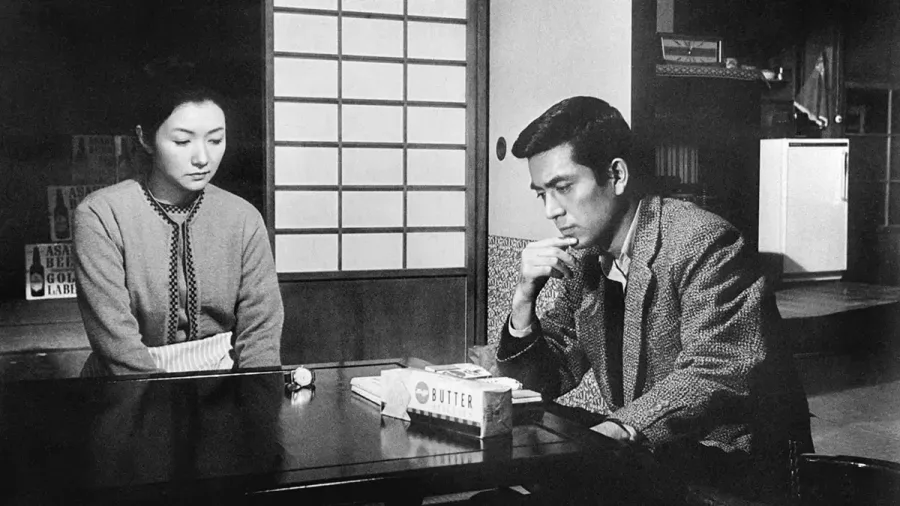
50. "Yearning" (1964, Mikio Naruse)A masterpiece melodrama from Naruse's later years, starring Hideko Takamine as the heroine Reiko, and Yuzo Kayama as the brother-in-law who harbors feelings for her.
The screenplay was written by Takamine's husband, Zenzō Matsuyama.
Mikio Naruse is often called a master of "melodrama" and "women's films." He does not have the flashy direction of Akira Kurosawa, nor the unique style, Japanese formal beauty, or dynamism of Yasujiro Ozu or Kenji Mizoguchi, but he is said to be a director whose subtle nuances of everyday commoners' hearts, the delicate acting of his actors—often called "the art of the gaze"—and his direction of movement stand out. It is a work with the beauty of passion, where we have no choice but to hold our breath at the vortex of extraordinary emotions contained in the final cut.
A drama that chronicles the lives of a family forced to live apart, contrary to their love for their hometown.
Director Naomi Kawase has been under fire since 2022 due to allegations of violent behavior on set. However, Kawase remains a rare female film director in a male-dominated film culture and a source of unique inspiration. She broke through by using documentary techniques to depict a family deteriorating due to stalled industrial development in a logging village in Nara. She became the youngest person in history to win the Caméra d'Or, awarded to debut directors at the Cannes Film Festival.
A sci-fi thriller in which director Shinya Tsukamoto, based on his 1986 short film "The Phantom of Regular Size," depicts the desperate battle of a man whose body is being eroded by iron through nightmarish imagery. It attracted attention by winning the Grand Prix at the 9th Rome International Fantastic Film Festival, and instantly made Director Tsukamoto's name known to the world.
In a word, it is a work that depicts the evil sexuality woven by flesh and metal. It can be said to be the most cruel expression of Japanese cyberpunk. Shinya Tsukamoto vividly captures the disturbing changes that occur to an unnamed salaryman whose body is gradually dominated by metal, using high-contrast 16mm black-and-white film. While the sequel did not live up to expectations, the first film reigns as an underground masterpiece.
A film adaptation of a 13th-century picture scroll. It tells the story of a noble warrior who, in the aftermath of a violent coup, becomes obsessed with a woman he swore to protect. Creeping toward a suspenseful and tragic climax, this film fuses Shakespearean drama with rich color cinematography, lavish costumes, and intricate sets. It foreshadows the birth of Akira Kurosawa's masterpiece "Ran," released about 30 years later.
It was Daiei's first full-color film using Eastman Color, produced by Masaichi Nagata. The screenplay was adapted and directed by Teinosuke Kinugasa of "Gate of Hell" fame, based on Kan Kikuchi's original work "Kesa no Ryojin." The cinematography was handled by Kohei Sugiyama of "Asama no Karasu," the music director was Yasushi Akutagawa of "Zoku Shishunki," and the art director was Kisaku Ito. The cast includes Kazuo Hasegawa of "Hana no Kenkajo," Machiko Kyō of "Ani Imōto (1953)," Yataro Kurokawa, Ryosuke Kagawa, and Kanji Koshiba of "Suna-e Jubaku (1953)," Tatsuya Ishiguro of "Yudachi Kangoro," Koreya Senda of "Minami Jūjisei wa Itsuwarazu," and Jun Tazaki of "Bara to Kenju."
Director Teinosuke Kinugasa is also known for the silent horror film "A Page of Madness," released in 1926. This film is one of the great works from the early history of Japanese cinema for which the film still exists, and Kinugasa has won two Academy Awards.
A unique yakuza film directed by the eccentric Seijun Suzuki during his Nikkatsu era in 1966, starring Tetsuya Watari in his second year since debut. In this work, the punk energy of Seijun Suzuki, a man who filmed with joy and excitement, is vibrant. It is like the film "Le Samouraï" after being "heavily intoxicated" with shots of Jägermeister. Starting as a super-powerful yakuza film, it probably doesn't mean much, and halfway through, it literally takes on all colors from black and white. In the vivid visuals, what we see are ridiculously cool, "Austin Powers-esque" nightclubs and hideouts in Otsuka. (Though this is also not important) The plot is about a yakuza hitman who was trying to go straight being chased by a rival gang. Filmed over several weeks without rehearsals, this work was born from its disjointed spontaneity. It can be called a violent explosion of cinematic chaos. Chieko Matsubara plays the lover Chiharu, with Hideaki Nitani and Tamio Kawachi co-starring. Known for its innovative visual beauty called "Seijun Aesthetics," it is highly acclaimed not only in Japan but also overseas, and is known for director Damien Chazelle paying homage to it in "La La Land." A 4K digital restored version was released in 2024.
45. "The Ballad of Narayama" (1983, Shohei Imamura)It is based on the short story of the same name, 'The Ballad of Narayama' by Shichiro Fukazawa.
The setting is a deep, cold mountain village in Shinshu. In this village, there was a rule that all elderly people who reached the age of 70 must go to Mount Narayama in the winter. While this meant death, it was done to protect the future of the impoverished village. In the home of Tatsuhei, who lost his wife, lives his 69-year-old mother, Orin. Orin is not the least bit afraid of going to Mount Narayama, but Tatsuhei, who loves his mother, carries a painful heart.
Long before Dignitas (a Swiss organization that advocates for the right to die through euthanasia and actually assists in suicide with doctors and nurses) began its activities, it is said that Japan had a custom of abandoning the elderly called 'Ubasute,' where those over 70 would climb (or be made to climb) to the summit to wait for death.
There are two masterpiece films based on the novel 'The Ballad of Narayama,' which has the theme of abandoning the elderly. Although social welfare has advanced, there is perhaps no film that makes a stronger plea for an elderly woman facing death than the later version by Shohei Imamura (the gloomy, Kabuki-style version by Keisuke Kinoshita is also worth seeking out). This work won the Palme d'Or, beating out Scorsese's 'The King of Comedy,' Bresson's 'L'Argent,' and Oshima's 'Merry Christmas, Mr. Lawrence.' That is proof that it is a philosophical and memorable work. It is a piece worthy of being framed.
Based on the original work by Shohei Ooka, adapted by the 'Odd Obsession (1959)' duo Natto Wada and directed by Kon Ichikawa, it depicts soldiers driven to starvation on Leyte Island. The cinematography is by Setsuo Kobayashi of 'Daishin Nikki.' Kon Ichikawa's anti-war films are devastatingly bleak. This is true even before cannibalism appears. You feel exhausted after watching it. It is likely close to the feelings of the wounded infantryman who appears in the film. While enduring hunger and wrapped in rags, he walks briskly through the scorched earth of Leyte Island. This sight can be said to be a symbol of the defeated soldiers and the degradation of morality in war. Ichikawa's reputation is always a step or two lower than those like Kurosawa or Ozu. However, this film, which mercilessly and philosophically adapted Shohei Ooka's novel, proves once again that he deserves to be among his predecessors.
However, the film company that planned this work would likely not agree, because they were expecting an action movie.
A film adaptation of the short story 'Drive My Car' from Haruki Murakami's short story collection 'Men Without Women,' directed and written by Ryusuke Hamaguchi, who won the Silver Bear at the Berlin International Film Festival for 'Wheel of Fortune and Fantasy.' It is a work where Ryusuke Hamaguchi, a rising star in the Japanese film industry, modestly fuses Chekhov and Haruki Murakami. It was the first Japanese film to be nominated for the Academy Award for Best Picture and contributed to making the 'Saab 900,' which appeared in the film, cool again.
Watching a movie is like going on a small journey. Director Hamaguchi's work is an endless journey. When you finish watching it, you are struck by a strange sensation, as if you have arrived home, yet it is still continuing. It is a work that drew me in immediately from the opening, which starts with the protagonist's face, reminiscent of a Rene Magritte portrait that has lost its face.
A theater director who lost his wife visits Hiroshima to direct a performance of 'Uncle Vanya.' Due to difficult car insurance, the young Misaki is assigned as his local driver. The bond that follows would be sweet and predictable in the wrong (i.e., Hollywood) hands, but what Hamaguchi captured is the complexity of human beings and the conflicting desires for loneliness and connection. A moving story that combines art, grief, and healing, it gradually expands.
The fourth film directed by Takeshi Kitano, who also starred under the name Beat Takeshi, is a violent drama that depicts, with a detached rhythm and unique humor, a yakuza sent to Okinawa as a reinforcement who gets caught up in a fierce conflict. Takeshi Kitano (Beat Takeshi), who is active as a comedian, actor, and film director, was once called the successor to Akira Kurosawa. Looking back now, I think that might be an exaggeration, but he has left a vivid mark on Japanese cinema with his detached and often strangely humorous depictions of the underworld.
This is likely his most reflective, dark, and interesting yakuza film. For the yakuza, Kitano created a desolate spiritual paradise in Okinawa. Needless to say, it would end up overflowing with violence...
This could be called Samuel Beckett with a bullet.
The first work produced by Ryuzo Kikushima, co-writer of 'The Birth of Japan,' based on his own screenplay, depicting the public and private lives of a bar madam. Hideko Takamine stars and is also in charge of costumes. Directed by Mikio Naruse of 'The Kotan Symphony' and filmed by Masao Tamai of 'Kaoyaku to Bakudan Musume.' It is a work cited by the late Shinji Aoyama as one of his all-time top three Japanese films. I expected him to choose something like 'Floating Clouds' or 'Repast' if it were a Mikio Naruse film, but he brought this work, which, like 'Floating Clouds,' stars Hideko Takamine and Masayuki Mori. One cannot help but groan at the sureness of the discerning eye of Shinji Aoyama, a rare connoisseur.
Mikio Naruse's social melodramas are not as highly acclaimed overseas as those of his contemporaries like Kurosawa and Ozu. However, Naruse's 'When a Woman Ascends the Stairs' is a masterpiece and deserves as much attention as their works.
This film depicts the surface story of a young widow struggling to find her own happiness after her husband's death while cherishing his memory, with a graceful touch, while the ending is depicted as bleak. A development that makes you want to pump your fist in the air is a hallmark of his.
It is a masterpiece that coolly depicts the deception between men and women against the backdrop of a beautifully refined Ginza system, including expensive entertainment settings through credit, the separation of capital and management, and the hierarchy within the store with the mama at the top. The screenplay, direction, and cinematography are all excellent, and of course, the wonderful acting and demeanor of Hideko Takamine go without saying. However, as for me, I would like to mention the sound technology of this film as a notable element. The music is by Toshiro Mayuzumi, and one can clearly see the influence of the French film 'Elevator to the Gallows,' produced two years earlier. However, the Perspecta Stereo system used in this work, unlike current full stereo, could not make multiple sounds stereo at the same time. Therefore, the dialogue is concise, the sound effects are minimal, and the incidental music is emotional, with each being selected and vividly composed to prioritize the sound of each scene. This alone is a work worth seeing in a theater.
A mystery drama based on the novel of the same name by Tsutomu Minakami, adapted by Naozuyuki Suzuki of 'Shark' and directed by Tomu Uchida of 'Miyamoto Musashi: Duel at Ichijoji Temple.' Cinematography is by Hanjiro Nakazawa of 'Robo no Ishi (1963).' It adopted the 'Toei W106 method,' which involves blowing up from 16mm, contact printing of negative and positive images, and intentional exposure during development. Although it was scheduled to be released on December 27, 1964, it was postponed to January 15 of the following year due to production delays, and was released as a double feature with 'Ano Kumo ni Utaou.'
A story about a trio of robbers who went missing at the same time due to a terrible storm and the capsizing of a passenger ship. It is a work that fuses the grand Golden Age with the formal experiments of the Japanese New Wave. Unfortunately, it has remained underrated overseas and was finally released in the West in 2022. However, in Japan, its status is more secure. It was voted the third greatest Japanese film in a poll conducted by 'Kinema Junpo' in 1999.
The profound monochrome visuals coldly reflect the tragedy of people who tried to live their lives to the fullest while gasping in the chaos and poverty of the post-war period, resulting in a solid work that bursts with authentic suspense and human drama. The final confrontation, where the tenacity of an elderly detective over ten years corners a criminal with an unimaginable background, is a highlight. I feel that the 'strait' still exists today, and I am chilled by its timeless thematic nature.
It depicts a tanker driver who, drawn to a beautiful widow of a run-down ramen shop, helps her make that ramen shop the best in town, mixing in bizarre food-related episodes. The screenplay and direction are by Juzo Itami of 'The Funeral,' and the cinematography is by Masaki Tamura of 'Fire Festival.' This work by Juzo Itami, also called a 'Ramen Western,' is a 'derailment' comedy that weaves together food and sex. Even decades later, it feels sweet, lovely, and insane. With the story of a Japanese ramen shop and the people who intersect there as the main axis, short side stories unfold like Robert Altman's 'Short Cuts.' Itami infused this work with American-style quirky humor and sexual taboos throughout. In particular, his emphasis on the erotic use of raw eggs is famous.
39. "The Night of the Women" (1961, Kinuyo Tanaka)Based on Masako Ryo's "Michi Aredo" (Though There Is a Way), adapted by Sumie Tanaka of "Women's Hearts" fame, and directed by Kinuyo Tanaka of "The Wandering Princess," this is a social drama. The cinematography is by Asao Nakai of "When We Part." Just as there are still far fewer female filmmakers than men today, Japan has long been a patriarchal society. Within that, Kinuyo Tanaka, who had been active as an actress since the 1920s and started her directing career in the 1950s, established her position as a filmmaker by producing six works. However, behind the scenes, she faced criticism, and her former collaborator Kenji Mizoguchi even resisted her ambitions as a director.
Among her works, my top recommendation is the delicate social drama "The Night of the Women." Set in a reformatory after the enactment of the Anti-Prostitution Law, it depicts a woman trying to walk a new path in life. Composed with beautiful performances and impressive framing, this work is an underrated treasure.
38. "Love Exposure" (2008, Sion Sono)
A bizarre love story depicted in a 237-minute long runtime by the genius Sion Sono of "Bicycle Sighs" and "Noriko's Dinner Table." The lead is played by Takahiro Nishijima, a vocalist of "AAA" (Triple A) who makes his film debut in a starring role, and the heroine is played by former "Folder" member Hikari Mitsushima. Co-starring Sakura Ando, Atsuro Watabe, and others.
After watching this film, your head might be spinning. Being pummeled by every absurdity for four hours straight is enough to exhaust anyone's brain. However, that is the charm of "Love Exposure." Directed by Sion Sono, this is a very strange film full of provocation and stimulation, touching on everything from teenage sexual desire to cult religions. From the voyeuristic themes and religious metaphors to the flashiness of the hyperlink technique, it is unconventional, philosophical, and sensational. There is likely no other work like it.
A unique work written and directed by Toshio Matsumoto, who has released works in experimental film, documentary, television, and radio. The cinematography was handled by Tatsuo Suzuki of "The Lover of Cuba." It is an important queer work in the Japanese New Wave scene and a radical fusion of documentary and fiction.
The base is "Oedipus Rex." It depicts the transgender "queen" Eddie (played by Peter, an androgynous icon who appeared in Akira Kurosawa's "Ran") walking through Shinjuku, the neon-lit night district that is a place of psychedelic rock, marijuana, and orgasm, vividly expressing Tokyo's new gay scene. I certainly got the impression of a storyline influenced by Pasolini. As time went on, films also sought individuality and freedom, and there must have been various expressions. The film features countless homages to Western progressive cultural figures like Warhol and Godard. In addition, it is packed with interviews with television celebrities, pop editing, and dizzying handheld camerawork.
This year's Cannes Film Festival was buzzing with the Palme d'Or win for Michael Moore's "Fahrenheit 9/11." The Palme d'Or in my heart is overwhelmingly "Nobody Knows." Compared to other competition entries like the collection of news footage "Fahrenheit 9/11" and the rehash of "In the Mood for Love," "2046," this film not only had quality but also clearly conveyed the director's high aspirations and overflowing spirit of challenge. The careful filming, which followed the children's growth over about a year, is also very appealing. It is the culmination of the filmmaking style that Director Kore-eda has aimed for, walking the line between documentary and drama.
In this work, which highlights the problems of modern Japanese society, 12-year-old Akira is abandoned by his mother and left to live on his own with his three younger siblings. Food runs out, and the coin purse is empty. There are no adults to take care of them. It is a tragic situation. However, director Hirokazu Kore-eda depicted it using a unique method of capturing the subtle pain and bitter sadness of daily life while maintaining hope and warmth. It is also a work that makes it understandable why Kore-eda is called the successor to Yasujiro Ozu's humanistic storytelling.
One of the most controversial erotic "psycho"-sexual art films. Nagisa Oshima's epic is based on the sensational true story of Sada Abe, a former prostitute who murdered her lover and carried his severed penis around for days.
Due to concerns about whether works dealing with sexual love could be sufficiently produced in Japan, the film was shot using film imported from France, and the exposed raw film was sent directly to France for development and editing. The Japanese theatrical version was edited, but it sparked controversy over whether it was art or obscenity and freedom of expression, and it attracted great attention, even leading to a lawsuit over the subsequently published screenplay book. Overseas, it was screened at the 1976 Cannes Film Festival and highly acclaimed as a work of art. Many films have been made about her, but the one that expressed the story most impressively was Oshima, the director of the Japanese New Wave. In this work, obsession, desire, and jealousy toward a loved one are explicitly expressed.
Frankly speaking, it was Pasolini and Nagisa Oshima who elevated pornography to art. This film depicts sex brilliantly, and viewers will be surprised that the sexual acts in the uncut version are no different from those in pornographic videos. However, it remains questionable to deny the extraordinary artistry of this film based on that alone. No one should fail to notice that the sex scenes depicted in "In the Realm of the Senses" are a thousand times better than those in the erotic "Species." Nagisa Oshima was a director with an overwhelmingly higher aesthetic sense than Akira Kurosawa, and he could have made as many works as he wanted that ordinary people would find enjoyable. That talent is unshakable, and this sex-documentary-style masterpiece stands out in the history of Asian cinema.
Perhaps the only R18-rated films in this article are this one and "Audition."
You will understand its strangeness if you watch it.
A story produced by Studio Ghibli about two children who lost their mother in an air raid and became malnourished, taking refuge in an air-raid shelter where the light of fireflies shines in. The life of civilians in wartime Japan has probably never been conveyed so heartbreakingly.
Isao Takahata may not be as well-known as his Studio Ghibli co-founder Hayao Miyazaki (whose "My Neighbor Totoro" was released on the same day as this film). However, it was undoubtedly Takahata who gave Japanese audiences such deep emotion.
With his excellent powers of observation, he depicts people's gestures, giving the characters a vivid sense of life. Apart from that, he also possesses a very cold perspective, and he lets these coexist within his works.
This is certainly true in this work, but it can also be seen in "Pom Poko" and "The Tale of the Princess Kaguya." While drawing the audience into the work with Setsuko's innocent loveliness and then showing her tragic end, Director Isao Takahata did not make this a film that the audience could just cry comfortably and finish.
I saw something of American New Cinema in Seita, but there are many parts of Seita's actions that I cannot support. The most significant of these is that he has dragged his young sister along on his own way of life. What do the siblings think as they look at modern Japan at the end of the film? Including the fact that there is room for doubt about Seita's actions, these were naturally intended to be depicted, but in the end, I still do not understand Director Isao Takahata's intentions.
In this beautiful animated masterpiece, with the help of Michio Mamiya's moving score, he juxtaposed the whims of childhood with tragic destruction in a way that touches the heart. The climax is overwhelming.
Set in the early Meiji period, a time of brilliant civilization and enlightenment, this film depicts the life of Yuki, a young woman who walks a path of carnage to fulfill the grudge entrusted to her by her mother. It is a film adaptation of the manga of the same name by Kazuo Koike (story) and Kazuo Kamimura (art). The screenplay was written by Norio Osada of "Revenge of the Rebellion," directed by Toshiya Fujita of "Red Bird Running Away?," and cinematography was handled by Masaki Tamura.
In the late 1960s, as television became widespread and people moved away from cinema, major Japanese film companies began producing exploitation films themed around violence to offer easy thrills and bring audiences back to theaters. Meiko Kaji became a star in that scene. The film that made Kaji most famous was the cult classic "Lady Snowblood." In this film, she played Yuki, who burns with a desire for bloody revenge to clear her parents' sins, displaying a sharp, piercing gaze. It is also known for having a major influence on Quentin Tarantino's "Kill Bill." It is worth comparing the set of the courtyard where the snow falls.
This is a film adaptation of Seishi Yokomizo's novel of the same name, featuring the famous detective Kosuke Kindaichi. It depicts Kindaichi's efforts to solve a series of bizarre murders occurring one after another at the Inugami mansion towering by the lakeside. The screenplay was a collaboration between Norio Osada and Shinya Hidaka of "Revenge Journey" and Kon Ichikawa. It was directed by Kon Ichikawa of "Between Wife and Woman," and cinematography was handled by Kiyoshi Hasegawa, who also worked on "Between Wife and Woman." This film is a masterpiece overflowing with director Kon Ichikawa's experimental spirit. From raising the exposure in flashback scenes until the outlines in the monochrome footage are crushed, to coloring Kabuki statues with colorful flowers, and the famous inverted legs floating in the lake, the surreal formal beauty remains innovative even when viewed today.
More than the fun of solving the mystery, the impression of the insidiousness of human relationships prevails. Behind the tricks lie muddy family relationships, and the mystery-solving part is dominated more by a shudder at the depth of human karma than by a clean catharsis.
The famous white mask of Sukekiyo is an image created by the film; in the original novel, he wears a mask closer to a human face. The eeriness of this white mask is also due to director Kon Ichikawa's unique sense. The soundtrack by Yuji Ohno, famous for Lupin III, is also wonderful. Applying free jazz to the townscapes of the early Showa period creates a mismatch that exerts an excellent effect in giving an unsettling atmosphere. The poignant melody of the theme song, "Ballad of Love," tugs at the heartstrings.
The first installment in the legendary yakuza film series by master Kinji Fukasaku, "Battles Without Honor and Humanity." Based on the non-fiction book of the same name by Koichi Iiboshi, which was based on the notes of Kozo Mino, a participant in the "Hiroshima Yakuza War," the bloodiest in the history of Japanese yakuza gang conflicts, it depicts the fierce battles of the yakuza in a documentary style. The first cut is a monochrome photo of the Atomic Bomb Dome. The story begins in the black market of Kure City, Hiroshima Prefecture, immediately after the end of the war. From this opening black market scene, the energy of life erupts from the screen, and I find myself glued to it no matter how many times I watch it. The faces of the intense actors are projected onto footage as rough as news reels.
When watching this masterpiece of Japanese cinema again today, one is surprised that the story itself starts from the black market in Kure, which was depicted in the final scene of "In This Corner of the World." I feel like Director Fukasaku said it somewhere, but this work is wonderful in that it depicts the true image of post-war Japanese society from the underworld.
Rising during the chaos of post-war reconstruction, profiting from the special procurement of the Korean War, and eating into the political and business worlds, the human heart rots, and it becomes a world "without honor or humanity." Hirono, who goes in and out of prison, cannot ride that wave and lives holding onto his own sense of honor. It is also good that at the funeral at the end, he shoots the incense money and funeral flowers. None of the attendees are mourning Sakai's death, but they offer incense money and flowers as a formality, and he shot that rotten formality.
Thinking that Suzu and the others might be standing somewhere in this city where Bunta Sugawara kills someone for the first time makes me feel a strange emotion that I cannot stop. Come to think of it, this legendary series by Director Fukasaku was a story depicting the way of life of a man who tries to protect the honor of this world somehow while repeating "deceiving, being deceived, being betrayed, and being used" during the post-war reconstruction period. Throughout the series, the title back of this film always features the Hiroshima Atomic Bomb Dome and a mushroom cloud. Like "Godzilla," this work likely depicts the process in which aimless energy repeatedly collides while keeping the memories of the war and the atomic bomb in mind. Not only Fukasaku, Kasahara, and Sugawara, but Matsukata and Watase also passed away last year. However, the explosive energy carved into this film will never die.
A masterpiece period drama that became one of director Kenji Mizoguchi's representative works, based on the novel of the same name by Kofu Muramatsu, which chronicles the tragic love of the second Onoe Kikunosuke. Kikunosuke, who was raised pampered by those around him as the adopted son of the fifth Onoe Kikugoro, falls in love with Otoku, his younger brother's nanny, who frankly points out the immaturity of his acting. However, those around them strongly oppose their love, which crosses social classes. Kikunosuke runs away from home and comes to Osaka with Otoku, where he lives a poor life as a traveling actor, but...
In terms of perfection, it is Kenji Mizoguchi's greatest masterpiece of the performing arts genre, comparable to the post-war "The Crucified Lovers." It is a powerful work that is like a textbook for theatrical film, fully demonstrating the directing method of one-shot, one-scene that shows the continuity of acting, and one can only groan at the wonderful camera angles and tracking shots. The severity of Mizoguchi's direction, which insists on the essence of the actor's performance where lines and movements are in harmony. One is drawn into the compelling drama and the beauty of the acting, fully expressed through the unique camerawork wrapped in that tension.
In the scene where Otoku admonishes Kikunosuke for his poor acting, the connection between the hearts of the two, who are talking among the houses in the downtown area and the people passing by, is expressed through a tracking shot along the riverside road. The fun of the scene with movement and the taste of the atmosphere. In the scene where his mother-in-law, Ri, scolds Otoku, the situation of the maids in the house is described concisely to create a scene with depth. Also, in the scene where Kikunosuke meets Otoku after searching for her when she returned to the countryside, the direction makes use of the forest at the teahouse on the mountain path, making one imagine the characters' movements and thoughts. In the scene where Kikunosuke and his father-in-law Kikugoro argue, the direction films his mother-in-law, Ri, who is listening anxiously in the next room, from the front.
Along with highlighting the relationship between the three, there is the director who demands a high level of acting ability and Yoko Umemura's performance that responds to it. Director Mizoguchi's direction stimulates the viewer's imagination while leading them to think about the characters' personalities, emotions, thoughts, and actions.
It is a model of film that is as if one is tasting it and still getting drunk on it.
For a certain generation, this dystopian thriller became an entry point into Japanese cinema. The setting is a near-future Japan where recession, unemployment, and delinquency are rampant. In a government-sanctioned event to selectively remove the population, junior high school students engage in a war game where only one person is allowed to survive and escape. Adults, fearing children, enacted the New Century Education Reform Act, commonly known as the "BR Act." Once a year, one class randomly selected from junior high schools across the country is forced to kill each other on a deserted island until only one person remains. The students of Class 3-B of Shiroiwa Junior High School, who were taken to a deserted island under the pretext of a school trip, are forced to participate in this terrifying game under the relentless guidance of their former homeroom teacher, Kitano... Takeshi Kitano played the teacher Kitano with an overwhelming presence. There are many similarities to "The Hunger Games," but this work does not dilute the violence for young people and is also satirical. Even in the modern era, where we know "Squid Game," the criticism of authoritarianism in this work resonates strongly.
28. "Onibaba" (1964, Kaneto Shindo)A folktale film written and directed by Kaneto Shindo of "The Naked Island" (1963). Cinematography is also by his partner, Kiyomi Kuroda. Japanese cinema has a rich history of folktales and ghost stories, and Kaneto Shindo brilliantly expresses both in this erotic horror work, "Onibaba."
Starring Nobuko Otowa and Jitsuko Yoshimura as a woman and her daughter-in-law. While the men are away at the battlefield, she survives by killing samurai who wander into the wetlands and stealing what they are wearing. This is a story of desire, jealousy, despair, and revenge, and the hellish wetlands themselves are an unforgettable character. The visuals are cold monochrome, and the whistling and rough sound design are also wonderful. There is much touch, suspense, and beauty in the mysterious reeds of "Onibaba."
Depicts the figure of a soldier who remains alone in Burma as a monk to console the spirits of Japanese soldiers. A remake of the novel of the same name by Michio Takeyama after 29 years. Screenplay by Natto Wada, directed by Kon Ichikawa, the same duo as the previous work. Cinematography was handled by Setsuo Kobayashi of "Ah! Nomugi Pass: New Green Chapter." Kon Ichikawa, who possessed outstanding skills, made his name known in the West in the late 50s with two powerful anti-war films. While the film "Fires on the Plain" depicted the misery of World War II with impact, this work, which was nominated for an Academy Award, shows a more sentimental view of soldiers. This can be called a sad and philosophical drama with a compassionate person as the protagonist.
Mizushima (Shoji Yasui), a music-loving soldier, struggles to get a group of Japanese soldiers to surrender to the British. However, after that, Mizushima disappeared. The former battalion begins to wonder what happened to him...
From the corpses left carelessly, one cannot feel any trace that they were human. One cannot feel at all from the pieces of flesh left without a shred of dignity that each person had thoughts, emotions, was a unique existence, and that each had a life. Such heartlessness, the smallness of humans in nature, and the emptiness of the act of killing each other in a corner of the big world press upon the heart. A Japanese soldier who looks just like a Burmese person goes on a pilgrimage disguised as a Burmese monk. Even if he holds a memorial service, it does not mean that anything will be saved, but it is human nature to feel that one must hold a memorial service. Even if his name is not passed down to future generations, the fact that a trace remains that someone held a memorial service for the war dead in the land of Burma might be a salvation for someone in the future. I felt that thought was put into the Japanese-style bone burial. Where will Mizushima, who wanders as if to atone for his sins, end up? Sadness wells up.
The debut film of Hirokazu Kore-eda, known for the films "Wonderful Life" and "Shoplifters." It won the Golden Osella (for cinematography) at the 52nd Venice International Film Festival. Makiko Esumi, who made her acting debut in this film, played the protagonist Yumiko and won the Best Newcomer Award at the 19th Japan Academy Film Prize. Tadanobu Asano played the role of Ikuo, and Takashi Naito played the role of Tamio. Other cast members included Ren Osugi, Midori Kiuchi, and Akira Emoto.
It is a sad drama about a woman who lost her husband to an unexplained suicide. Hearing that alone, it is not a work that evokes a sense of exhilaration. It is a film that is solemn without being immersed in melancholy, and it is not only patient but also gorgeous and healing.
While the contrast between the cold, quiet streets of Osaka and the dramatic scenery of the Noto Peninsula exposed to wind and rain is eye-catching, it is memorable that much time is spent depicting a lonely woman. The location of Okunoto is wonderful, a complete change from the downtown atmosphere of Amagasaki. The rough waves of the Sea of Japan, as well as old houses, single-track trains, and paths between rice fields, are captured with the beauty of each of the four seasons. Seeing the bustle of the Wajima morning market is deeply moving, coupled with the theme of this work. The screen composition, with its deep shadows and slow pans in long shots, shows why it was appreciated overseas at the time. Scenes such as the funeral have the atmosphere of an Eastern European film. I knew it was Makiko Esumi's breakout film, but Tadanobu Asano, Takashi Naito, and Akira Emoto also gave great performances. The use of child actors is also wonderful.
A work by director Masaki Kobayashi of "The Human Condition" and "Harakiri," who adapted four stories from Lafcadio Hearn's "Kwaidan" into an omnibus format, winning the Jury Special Prize at the 18th Cannes International Film Festival in 1965.
The emphasis is on eeriness rather than thorough terror. It consists of four stories themed around vengeful ghosts, snow spirits, possessed hair, and deceitful men. The dreamlike visuals of this film, such as the phantom eye seen from the sky and the man covered in spells, can be said to be among the most beautiful in film history. It consists of four stories: "The Black Hair," in which a samurai who abandoned his wife due to poverty and remarried the daughter of a good family reunites with his former wife in an unexpected way; "The Snow Woman," which depicts the fate of a man who encounters a snow woman in a blizzard; "Hoichi the Earless," in which the blind biwa player Hoichi, who recites the Tale of the Heike, is possessed by the vengeful spirits of the Heike clan; and "In a Cup of Tea," which depicts the end of a man who drank a stranger's face reflected in his teacup. The cast includes a star-studded lineup such as Rentaro Mikuni, Tatsuya Nakadai, and Keiko Kishi. A shortened 161-minute version was screened at the Cannes International Film Festival. The art direction is quite elaborate and well-made, but it is disappointing that the sky background and snow are immediately recognizable as artificial when filmed inside a studio. However, the atmosphere of watching an old folktale is well-conveyed, and it feels fresh when watching only modern works, as if looking back at distant old Japanese stories from a slightly older time, around the Meiji era. The quiet direction and the somber Japanese-style music suited this work well.
Since the stories are Lafcadio Hearn's ghost stories, there is nothing particularly novel, but the fourth story is half-baked and superfluous. There must be other stories that should have been chosen. The story of Hoichi the Earless also feels a bit dragged out. The first and second stories were well put together.