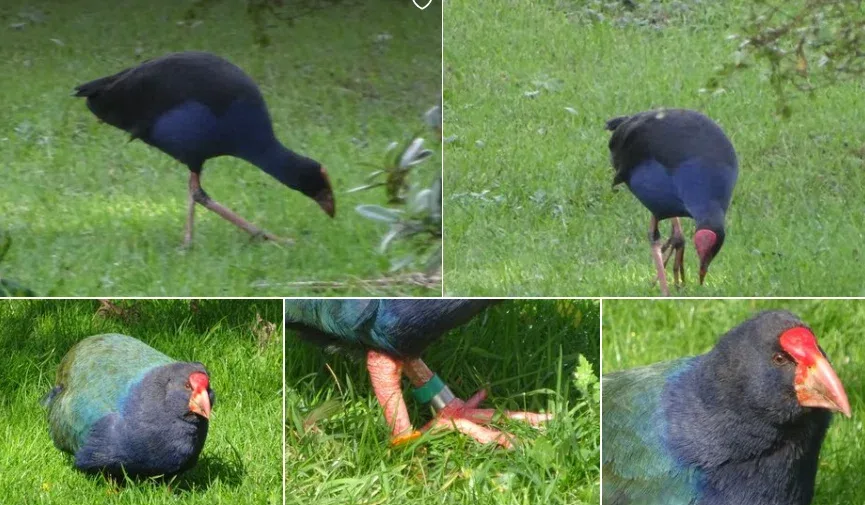
Observations of a Migratory Bird in Large Corporate Subsidiaries
While watching 'The Summer Hikaru Died,' there was something that kept bothering me.
It was Nounuki-sama and the Kegare.
Nounuki-sama seems less like a simple deity and more like an entity formed by the layering of a community's desires, beliefs, and narratives created to process things they don't want to see. Kegare is like a distortion leaking out from the 'hole' behind it.
Watching this, I found myself thinking about large corporations and startups.
As I move between large corporate subsidiaries, I feel that similar things exist within those organizations.
An anxiety that cannot be named. A sense of discomfort that cannot be fully explained. A structural distortion that no one wants to look at directly. A convenient myth created by the organization to appease it.
That is what 'transformation' is in a large corporation.
Large corporations often have their own Nounuki-sama.
Of course, they aren't literally enshrined on a household altar. But they are certainly present in the conference rooms.
DX. AI utilization. New business ventures. Startup collaboration. Open innovation. Agile. Group synergy. Data-driven management. Mid-term management plans.
Every time these words are chanted, the atmosphere in the organization settles down a little.
It feels like something big is about to begin. It feels like the company might change. It feels like light is shining into a stagnant workplace.
But after being inside for a while, you realize.
Is it really transformation? Or is it a faith called transformation?
Large corporations are not good at looking directly at their own inability to change.
Decision-making is slow. Departmental optimization is strong. Failure cannot be evaluated. There are no criteria for withdrawal. No one wants to take responsibility. Authority and responsibility are twisted between the parent company and the subsidiary.
In truth, this is what needs to be looked at.
But looking at it is painful.
That is why large corporations sometimes need a Nounuki-sama.
"If we do DX, things will change."
"If we introduce AI, things will change."
"If we partner with startups, things will change."
"If we create a digital subsidiary, things will change."
"If we bring in external talent, things will change."
By believing this, they can avoid looking at the holes in their structure.
Startups easily become a convenient myth for large corporations.
Startups appear to be packed with the things that large corporations believe they have lost.
Speed. Passion. Customer-centricity. Product-orientation. Risk-taking. The strength of small teams. The tension of being directly hit by the market.
Large corporations yearn for that.
And so, they start saying, "Let's act like a startup," "Let's collaborate with startups," or "Let's create an isolated organization."
At first glance, it seems correct.
But in many cases, this is where the disconnect happens.
Large corporations only want the "results" of a startup. However, they do not want to take on the "instability" or "pain" that startups bear to achieve those results.
The pain of being rejected by the market. The tension of dying if you don't sell. The fear that funds will run out immediately if a decision is wrong. The structure where management bears responsibility with no place to run.
They don't import that.
What they import are just the words.
Agile. MVP. PoC. Pivot. Growth. PMF. SaaS. AI agent. Design thinking.
Only the words arrive.
The pain does not arrive.
The responsibility does not arrive.
The withdrawal does not arrive.
As a result, "something in the shape of a startup" is born within the large corporation.
This is not a startup.
But it is not a large corporation either.
It is something in between—something lukewarm.
Large corporate subsidiaries easily become that middle ground.
From the parent company's perspective, a subsidiary is convenient. They can make it do things the main body cannot. It can be slightly detached from the constraints of the existing organization. It is easier to hire digital talent. They can put on a startup-like face.
On the other hand, from the perspective of the subsidiary, the reality is quite different.
It looks free, but it is bound by the intentions of the parent company. Speed is demanded, but the approval process is heavy. Business accountability is required, but final decision-making authority is ambiguous. External talent is brought in, but the evaluation system remains that of a large corporation. You are told to 'take on challenges,' but if you fail, you get hurt just like anyone else.
There is a unique kind of hell here.
The parent company dreams.
The subsidiary pretends to implement that dream.
The front lines process the difference between the dream and reality.
This difference becomes 'kegare' (impurity/stagnation).
Large corporations also have their own kegare.
It is not just the obvious things like shouting bosses or old paper-based cultures. It is something quieter and much more troublesome.
Meetings where no one makes a decision.
Documents that no one reads.
PoCs that no one takes responsibility for.
New businesses where no one meets the customer.
Projects that no one can say should be withdrawn.
Dashboards that no one uses.
DX initiatives where no one is actually serious about changing.
This is the kegare of a large corporation.
It is not malice. In fact, it is made of good intentions.
'I want to make the company better.'
'I want to change the workplace.'
'I want to do something new.'
'I want to leverage the group's strength.'
There are such beautiful wishes.
But wishes alone do not change the structure.
They do not change the authority design. They do not change the evaluation system. They do not change the investment criteria. They do not set withdrawal criteria. They do not coordinate interests with existing businesses. They do not have the resolve to sell to customers. They do not truly leave one person in charge.
They preach 'transformation' while keeping everything as is.
Then, the wish becomes a myth. The myth becomes a ritual. The ritual becomes a meeting. The meeting becomes a document. And in the end, only the kegare remains.
The same structure exists in startup collaborations.
Large corporations have expectations for startups.
'They have a speed we don't have.'
'They have new technology.'
'They have ideas that don't exist in our existing organization.'
'If we combine them with our assets, it will grow.'
Certainly, that possibility exists.
But on the ground, something else happens.
Startups are left waiting for large corporations' internal approvals. They get stuck in legal reviews. They get stuck in security checks. Business negotiations continue without knowing who the final decision-maker is. They only do PoCs and never move to a formal contract. They are told, 'We will consider it in next year's budget.' Before long, the person in charge is transferred.
Large corporations dream of startups.
But they lack the mechanisms for procurement, legal, budgeting, decision-making, and risk-taking to make those dreams a reality.
Therefore, startups are invited as gods, treated as vendors, and in the end, become the ones who handle the 'kegare' (impurity).
The problem is not the startup collaboration itself.
The problem is that large corporations invite startups as a 'Nounuki-sama' (a deity of transformation) to change them.
'If we partner with this company, we can change.'
'If we adopt this technology, we can change.'
'If we introduce this SaaS, we can change.'
'If we use this AI, we can change.'
They believe this.
The reason they cannot change is not because they lack something new from the outside. In many cases, it is because there is a hole in their internal structure.
As long as that hole is not plugged, no matter how many new things you bring in, the 'kegare' will leak out from there.
The holes in large corporations are usually in the same places.
It is unclear who decides.
It is unclear who takes responsibility.
While claiming it is for the customer, they are actually writing documents for the parent company.
They cannot stop what they have started.
Even if it is not selling, they call it a 'learning experience' to keep it on life support.
As long as this hole exists, no matter what startup you partner with, what AI you introduce, or what subsidiary you create, you will eventually end up back in the same place.
The 'kegare' is not born from a lack of technology.
It leaks from the holes in the structure.
That is why I have recently started thinking this way when looking at the transformation of large corporations.
Is this a 'Nounuki-sama'?
Or is it an initiative that truly changes the structure?
Will this AI implementation change the actual work on the ground?
Or is it an offering just to say, 'We are doing AI'?
Will this startup collaboration create customer value?
Or is it just a ritual of open innovation?
Is this subsidiary an entity with actual authority?
Or is it an altar reflecting the dreams of the parent company?
The question is surprisingly simple.
Who decides?
Who takes responsibility?
Who pays?
Who uses it?
What changes?
When do we stop?
Who gets hurt if it fails?
Transformation that cannot answer these questions is usually closer to faith.
Large corporations dreaming of startups is not inherently evil. In fact, there are times when it is necessary.
The problem is failing to design reality while still dreaming.
If you are going to invite startups, decide on the decision-makers. Secure the budget. Set a verification period. Design the terms of the main contract in advance. Determine the exit criteria for failure. If you leave it to a subsidiary, delegate the authority as well. If you are introducing AI, change the business processes and the division of responsibility.
Only by doing all this does it become a transformation.
If you do none of that and only increase the number of words, you are simply increasing the number of Nounuki-sama.
The Nounuki-sama of DX.
The Nounuki-sama of AI.
The Nounuki-sama of new business.
The Nounuki-sama of startup collaboration.
The Nounuki-sama of isolated organizations.
The Nounuki-sama of group synergy.
Only the names of the gods continue to grow.
But the hole does not close.
I think the horror of 'The Summer Hikaru Died' lies not in the grotesque entity itself, but in the fear of being unable to treat a foreign object as a foreign object.
We know this is not a business.
But we call it a new business.
We know this is not a transformation.
But we call it DX.
We know this is not a startup.
But we call it a startup-like organization.
We know this is a failure.
But we call it learning.
By changing the names, we avoid looking at reality.
In that moment, a Nounuki-sama is born within the large corporation. And the reality that was not given a name leaks out as kegare (impurity).
Perhaps moving from one large corporate subsidiary to another means seeing the gods and the kegare of each land.
Even if the names being worshipped are different, the holes are similar.
There is no one to decide.
There is no one to take responsibility.
The customer is distant.
We cannot withdraw.
Stories are prioritized over numbers.
Convincing headquarters is prioritized over the front lines.
Explanation is prioritized over the business.
Transformation is not about increasing the number of gods.
It is about finding the hole.
It is about giving the hole a name.
It is about someone taking on the pain to plug that hole.
Organizations that fail to do this will worship the same gods over and over again.
And they will be swallowed by the same kegare time and time again.
The parent company's dream becomes a living hell for the subsidiary.
To give that hell a name, I continue to move on to the next subsidiary today.
#TheSummerHikaruDied
#NounukiSama
#Kegare
#LargeCorporation
#LargeCorporationSubsidiary