Simply saying “poozu wo toru” feels bland. “Strike a pose” carries the nuance not of merely adjusting one’s posture, but of consciously — sometimes theatrically — “kimepoozu wo toru”: hitting a signature pose. The verb “strike” is what gives the expression its punch. The original meaning of this word in Old English was “to stroke lightly, to rub, to smooth,” and from there its senses branched out into “to advance,” “to hit,” and “to start a fire.” The usage “strike a pose” is attested from around 1825, carrying the sense of assuming a posture with decisiveness. It is not about settling into position slowly. It is about “deciding” in an instant.
The expression was catapulted into public consciousness by none other than Madonna’s 1990 track “Vogue.” The phrase “Strike a pose, vogue” encapsulated the spirit of voguing, a dance form born out of New York’s ballroom culture. While the origins of voguing are subject to various accounts, it is generally said to have begun in Harlem’s Black and Latino queer community ballroom scene, where participants imitated the poses of fashion magazine models as they danced. It was a declaration: show yourself off with the pride and poise of a fashion model. Here, “strike a pose” refers not to a mere physical action but to the very act of self-expression.
In everyday life, the phrase is most commonly heard in the context of photography. Saying “Come on, strike a pose!” amounts to a casual prompt — something like “Hai, poozu totte!” — but it still implies “look sharp” or “show off a little.” Using “pose” alone can also mean to assume a posture, but adding “strike” introduces a theatrical exaggeration, or perhaps a humorous self-awareness.
“Kimegao wo tsukuru” or “bacchiri kimeru” would be close as colloquial translations. In fashion or photography contexts, “poozu wo kimeru” communicates the idea well enough, but the particular theatrical flair of the English expression is difficult to convey with “poozu wo toru” alone.
What makes this especially interesting is that in contemporary usage, the expression is not infrequently employed with a note of irony. When someone says “She’s always striking a pose for Instagram” to poke fun at social media selfie culture, it carries a cool, critical gaze — something like “kanojo wa itsumo Insuta you ni kimekime da.” In an age where self-presentation has become a daily routine, “strike a pose” can serve as both praise and sarcasm — an expression that is becoming increasingly ambivalent.
Incidentally, the verb “strike” itself is one of the most peculiar words in the English language. As noted earlier, the original meaning of Old English “strican” was “to stroke lightly, to rub.” It shares a root with “stroke” and “streak,” tracing back to the Proto-Indo-European root *strig- (to stroke, rub, press). From this same root came the “strigil,” a tool used by ancient Romans to scrape oil and dirt from the skin after bathing. In other words, the starting point of “strike” was a motion of gently gliding across the skin.
It was in the fourteenth century that “strike” acquired the meaning of “to hit.” Behind this leap, one can detect the shadow of the Vikings. During the period from the ninth to the eleventh century, when Old Norse vocabulary flooded into English in massive quantities, it has been suggested that the combat-rich linguistic sensibility of the Scandinavian languages pulled the once-gentle Old English “strican” in a more violent direction. But considered more simply, the actions of rubbing a surface and striking it differ only in the intensity of the arm’s swing. Just as the Japanese word “hataku” can be used for both beating a futon and slapping a cheek, “stroking” and “hitting” may seem like opposites yet share a common root in bodily motion.
What makes this even more fascinating is how the word developed from there. “Strike while the iron is hot” is a metaphor born from the blacksmith’s forge, and the action of rubbing a flint to produce sparks was also called “strike.” The medieval workshop, where rubbing and striking overlapped in daily practice, likely propelled the word’s semantic evolution. Eventually, “strike” proliferated into ever more meanings: from “lowering sails” to “going on strike,” from “hitting a gold vein” to “strike it rich.”
The baseball “strike” also traces a curious path. When the term first appeared in 1841, it meant that the bat had made contact with the ball — that is, the batter had “struck” it. At some point, it came to refer to failing to hit the ball, and in modern usage, it is the pitcher who “gets” the strike. It is a nearly magical transformation in which both the subject and the meaning of a single word have inverted.
From “stroking” to “hitting,” from “having hit” to “having failed to hit,” and onward to “decisively assuming a posture” — “strike” is a rare verb whose meaning has flipped to the opposite direction multiple times. It is precisely because the word harbors such an extraordinary range of motion within itself that “strike a pose” can hold both softness and forcefulness at once. To “kimeru” a pose is, in essence, an act of concentrating force into a single moment of stillness — a movement that perhaps lies somewhere between “stroking” and “striking.”
'strike a pose': Meaning and Context
目次
同じカテゴリの記事
デジタルマーケター
真鍋 千夏
プロフィールを見る →
美容と暮らしの話題を担当。メーカーの公式発表、商品成分の公表資料、専門家の監修記事をもとに事実を整理します。
おすすめの関連記事
-
 むくみ&美容ケアしたい人必見!!韓国で話題のカボチャ茶(ホバクチャ)を実際に飲んでみたレビューBy 藤崎 健人 • 2026年11月17日
-
年報(筋トレ年報)出ました!By 東條 淳平 • 2026年11月18日
-
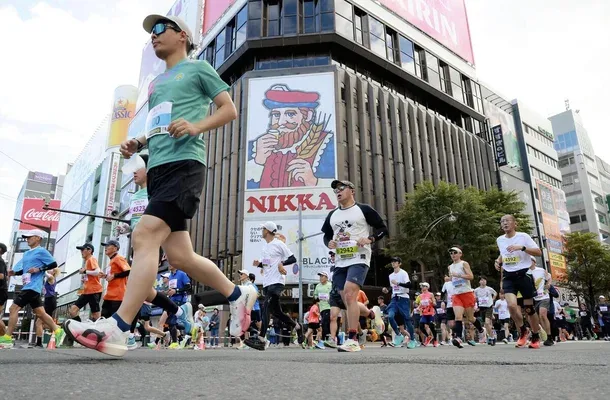 札幌マラソン過去最多1万5211人出走 男子ハーフJPHSランキングの行方はBy 篠原 沙世 • 2026年11月20日
-
絵本「ヘンゼルとグレーテル」(いもとようこ版)のあらすじと評価By 三浦 拓海 • 2026年11月18日