What are Hollow Glass Microspheres?
The hollow glass microspheres market is expected to see sustained growth, driven by the increasing demand for lightweighting, improved thermal insulation, and high-performance composite materials. The global market size is estimated at 637 million USD in 2025, and is projected to grow at a compound annual growth rate (CAGR) of 5.3% from 2026 to 2032, reaching 916 million USD by 2032. Hollow glass microspheres are spherical inorganic particles with thin-walled glass shells and a hollow structure, characterized by low density, high compressive strength, low thermal conductivity, chemical stability, and excellent flowability. Leveraging these properties, they are increasingly being used in plastics and rubber, paints and coatings, adhesives and sealants, composite materials, construction materials, oil well cementing, drilling fluids, thermal insulation materials, buoyancy materials, and syntactic foams.
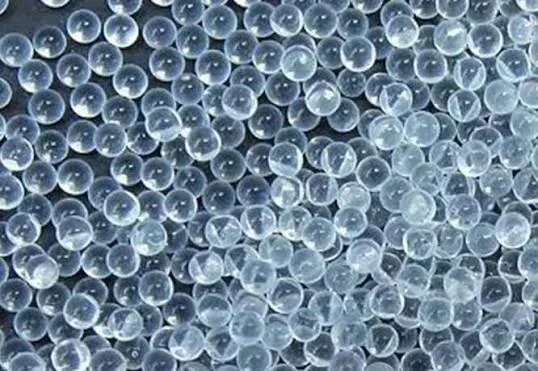
Figure 00001. Photo of hollow glass microspheres
Figure 00002. Global market size of hollow glass microspheres
According to the latest report by the QYResearch survey team, "Hollow Glass Microspheres - Global Market Share and Ranking, Overall Sales and Demand Forecast, 2026-2032", the global market for hollow glass microspheres is estimated at 637 million USD in 2025 and is projected to reach 670 million USD in 2026. It is then expected to grow at a CAGR of 5.3% from 2026 to 2032, reaching 916 million USD by 2032.
The charts/data above are cited from the latest QYResearch report, "Hollow Glass Microspheres - Global Market Share and Ranking, Overall Sales and Demand Forecast, 2026-2032".
Market Size and Demand Structure of Hollow Glass Microspheres
The global production capacity for hollow glass microspheres is approximately 200,000 tons, with sales volume in 2025 estimated at approximately 152,000 tons, an average selling price of approximately 4.2 thousand USD/ton, and a gross profit margin of approximately 23%. The main drivers for market expansion are the demand for lightweight components in the automotive and aerospace sectors, energy conservation in the construction sector, and the need for low-density, high-pressure-resistant materials in the oil and gas sector. Compared to conventional mineral fillers, hollow glass microspheres offer superior density reduction and thermal insulation, and contribute to improvements in dimensional stability, processability, thermal conductivity suppression, and formulation costs, leading to their expanded adoption as high-performance fillers.
Product and Technology Trends of Hollow Glass Microspheres
The product competitiveness of hollow glass microspheres is defined by particle size, density, compressive strength, glass composition, surface treatment, and dispersion compatibility with the matrix material. Products are categorized by particle size into under 40μm, 40-80μm, and over 80μm, and by material into borosilicate glass and silica glass, and by density into low-density and high-density products. In recent years, development of application-specific grades has progressed, such as products that achieve both low density and high compressive strength, and surface-treated products that enhance compatibility with resins, paints, adhesives, and cement-based materials. In particular, pressure resistance is a key performance requirement for deep-sea oil and gas applications, while lightweight and crush resistance are critical for automotive and aerospace applications, and thermal insulation and workability are essential for construction and coating applications.
Growth Factors by Application of Hollow Glass Microspheres
In the automotive and aerospace sectors, the addition of hollow glass microspheres is used to reduce fuel and power consumption through component lightweighting. In the oil and gas sector, demand for low-density, high-strength products is being formed for cementing, drilling fluids, subsea insulation, and buoyancy materials. In the construction materials and paint/coating sectors, adoption is increasing for the purposes of thermal insulation, density reduction, and improved workability. In the plastics, rubber, and adhesive/sealant sectors, formulation technologies aimed at improving dimensional stability and reducing material weight are also expanding.
Competitive Landscape and Market Outlook for Hollow Glass Microspheres
Major companies include 3M, Potters Industries, Sinosteel, Trelleborg, Zhongke Huaxing New Material, Zhengzhou Hollowlite Materials, Shanxi Hainuo Technology, Anhui Triumph Base Material Technology, Zhongke Yali Technology, Mo-Sci Corporation, Sigmund Lindner, The Kish Company, Cospheric, Dennert Poraver GmbH, and Zhongke Hairui Technology Research Institute Co., Ltd. Upstream, key supply elements include specialty glass, silica, soda ash, borosilicate glass, additives, surface treatment agents, and heating/classification equipment, while downstream, major demand sources include automotive parts, aerospace parts, composite materials, building materials, paints, oilfield services, and marine buoyancy materials. Fluctuations in US tariff policies in 2025 may impact international procurement, capital investment, and supply chain restructuring. In the future, the hollow glass microsphere market is expected to see competition centered on low density and high compressive strength, particle size control, surface treatment, improved dispersibility, cost optimization, and the development of application-specific grades.
This article provides an overview of market trends and competitive analysis based on the QY Research report, "Hollow Glass Microspheres - Global Market Share and Ranking, Overall Sales and Demand Forecast, 2026-2032".
[Report Details and Free Sample Request]
https://www.qyresearch.co.jp/reports/1621374/hollow-glass-microspheres
Contact Information
QY Research Co., Ltd.
URL: https://www.qyresearch.co.jp
Japan Address: 5F, Ginza Wall Building, 6-13-16 Ginza, Chuo-ku, Tokyo 104-0061
TEL: 050-5893-6232 (Japan); 0081-5058936232 (Global)
Marketing Representative japan@qyresearch.com
Company Profile
QYResearch is a market research and consulting firm established in Tokyo in 2017. We provide a wide range of services for the global market, including market research reports, commissioned research, and IPO-related consulting, comprehensively analyzing market trends, growth potential, and competitive structures in various industries. To date, we have provided industrial information services to over 65,000 companies in more than 160 countries and regions, leveraging our extensive research track record and global network. We have earned high trust and evaluation from many Japanese companies, particularly in the fields of competitive analysis, market size forecasting, industry structure analysis, and customized research.