The Yungang Grottoes are truly recommended!
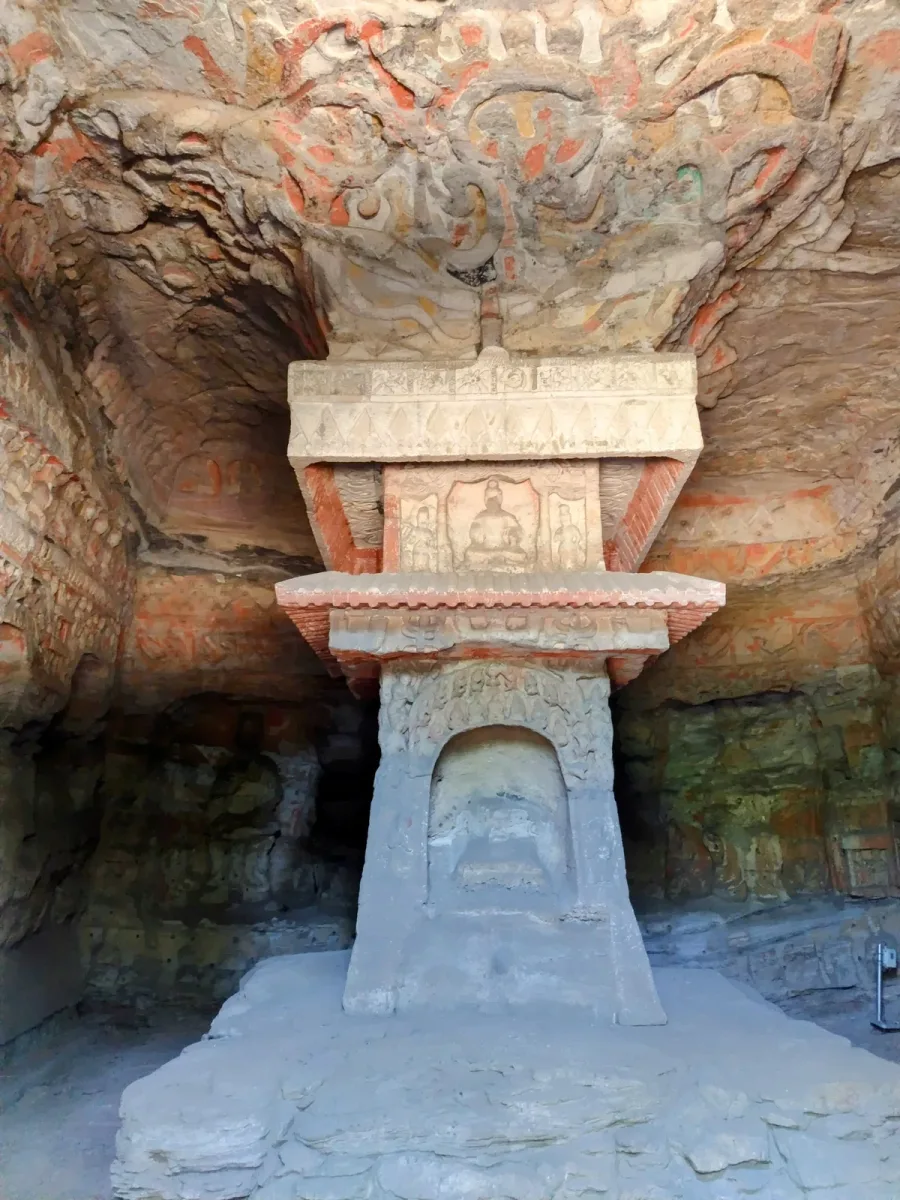
The Yungang Grottoes are one of the most recommended historical sites in China. Here is why:
Location
Within day-trip range from Beijing! Excellent accessibility!
It takes only 1 hour and 40 minutes by high-speed rail from Beijing to the hub city of Datong. The Yungang Grottoes are located 16 km outside the city, a distance of less than 40 to 60 minutes.From Giant Buddhas to Cave Carvings
The Yungang Grottoes feature both eye-popping giant Buddhas and intricate, detailed cave carvings. There are so many of both, offering great variety, and it is rare to find a scenic spot where you can see so much at once.The Historic and Cultural City of Datong
Since becoming the capital of the Northern Wei dynasty 1,500 years ago, the hub city of Datong has remained an important city in northern China, serving as a secondary capital for the Liao, Jin, and Yuan dynasties. It is also a state-certified historic and cultural city that flourished through trade with other ethnic groups as a hub on the 'Tea Horse Road.' Therefore, in addition to the Yungang Grottoes, there are countless must-see sights in and around Datong city.
I hope this helps with your visit to the Yungang Grottoes.
(Based on a visit in the summer of 2025)
A taxi is recommended from Datong city to the Yungang Grottoes. It is affordable at around 60 yuan one way, and I also used a taxi for a round trip.
There are city buses, but they are slightly inconvenient as they require transfers. It costs 2 yuan one way.
(From 'Datong Station' take the No. 4 bus for 20-30 minutes -> get off at 'Gongjiao Si Gongsi (Xinkai Road)', transfer to the No. 3 bus for 15 minutes -> get off at the final stop 'Yungang Grottoes')
Advance online booking is essential.
The admission fee is 150 yuan (about 3,000 yen), but those over 60 are admitted for free (just show your passport).
It is about a 1 km walk from the visitor center at the entrance to the grottoes, taking about 20 minutes (the path is paved and flat).
You can also take an electric cart (15 yuan round trip, tickets can be purchased at the visitor center).
The grottoes open at 8:00 AM. If you enter as soon as they open, you can get into Cave 6, which later develops a one-hour waiting line, without any wait. Waking up early is highly recommended.
The main highlights of the grottoes are Caves 1 through 20. Caves 21 and beyond are smaller grottoes from later periods, and while there are a few worth seeing, few people visit them.
It is rare for all of Caves 1 through 20 to be open for viewing, as some grottoes are usually closed for renovations.
Until December 2024, the masterpieces, Cave 6 and Cave 12, were closed for a while due to renovation work.
On the day I visited, I was only able to see 11 out of the 20 caves: Caves 1-3, 6, 10-12, and 17-20. Even so, it took a full 3 hours, and each one was so worth seeing that I was exhausted by the time I finished.
One problem is that you don't know which caves are open until you get there on the day. It would be nice if they at least provided information on the official website, but it doesn't seem to be posted there...
Even so, every cave has its own splendor, and no matter which caves you are able to see, you will not be disappointed by your visit.
Caves 1 and 2
These are the first two caves you see when visiting the Yungang Grottoes, but they are so small that you cannot enter them, and the state of preservation of the carvings is poor, so you might be quite disappointed, thinking, 'Is this it?' Fortunately, it gets much better starting from the third cave, so please rest assured.
Caves 1 and 2, located at the easternmost end of the Yungang Grottoes, are a pair of caves excavated simultaneously between the fifth year of Huangxing and the eighteenth year of Taihe (471-494 AD) during the reign of Emperor Xiaowen. Both are square with a central pagoda pillar and are very similar. Because the interiors were left unfinished due to the Northern Wei's relocation of the capital to Luoyang, they are small in scale (about the height of a modern room, and about the size of an eight-tatami mat room) and the wall statues are not well preserved.
Cave 1
Cave 2 is commonly known as the "Cold Spring Cave." It is named after the perennial spring that gushes from the edge of the back wall, but you cannot enter here, so the spring water is not visible.