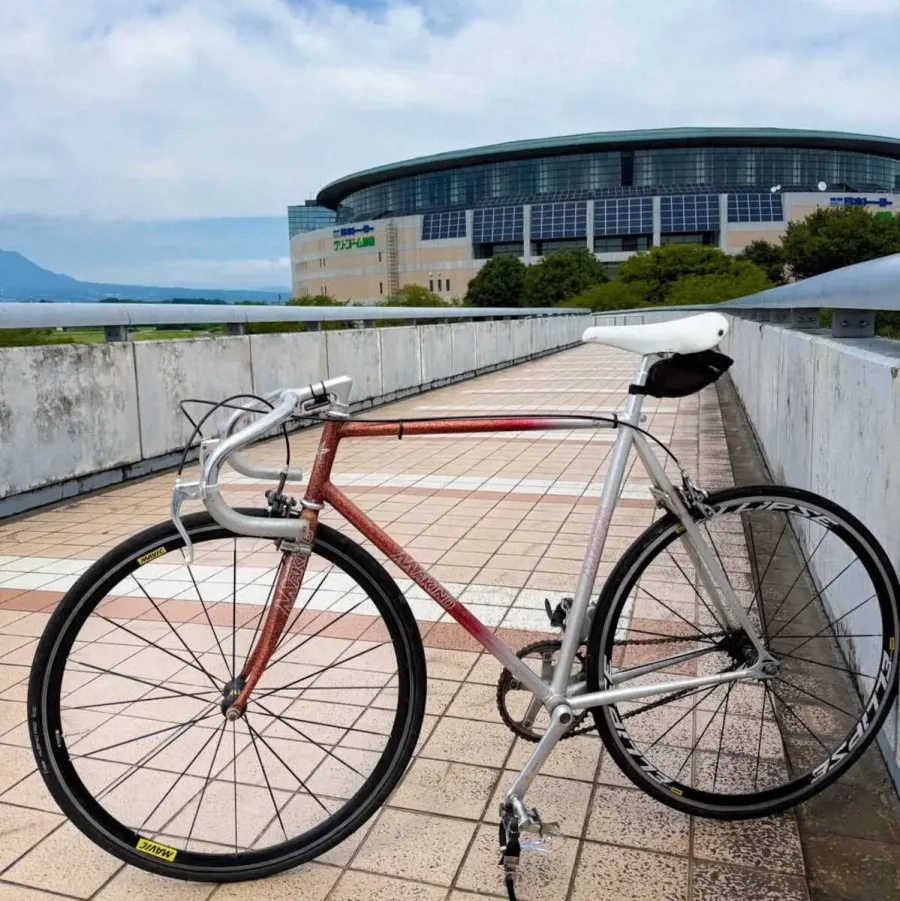
I thought about saving this for the main part of the series, "Why is the Seibu Dome located there?" (tentative title), but I've decided to write about it now.
Cold, hot, far away, nothing around it, bugs, pollen.
These are the many stock phrases thrown at Belluna Dome (Seibu Dome).
So why go out of the way to use a venue that gets criticized so much?
I will write about it from the Seibu Group's perspective in the main series, but this time I will look at it from the perspective of the event organizer.
① Cheap for its capacity
This is the biggest reason, really.
Even though it is a venue that can hold up to 40,000 people (officially/actually around 30,000 to 35,000 people based on transportation data) during a concert, it can be rented for a price significantly lower than the market rate.
What I want you to know here is just how cheap Belluna Dome is among the venues in the Tokyo suburbs.
As you can see from this, there are almost no venues in the Tokyo suburbs that hold 20,000 to 25,000 people. Until the K Arena opens this autumn, the only venues that can hold over 20,000 people and host live events are the Saitama Super Arena (hereinafter SSA), Makuhari Messe International Exhibition Hall (using multiple halls), Tokyo Dome, and—though not listed here—outdoor ballparks like Jingu Stadium, ZOZO Marine Stadium, Yokohama Stadium, stadiums like Ajinomoto Stadium, Nissan Stadium, the National Stadium, and Belluna Dome. If you limit it to venues with roofs, there are only four at the moment.
And when compared to the three venues other than Belluna Dome, it can be rented at a basic rate that is much cheaper than the SSA's stadium mode, which has almost the same capacity, and about the same as Makuhari Messe, which likely has a lower capacity when fully flat.
Tokyo Dome costs about twice the basic rate of Belluna Dome. I suppose you could say that if you call twice as many spectators or double your ticket and merchandise sales compared to a Belluna Dome event, you could achieve similar profitability by holding it at Tokyo Dome. Regardless, Belluna Dome is extremely cheap compared to venues of similar size, despite being able to hold over 30,000 people.
Also, in the table above, even venues that hold around 15,000 people cost about 20 to 25 million yen. Depending on how much you can increase your budget, if you can spend another 5 to 10 million yen on venue costs, you can add the prestige of holding a dome event. Especially if you are using the SSA arena mode, you are budget-wise just a little bit away from being able to afford a dome. I am well aware of how difficult that "little bit" is, but if you can hold an arena-class event, Belluna Dome is within reach. Since the capacity doubles, there is also the question of whether you can fill the venue, though.
In any case, Belluna Dome is very easy to use in terms of pricing.
(I intentionally excluded outdoor ballparks and stadiums based on whether they have a roof, but while you can deal with the lack of walls and the heat/cold with warm clothing, etc., the lack of a roof means both the cast and the audience have to worry about getting wet (especially costumes) and the risk of equipment getting wet and breaking down (though this is probably fine in recent years since they do outdoor festivals), and there is the possibility of lightning strikes, so I consider a roof more important than walls for operations. If a typhoon comes, no venue can operate due to transportation restrictions anyway.)
② Plenty of space
Another appeal of Belluna Dome as an event venue is the abundance of space.
Merchandise sales are a staple of live concerts, but the larger the scale, the more problematic the sales space becomes. As an extreme example, in the case of the recent THE IDOLM@STER M@STERS OF IDOL WORLD!!!!! 2023 concert held at Tokyo Dome, the Tokyo Dome merchandise space alone was not enough, so two separate merchandise venues were set up outside, which caused the hassle of moving around. In addition, because the outer concourse of the dome is not that wide, it was crowded before the doors opened.
Securing venue space like this is one of the factors in venue selection.
If it were SSA, it would be possible to hold merchandise sales and pre-show exhibits at Keyaki Hiroba (66 yen/m² + 55,000 yen technical management fee, etc.). Also, Makuhari Messe can be used for parking lots next to the event hall if the scale is small. However, if it becomes large-scale, it ends up using the International Exhibition Hall as well.
Other venues can also be handled with parking lots, etc., but they do not have enough space. In recent live concerts, advance sales have become mainstream, and it is not uncommon to set up a main merchandise venue separate from the live concert venue.
However, in the case of Belluna Dome, event setup utilizing the vast land is possible.
Blue Parking (foreground) and Lions Training Center *The training center cannot be used as an event venueAlso, the Blue Parking lot, which opens up if you go straight up the stairs right in front of the station, is a parking lot that can hold 200 cars. This can also be used as an event space. Combining both spaces, it is 720 cars, and assuming 12.5 m² per car (based on the Ministry of Land, Infrastructure, Transport and Tourism's parking lot design and construction guidelines), it is approximately 9,000 m². This is equivalent to about 1.5 halls of the Makuhari Messe International Exhibition Hall.
Furthermore, the station plaza is structured to accommodate crowds. This was anticipated from the stadium's design phase (more details in the main text).
Also, since October 2022, food trucks have begun operating in the station plaza during concerts, making it even more convenient.
Although it is not currently being rented out for events, it is thought that the space could be expanded further by utilizing the area toward the former UNESCO Village.
You have to take measures against the heat in summer and the cold in winter. Additionally, for event organizers, if a stage is set up on the back screen side, there is the issue of having to transport the cast around by bus from the facilities on the home plate side, during which time the visitor flow must be stopped. However, for the reasons mentioned above, Belluna Dome is convenient to use, which is why it is chosen as a concert venue.