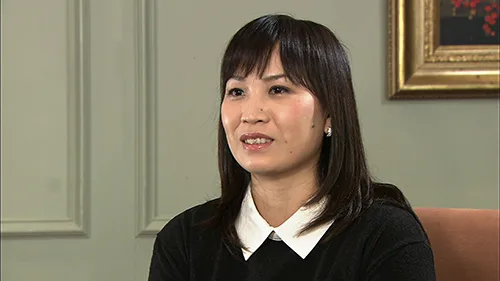
It is a situation where it is no longer a dream for former BiSH member Aina the End to surpass the popularity of BiSH, or rather, she is already surpassing it, or has she already surpassed it? In fact, if you compare just the number of YouTube channel subscribers, she is already nearly 300,000 ahead at the time of writing this article. For someone like me who has known them since their BiSH days, this is a state that is a little hard to believe. In the first place, it is close to a miracle that the group BiSH itself sold this well, so I can only be in awe that she has surpassed even that.
I first learned of this group's existence when I saw the music video for "Orchestra" on a late-night music program. They were on the verge of selling, but they hadn't really appeared on variety shows yet, so I learned of them on the eve of them truly going viral. At the time, I watched the video thinking that an idol group had collaborated with a major R&B singer. That is how much Aina the End stood out to me. Both her visuals and her singing style were quite far from the image of an idol I had in my head. Anyway, I liked Ms. Aina's vocals, so I looked into them, got interested, and ended up getting pretty hooked.
As I looked into BiSH, I naturally ended up at the agency called WACK. While WACK has gained considerable fame now, having been featured extensively on shows like "Wednesday's Downtown," they weren't as well-known back then. As I started to get interested and look into them, I learned that there was a predecessor-like group called "BiS," and that BiSH was a project that started as a spiritual successor to that group. This WACK and its founder "Junnosuke Watanabe," "Kenta Matsukuma" who was in charge of most of WACK's sound at the time, and the predecessor group BiS and its central member "Pour Lui" (also known for having the talent First Summer Uika as a member, among other famous people), there are a huge number of interesting backstories woven by various unique characters that are just hard to understand, chaotic, and prone to controversy (or rather, they were controversial). If you know all of them, you can enjoy BiSH even more, but... it is honestly a mystery that the official side seemed to have no intention of explaining these saga-like parts in an easy-to-understand way for newcomers. After BiSH was formed as a successor group and sold to a certain extent, the second generation of the supposedly disbanded BiS restarted with Pour Lui at the center, and while they also gave off a feeling of "you guys sold easily by using the fame we gained through our destructive activities," there was also professional wrestling-like tension of "no, our skills are different from BiS," whether they were grateful or annoyed, or whether they were at odds with BiSH... it's all very complicated. Honestly, I'm not that much of a WACK freak from this period, so it's frustrating that I have to say what I'm stating here is quite shallow. Anyway, there were so many things going on and it was interesting, so I remember feeling quite frustrated about why they didn't show the history in a way that was easier for newcomers to understand! If you really intend to follow it, you can, but it's structured in a way that isn't easy to follow, and because of that, I never really got into it for real. I feel like there were books of historical materials or something, but I wouldn't go out of my way to buy them for that. I have the impression that the inside jokes continued for a while. By the way, BiSH is the first, or rather the only, group to have stepped outside of those WACK-related inside jokes. I can't help but feel they were pushed as Avex's breadwinner after AAA passed away, but I think they actually had a certain level of popularity.
Personally, I loved Kenta Matsukuma's songs. He and his sound team have left WACK now, but at the time, he was in charge of composing and arranging most of the songs (most of the other groups belonging to WACK besides BiSH were also by him and his sound team), so there was absolutely no lack of consistency like other idols, and the fact that I could listen to them with the same feeling as listening to a normal musician's album is what particularly grabbed my heart. Since this Kenta Matsukuma was in charge of sound production, not just providing songs, he also ordered arrangements from the team he belonged to (or rather, reading interviews, it seems more likely that in many cases, the arrangement made by the team came first and he added the melody to it). Anyone who likes music can imagine that the sonic strength of this system is immeasurable. Also, when watching documentary footage, he was also doing vocal direction and minor corrections to the lyrics written by the members, which also contributed significantly to the quality improvement. I realized that a part of the singing of the members I like is largely due to this direction and lyric correction.
That said, it wouldn't be possible without the individuality of the members. It's a bit late, but let me briefly introduce the members. First, the aforementioned Aina the End. Her voice is like an electric guitar and she is incredibly cool. She is also in charge of the choreography, so she is truly an artist. It seems she was almost rejected at the audition despite having this much skill, but there is an urban legend that the costume designer who was captivated by her beautiful body (an obsolete term) suggested that they keep her, which became the trigger for her passing. If you are curious, look it up. Next is Cent Chihiro Chittiii. The name is too dangerous, but it seems there is no deep meaning. Perhaps because she has the best singing ability after Aina, she has the most singing parts after Aina. These two basically handled the chorus. I feel like she was somehow forced into the role of being in charge of social interaction; she was the one who could talk the most on the radio and such. I have a vague memory that when they first appeared on Music Station as a group, while the other members were pale, she was the only one who looked calm and said something like "I'm nervous, it's terrible" (maybe she didn't say it), but there are many elements that make you feel her strength other than this, and it was pointed out by Ms. Aina that she was quite a hypocrite in the early days. She is also a person with a quite severe side, such as telling other members to stop dreaming when they say they want to marry a rich person. Next is Momoko Gumi Company. She has a character like a literary girl, but she is a unique existence where being twisted, refreshing, and loli elements are mixed together, and she is the only member who is always blonde. She also published books. According to her, she is not good at singing or dancing, so it feels like why did she want to become an idol, but I forgot the reason. I remember her often categorizing herself as an "early member" (since BiSH increased members in stages, the members from the time of formation were only Chihiro Chittiii and Aina, including Momoko Gumi), and I personally see her as having a passionate side like a bond-type girl, but that might just be speculation. As far as I heard on the radio, I have the impression that she was able to talk smoothly with all the members the most. Next is Hashiyasume Atsuko. After the breakup, she might have the most exposure in media such as variety shows. She is the most worldly, or rather, she is the type of person who longs to be an entertainer and is a proper industry person. I also remember Chihiro Chittiii pointing out that she was diligent in greeting other performers when she appeared on TV. It is also impressive that she had the most safe and business-like posts among the members. In short, she is the most mysterious. Although there are easy-to-understand elements such as liking muscles and being a glasses character, she is the person whose personality is the least visible. I also remember hearing that she was slightly prone to getting angry. Next is Lingling. She was the existence that took on the punk elements of BiSH. Her fashion, hairstyle, singing, and lyrics were all anarchic and punk, and it seems that quite a few people found elements of Jun Togawa in her, and in fact, it seems she likes her quite a bit herself. It makes sense that she is the only member to change her name after the breakup, which is very Lingling-like. Her name after the breakup is "MISATO ANDO." Hmm, the fact that it is in Roman letters makes me feel that it is like her. Next is Ayuni D. She is the member with the most drastic changes. At the beginning of joining, she was forced into a role that was completely like a loli, but she gradually blossomed her artistry, started wearing flashy makeup, handled songwriting and composition in her solo project, and after the breakup, she became makeup and fashion appropriate for her age, and is currently continuing the band she was doing in the aforementioned solo. It is said that she started listening to quite maniacal rock, perhaps due to Kenta Matsukuma's influence. It seems she originally liked Vocaloid and the like, and she often played songs by internet musicians in her radio selections. In the very beginning, there were not a few fans who overlapped her with Ano-chan, but it is also an important point that she immediately headed in a different direction. People have various histories. Finally, there is the withdrawn member Hug Mii. I feel like her visuals were the best among the members. She is simply a beauty. In the early albums, she had many singing parts, and personally, I thought she was better than Cent Chihiro Chittiii. She withdrew at a stage where it looked like she was finally going to sell, but she appeared for the first time in several years in Junnosuke Watanabe's post after the final live concert, and fans who supported her were in tears. Her visuals were firmly updated to a Reiwa feel, and I felt her connection to society. It's good that she seems to be doing well.
Like this, I have a rough grasp of the members' personalities. For me, BiSH is the first idol group I've ever been hooked on in my life, so I have a special attachment to them. I liked Morning Musume, Momoclo, and AKB, which I had listened to until then, on a song-by-song basis, but I had never been interested in the members themselves. One of the reasons I became interested is that the singing in the songs is basically one person singing at a time. Idol songs have relatively many chorus parts, so I didn't really care about the person singing while listening to the songs, but since the policy of Mr. Matsukuma's sound production was basically not to do unison, it was a specification where the voice of the person themselves basically entered no matter how subtle the vocals were. It is a fact that this was a big trigger for me to become interested. Lingling is quite a death voice, who is this person, or I became interested in the opposite way by listening to Momoko Gumi Company's weak singing, or the transition of Ayuni D's singing method, there are too many triggers to mention. Moreover, because the ratio of being featured is completely different for each song due to Mr. Matsukuma's genius arrangement, I wondered what the members who were not singing were thinking, and for various reasons, I, who had not been interested in the members until then, became interested in the members. This was a groundbreaking event for me. I think it was quite a harvest to know a little bit about the feelings of people who support idols.
Until a certain period, I was quite hooked, following the radio, checking them whenever they appeared in the media, and although I didn't go to live concerts, I was quite hooked. However, my enthusiasm gradually cooled down. This is a very personal impression, but as media exposure increased, the songs became less attractive to me. I suspect that because they use advertising expenses to push them hard, Avex's checks, which they absolutely don't want to miss, have become stricter, and the quality has dropped so blatantly (this is just a personal impression). Simply put, they became bright and pop, and the tingling impatience I liked gradually faded away. Songs for large venues, songs assuming call and response, etc., have increased, and I have the impression that they are preparing songs for the stage, so I felt like I was done with it. However, looking at the number of views, sales, and attendance, it hasn't decreased drastically, so I am aware that this opinion is in the minority.
I didn't notice it when I was following them in real-time, but in many ways, they feel like idols of the 2010s. Rock-style groups were quite prominent. I liked BiSH when they had a faint subculture smell, when they were in the underground idol scene of the 2010s, and before they went too far out of WACK. That was a time when it was said to be the dark age of Japanese music, and personally, I was tired of mass-produced idols, so I think I had expectations that they would break that deadlock. However, rather than breaking it, the idol boom of that time ended somehow, perhaps due to COVID-19, and I had the impression that BiSH went to a world of competition on a stage other than the idol village. It is also a nostalgic memory that they were criticized for being tone-deaf every time they appeared on Music Station or Kohaku. It's not so much tone-deaf, but there were too many times when the pitch was simply off, so I think it's a legitimate criticism, but it's not a good feeling for the group you support to be criticized, and I had never experienced that feeling before, so it was fresh.
Times have moved on, and now that there are more people who don't know the WACK saga, there must be people who learn of BiSH's existence for the first time by entering from Aina. The current Aina is quite dance-music-oriented, but honestly, that singing style is not very rare in dance music, so personally, I don't feel much freshness. Watching Aina's recent progress, I think that I liked her singing Mr. Matsukuma's crisp rock with that voice and singing style. In a good sense, BiSH was a combination of elements that had nothing to do with trends, so I think it would still feel fresh even if you listened to it now. There are parts where the singing other than Aina is a bit suspicious and painful to listen to, or rather, it has a strong idol-like feel, but after listening to it a lot, I realized that I should just think of it as cute rather than cool, and from then on, I was able to listen to it. And now, I don't have a rejection reaction to idols other than BiSH like I used to. My senses have expanded.
The last part is about the breakup. Since I had already left, it didn't really matter to me, but I was simply curious about why they were breaking up, so I looked into it. It is said that the reason was the judgment that it is better to scatter at the coolest peak. However, personally, I speculate that there might be a more raw reason. As can be seen from the fact that Mr. Watanabe said that more than half of WACK's sales are BiSH, honestly, if you only think about profits, the breakup is a judgment error. The reason for wanting to quit at the peak also doesn't ring a bell, honestly. If they want to quit at the peak of popularity, I personally think they have already been doing it for too long. I think it is probably the result of judging that this is the limit in terms of time after thinking about the members' lives. If there were members who wanted to get married or give birth, continuing BiSH lazily shouldn't have a good effect. Just as there are various ways to look at Perfume, I am speculating that it is the result of considering various things arising from age and gender, but I have a strange confidence that it is not that far off. I see opinions on the internet that they are breaking up even though they are so popular, but I thought they were the ones who continued for a long time. In fact, reading the members' interviews, Lingling also stated that she felt Mr. Watanabe's kindness, so I think that aspect is not zero. This is a severe reality that accompanies female groups. I think this example of BiSH's breakup has had some influence on other female idol group operators.