Hello, my name is aqua.
With the Underground Arena arriving and the Arena mode heating up, I have put together this Arena guide as an article.
Basically, just looking at the images is enough.
For those who want to see more details, please read the additional text as well.
Self-Introduction
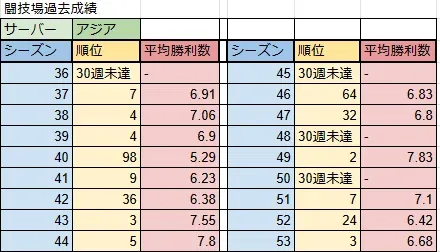
I play Hearthstone primarily in the Arena.
I have been focusing on streaming on YouTube lately, and occasionally posting videos.
My YouTube account is here ↓
About the Underground Arena
Basically, the system is the same as the traditional Arena mode.
The differences are:
・Legendary cards come with 3 related cards
・You can re-draft 5 cards for every loss (the second loss guarantees you can pick one Legendary card)
That is about it.
Drafting StrategyIn the Arena, what is basically strongest is making the most of "synergy," and if that is not available, pushing through with tempo is the most stable approach.
Basically, Legendary cards come with 3 related synergy cards. Therefore, it becomes easier to build around that theme.
The above example is an Elemental theme.
By all means, let's make the synergy strong.
As a point of caution, not all cards in a set are strong.
Judge whether they fit your deck or not, and if you feel they are unnecessary, remove those cards when you have a loss.
※ It is a valid strategy to take a set because the cards are strong even if you don't need the Legendary. Once you have a loss, say goodbye to the Legendary card.
By the way, what I look for in a Legendary card in the Arena is:
・A card that can turn the game around on its own
・A card that can create a powerful board on its own
・A card that strengthens your early/mid-game on its own
・One with a persistent effect that almost guarantees a win if played
I think you should keep these in mind.
Of course, besides Legendary synergies, there are other powerful synergies.
For example, you can set up a plan where Dragon synergy is the main focus, and you increase buffs with Nature spell synergy.
As a point of caution, when aiming for synergy, try to consider "whether the synergy is easy to execute."
For example, with Astral Reactor, there are times when you end up in a sad situation because the number of Arcane spells is too low.
If the conditions are too strict, it often ends up weaker than vanilla stats, so try to keep the conditions as light as possible.
If there is no synergy, basically choose based on individual power.
Basically, high total stats are justice.
Cards that are strong on their own or can make the board powerful with simple synergies lead directly to victory.
For example, just playing three Imps in the Middle on turn 4 makes things very difficult for your opponent.
Since the board state from turns 1 to 5 is directly linked to winning, try to include as many as possible!
*Tempo strength should be considered based on total stats.
Usually, having around 10 resource cards is sufficient.
Even if you fail to push for the win by turn 8 through tempo, you will still be able to fight for a few more turns.
However, mediocre resource cards (like spells that only draw cards) can lower your tempo, so if you're going to include mediocre resources, it's better to include strong board cards instead.
At worst, even with about 5 cards, you can fight well for 7-8 turns.
Resources are important, but let's prioritize the board even more!
The mana curve is directly linked to how easy it is to play.
For example, with a 4-cost heavy deck, you might struggle throughout a match, such as being unable to play minions early on or ending your turn with 4 mana left over around turn 6.
While you are getting used to it, try to include more 1-3 mana cards so you can maintain tempo effectively.
Redrafting allows you to add 5 cards.
Basically, the same picking strategy as usual is fine.
However, since you can remove 5 cards, you can generally prioritize synergy and power.
Since the main goal is to strengthen the deck, if you have a choice of three weak cards, remove them immediately later lol
The main point of redrafting is to remove weak cards.
Once you've finished removing them, check if your mana curve is healthy.
No matter how many strong cards you have, if they are all high-cost cards, it will be difficult to fight.
Keep in mind that it is ideal to have a solid foundation of low-cost 1-3 mana cards when choosing which cards to remove.
By the way, choosing to remove a Legendary is perfectly fine! If you're carrying the burden of a sad one, don't hesitate to remove it.
Basics of Picking
Criteria for PickingIt is easiest to fight using heroes with a high base win rate.
Data is available on a site called HSReplay, so checking hero strength before picking makes a big difference.
Unless the Legendary is weak, build your deck around it.
Think of strong cards as those that are "almost a guaranteed win if played with loose conditions" or "have an immediate, powerful impact on the board."
In the context above, Rheastrasza is the former, and Tess Greymane is the latter.
Combo cards like Zarimi are difficult to play in Arena because the conditions are too strict.
This is the fundamental rule of Arena.
Because how much of an impact you can have on the board is extremely important, decks tend to be minion-based.
Therefore, you need to pick stronger minions.
You will be able to tell just by looking once you get used to it, but if you don't know, try calculating based on total stats.
If there is one point to note, it is that heavy cards (especially those costing 6 mana or more) should ideally have an effect that impacts the board immediately. (e.g., Battlecry removal, Rush, Taunt, etc.)
For example, Cosmic Rock. It's a 32/32 monster in total stats, but because it doesn't have an immediate impact effect, it's surprisingly hard to play. It's not weak, but it depends on the deck.
Tempo cards are strong, but you can't fight for long without at least some resources.
Try calculating card draw in terms of mana value as well.
However, minion resources are generally prioritized. I will explain this later.
Discover cards are generally strong.
The reason is that they allow you to pull out cards that can turn the game around.
That said, it is better to choose cards with a good total mana ratio.
Certain resources and Discover cards can be strong for specific heroes.
Like the example above.
Basically, board-related cards are the top priority.
Next, Discover cards are often highly rated because they allow you to search for comeback tools at will.
However, since Discover minions tend to have low stats, it is also okay to rely on resource minions that prioritize high stats.
The most important point to note is that spell draw is generally weak in Arena.
While it might look quite strong in terms of mana ratio, it often significantly hurts your tempo, making it surprisingly difficult to use.
If the draw effect is attached to a minion summoning effect, then it is strong.
Spells that can interact with the board are strong. Cards that can hit the face are even stronger.
In addition to the above, if it has effects like Discover or minion summoning, its value skyrockets.
By the way, there are quite a few strong 1-mana spells among the Discover cards. Discover spells that cost 2 mana or more are surprisingly hard to play unless they have a mana reduction effect.
Lately, this is everything.
Since it became the Underground Arena, it has become easier to aim for high-roll picks.
If you see class-specific synergies, go ahead and pick them aggressively.
If it fails, you can just drop it once you have one loss!
You should aggressively pick cards that have individual power without relying on synergies.
Cards like Midnight Wolf, which you would almost never see in Standard, are top-tier in Arena.
Remember that cards that interact with the board and have high total stats are strong in Arena.
Similar to the synergies mentioned earlier, there are combos that, if pulled off, almost guarantee a win.
For example, a Shaman or Druid with a super-buffed Inspire effect is unstoppable.
Deathrattle synergies can also lead to a one-shot KO if they come together.
Like this, there are meta-specific synergies that win you the game if they work, so try to aim for them.
In Arena, the early-game board is extremely important.
Just by playing minions in the order of 1→2→3, you can put your opponent at a significant disadvantage.
On top of that, if you can maximize your tempo with synergies, it becomes easier to win.
People who are not used to Arena tend to underestimate 1-cost cards, so make a conscious effort to pick 1-cost minions.
A front-loaded mana curve makes your matches more stable.
Conversely, if your mana curve leans towards the late game, your play tends to become difficult.
Because of this, you end up losing more often to aggressive rushes.
Be especially mindful of your mana curve in the latter half of the draft.
Basically, this is not recommended for beginners.
It assumes you are familiar with the meta.
Simply focusing on making your deck stronger usually leads to better results.
Basically, you should think about the number of AOE cards.
When there are many heroes that are strong at flooding the board, I think it is worth keeping AOE in mind.
There are websites, so please feel free to use them as a reference.
You can view them on both PC and smartphone.
<HSReplay>
<HEARTH ARENA>
It is recommended to basically use HSReplay win rates as a reference.
The reason is that it reflects the current meta.
HEARTH ARENA is attractive because it measures cards by their individual power, making it easy to understand their strength.
Arena ToolsThese are trackers that can be used exclusively on PC.
Please try downloading them from below.
<HSReplay Tracker>
<FireStone Tracker>
There are Arena draft assistant apps. They are helpful when drafting, so please try installing them if you like.
<ArenaTracker>
<HEARTH ARENA App>
Mulligan Basics
Basically, you mulligan to ensure you can make moves according to your mana curve.
However, it is becoming more common that prioritizing synergies is stronger.
If there is a strong synergy as mentioned above, actively mulligan to find it.
Holding onto minions with mediocre stats often leads to situations where you can't do anything.
As an exception, if you have a card that can win the game on its own, it is acceptable to keep it even if it has a high mana cost.
However, since you have one less card in your hand when going first, consider swapping it depending on your mana curve.
If your opponent is a hero that excels at flooding the board, you might want to consider keeping an AOE card.
However, since you lose a slot for an offensive card, if your deck is more aggressive, it is better to prioritize strengthening your board rather than keeping AOE.
Basics of Gameplay
If you have cards in your hand that can be played in two different ways, prioritize the one with higher stats, especially in the early game.
"Muscle solves everything."
Just by following this, you will find yourself in an advantageous position more often than you realize.
Generally, consider using your Hero Power to be the weakest possible move.
Unless you have a reason, such as strengthening your board even slightly or aiming for a synergy, prioritize playing minions first.
In recent trends, there are many board states where you want to go face even from the early game.
However, if you don't trade when you could make a favorable trade, you might find yourself reversed into a major disadvantage. Be conscious of trading, especially in the early game.
The shift in mindset toward attacking the face is often made from turn 4 onwards.
If you are playing a tempo deck, try to aim to finish the game around turn 7.
Depending on the class, some are better at AOE than others.
For example, Druid, Rogue, and Hunter are weak at it, while Mage and Shaman are strong.
Can you recover if you get hit by an AOE? If you think about that while trading, you can improve one step further.
Ideally, you should not use resource-generating cards in the early game.
Even if you have them in your hand, you cannot reclaim the board with them in the early game.
Think about using them from the mid-game onwards.
However, if it is a minion with stats, it will perform reasonably well.
Picking such minions makes it easier to play.
The value of Discover is fluid.
Basically, picking strong cards is fine, but if you Discover in the early game, try to prioritize cards that can strengthen your early board.
Conversely, if your early game is already set in your hand, or if you are in a dominant position from the mid-game onwards, Discover the strongest card and go on the offensive.
Everyone makes misplays...!
Don't worry about it and keep going through trial and error!
Since the Underground Arena allows for re-drafting, it is easy for strong decks to appear.
Therefore, there will be times when you simply cannot win no matter what you do.
If you cannot control your emotions at that time, it will have a significant negative impact on your gameplay. That's what we call anger management.
If you lose several games in a row, take your eyes off the screen and take a deep breath before the next match. Short-term meditation is also recommended.
By the way, meditation also has positive effects on studies and work, so please try it if you'd like! (It stabilizes your mental state.)
Conclusion
How was it?
Arena is often difficult, but it is a very fun mode once you get used to it.
They say the draft is the main part of the game
I hope this serves as a helpful reference for you to enjoy the Arena even a little bit more.
If you have any questions, please feel free to leave a comment during my stream!
With that, have a great time in the Arena!