Stories of Typefaces Magazine
Articles about typefaces are collected here.
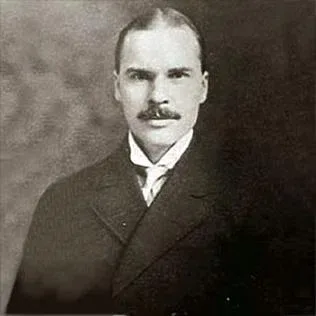
Morris Fuller Benton
Born: November 30, 1872 (Milwaukee, Wisconsin, USA) Died: June 30, 1948 (aged 75) (Morristown, New Jersey)
Occupation: Type designer, executive
Employer: American Type Founders (ATF)
Morris Fuller Benton (November 30, 1872 – June 30, 1948) was an American typeface designer who led the design department at American Type Founders (ATF). He served as the company's chief typeface designer from 1900 to 1937.
Many of Benton's designs, such as Alternate Gothic, Franklin Gothic, and related sans-serif typefaces including News Gothic, are still used daily.
Typefaces
Benton is known as the most prolific metal type designer in America, having completed 221 typefaces with his team.
This included revivals of historical typefaces (such as Bodoni and Cloister), original designs (such as Hobo, Bank Gothic, and Broadway), and the addition of new weights to existing typefaces (such as Century, Goudy Old Style, and Cheltenham). While he did not invent the concept, Benton, while working at ATF, pioneered the concept of a typeface family, allowing for consistency in appearance across different sizes, widths, and weights. This enabled ATF to maximize the popularity of successful typefaces and allowed for cohesive layouts and graphic design.
A 1923 specimen book described the approach to creating families as "enabling advertisers to speak freely with various emphases and orchestral power (rather than just collecting various display typefaces)."
Benton worked as the leader of a design team responsible for creating basic designs and adapting them to various sizes and weights. He valued his work as a designer, and in 1936 (at age 64), shortly before his retirement, he wrote a concise list of the typefaces he considered his most important work.
Benton was a relatively introverted person (1). A 1936 interview described him as "one of the most difficult people I have ever interviewed... if you try to bestow any honor upon him or praise his achievements, he will humbly deflect the topic by saying, 'The goddess of luck helped me quite a bit back then!'"
Technology
In addition to an excellent aesthetic design sense, Benton was also a master of the technology of his time. He studied mechanical engineering at Cornell University and graduated in 1896.
His father, Linn Boyd Benton, invented the pantographic engraving machine. This machine could not only compensate for size changes when scaling a single typeface design pattern to various sizes, but could also compress, extend, and slant the design (mathematically, these are examples of affine transformations, which are the fundamental geometric operations in most modern digital typesetting systems, including PostScript). Morris used these machines with his father at ATF, and in the process, the machines were improved to incredible precision.
Theo Rehak, the current owner of the ATF type casting equipment and author of the definitive professional book "Practical Type Casting," explains that the Benton brothers required that errors in machining and casting be kept within 1/20,000th of an inch. Most modern machine shops are capable of measuring in 1/1,000th of an inch increments.
For promotional purposes, in 1922, ATF manufactured 8-point (0.11 inch) type. This used a cutting tool with a precision equivalent to a 2000 dpi printer to fit the entire text of the Lord's Prayer across 13 lines.
List of typefaces by Morris Fuller Benton
Century type family (1900–1923)
Globe Gothic (c. 1900)
Card Mercantile (1901): Card Mercantile (1901) was a redesign of the two smallest sizes of a design from the Dickinson Type Foundry of the 1890s, which ATF acquired during the 1896 merger.
Wedding Text (1901)
Typo Script
Engravers Bold (1902)
Franklin Gothic series (1903–1912)
Alternate Gothic, Nos. 1,2,3 (1903)
Cheltenham series
Bulfinch Oldstyle (1903)
Bold Antique (1904)
Cloister Black (1904)
Miehle Extra Condensed + Title (1905)
Typo Upright (1905)
Cushing Antique (1905)
Engravers Shaded (1906)
Norwood Roman (1906)Engravers Old English (1906)
Clearface series
Monotone Gothic (1907)
News Gothic series
Lightline Gothic (1908)
Commercial Script (1908)
Bodoni series
Hobo (1910)
Clearface Gothic (1910)
Venetian + Italic (1911)
Copperplate Gothic Shaded (1912),
Cloister series
Della Robbia Light (1913)
Cromwell (1913)
Packard (1913)
Antique Shaded (1914)
Lithographic Shaded (1914)
Adscript (1914)
Souvenir (1914)
Light Oldstyle (1916)
Invitation Shaded (1916)
Goudy series
Garamond series
Baskerville Roman + Italic (1915)
Motto (1915)
Sterling (1917)
Sterling Cursive (1919)
Freehand (1917)
Rugged Roman (1917?)
Card Litho + Card Light Litho (1917)
Announcement Roman + Italic (1918)
American Caslon (1919)
Pen Print Open (1921)
Civilité (1922)
Typo Roman Shaded (1924)
Schoolbook Oldstyle (1924)
Card Roman (1925)
Typo Roman (1926)
Canterbury (1926)[8]
Bulmer Roman (1926)
Greeting Monotone (1927)
Gravure (1927)
Galia (1927)
Broadway (1928)
Modernique (1928)
Novel Gothic (1928)
Chic (1928)
Parisian (1928)
Louvaine series
Paramount (1929)
Bank Gothic series
Dynamic Medium (1930)
Piranesi series
Engravers Text (1930)
Rockwell Antique (1931)
Stymie series
Thermotype (1931)
American Text (1932)
Raleigh Gothic (Condensed) (1932)
Agency Gothic (1933)
Tower (1934)
Eagle Bold (1934)
Poster Gothic (1934)
Benton (1934)
American Backslant (1934)
Othello (1934)
Shadow (1934)
Headline Gothic (1935)
Phenix (1935)
Headline Gothic (1936)
Empire (1937)
Related Articles
Reference
1
*2
#Typeface #MorrisFullerBenton