1. Keywords for Understanding Dementia
In dementia care, a caregiver who was thanked as a lifesaver just a moment ago may suddenly be strongly accused of being a "thief" because a wallet cannot be found (delusion of theft). Also, when trying to undress a patient for care, they may misunderstand it as a sexual or physical attack and react with intense verbal abuse or physical resistance. Furthermore, they may become convinced that the food served is "poisoned" or that someone is "trying to kill them" (delusion of poisoning) and stubbornly refuse to eat it.
If we simply dismiss such behavior by saying, "It can't be helped because it's dementia" or "It's just BPSD (Behavioral and Psychological Symptoms of Dementia)," our understanding of the person with dementia will never progress.
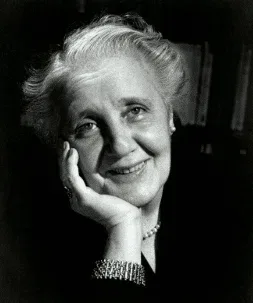
I believe it is also useful to interpret such situations using the concepts of Paranoid-Schizoid position (PS position), Depressive position (D position), and Splitting presented by psychoanalyst Melanie Klein (1882–1960).
As mentioned in the book "The Discovery of the Unconscious" (Kodansha Gendai Shinsho, 2026) by Kenta Kudo, a historian of ideas focusing on psychoanalysis and modern philosophy, Klein's concepts are better understood not as fixed developmental stages, but as "mental postures/regimes (positions)" that one moves between throughout life.
The incomprehensible words and actions of people with dementia can be understood as this "regression and fluctuation of positions."
Also, the concept of "splitting," which is a characteristic of the paranoid-schizoid position, is one of the defense mechanisms of the mind that perceives oneself or others as either "completely good" or "completely bad," and I believe this is also frequently seen in people with dementia.
When the integration of the ego can no longer be maintained, the person tries to protect themselves by perceiving the object (caregiver or family member) as two separate entities: a "perfectly good existence" and a "harmful bad existence."
For example, a caregiver who was thanked as a "lifesaver" just a moment ago is suddenly labeled a "thief" and fiercely accused the moment the patient thinks their wallet is missing—such persecutory delusions and delusions of theft are truly typical manifestations of splitting. It is a state where the function of continuing to integrate the "good side" and "bad side" of the other person as the same individual (whole object relations) is not working well.
2. Depressive Position and Paranoid-Schizoid Position
(1) Regression to the Paranoid-Schizoid Position and "Persecutory Anxiety" I believe that the early to middle stages of dementia are in the "depressive position," and as dementia becomes severe, it shifts to the "paranoid-schizoid position."
Kenta Kudo explains the "paranoid-schizoid position" as follows.
When cognitive impairment progresses and the elderly face the "terror of being suddenly thrown into an unfamiliar world," they regress to the paranoid-schizoid position to protect themselves. Aggressive behavior such as "being deceived" or "being poisoned" is a projection of the destructive impulses and terror held within, and can be considered a defensive reaction stemming from anxiety.
(2) Fluctuation of the Depressive Position and "Grief and Reparation" The depressive position is moving out of the state (paranoid-schizoid position) where one viewed the mother, etc., as divided into a "good part that loves" and a "bad part that attacks," and coming to perceive the other person as a single human being who possesses both "good parts" and "bad parts." In that process, it is said that anxiety, guilt, and sadness arise from the fear that one might have hurt a precious "good object" through one's own destructive impulses (such as anger).
From the early to middle stages of dementia, when elderly people vaguely feel their own functional decline and memory loss, they may harbor anxiety and guilt such as "Have I hurt my precious self or others?" The words and gestures of "I'm sorry for always causing you trouble" shown when they are calm can be considered an expression of the desire to "make reparations" in a depressive state of mind.
* The "depression" in "depressive position" does not refer to pathological "clinical depression," but to the experience of "mental pain" that is essential for maturity. The process of enduring this pain and making amends is considered essential for personality growth.
(3) Comparison Table of Paranoid-Schizoid Position and Depressive Position (4) The Emergence of Time Perception and Other PerceptionKenta Kudo points out that an infant shortly after birth, who is in the paranoid-schizoid position, does not yet have the concept of “absence.”
In the paranoid-schizoid position, where “absence” does not exist, the infant has no perception of time. Therefore, it may be that people with dementia who are also in the paranoid-schizoid position have a weakened sense of time.
Furthermore, for people with dementia in the paranoid-schizoid position, whose memory function has declined and who can no longer understand “absence,” there is a risk that their ability to recognize others will weaken and they will find it harder to exercise patience.
For people with dementia in the paranoid-schizoid position, both “time” and “others” become tenuous, and I believe caregivers need to firmly accept the situation where it becomes “difficult to be patient.”
3. The Paranoid-Schizoid Position in People with Dementia
People whose cognitive functions have declined and who are in the paranoid-schizoid position find it difficult to give meaning to the world, and their ego, exposed to intense anxiety, reacts for the sake of self-defense, triggering typical behaviors.
(1) Paranoid-Schizoid Position・Persecutory anxiety/Paranoia (“The world looks like an enemy”): This occurs when it becomes difficult to grasp the big picture, and an uncertain environment or the presence of others approaches as “something that threatens oneself.”
・Delusion of theft/Accusation of theft: Because the ego would collapse if they accepted the fact that “I don’t have my wallet = I lost it/forgot it,” they interpret it as “someone stole it (attacked by a malicious person)” to protect themselves.
・Paranoid/Defensive aggression: When trying to take off their clothes for care, they interpret it as being “sexually or physically attacked” and may lash out with intense verbal abuse or physical resistance.
・Delusion of poisoning/Refusal to eat: They may stubbornly refuse the food served, convinced that “it contains poison” or “they are trying to kill me.”
People experiencing splitting can only see others or things as partial objects of “good parts” and “bad parts,” and human relationships and evaluations tend to change extremely in black-and-white terms.
・Intense deification and demonization of caregivers: They may turn around and verbally abuse a caregiver they were excessively relying on until just a moment ago, calling them “You devil! You monster!” if something goes slightly against their wishes, despite having called them “You are the only one I can rely on” or “You are like a god.”
・Fixation on specific staff and excessive rejection: They may extremely categorize people, such as “Person A is a good person (a completely good object)” and “Person B is a bully (a completely bad object),” and may refuse any intervention from Person B entirely.
・Dichotomy between family and others: There are also cases where they draw extreme boundaries, such as “Family (or a specific caregiver) are absolute allies” and “Everyone else at the facility is an enemy.”
Projective identification is a defense mechanism in which negative emotions such as unacceptable anger, anxiety, fear, and a sense of collapse are projected onto the other person, unconsciously causing that person to harbor the same emotions or engage in the same behaviors.
Kenta Kudo explains this projective identification as follows.
Projective identification is thought to manifest in dementia care settings as follows.
・Directing intense anxiety or discomfort with full force (feelings of wanting to go home or shouting): One may project intense, inexpressible discomfort or fear onto the other person, and through attitudes or words, cause the other person to become angry or confused. For example, they may vent shouts or excitement such as "I'm going home!" or "Let me out of here!" at those around them, attempting to force an immediate change in the environment.
・Shifting responsibility for one's own emotions: Even though they are the ones feeling anxious and irritable, they avoid facing their own anxiety or emotions they do not want to acknowledge by convincing themselves that "the other person made me angry" or "the other person is bad." For example, they may push responsibility onto the other person by saying things like, "You are making me uncomfortable because you are irritable," or "You are making me angry."
"Projection" merely reflects emotions onto the other person within one's own mind and does not affect the other person's actual feelings or actions. On the other hand, "projective identification" differs in that it elicits an actual reaction from the other person, and that interaction circulates within the relationship.
Projective identification is not caused by malice or personality changes, but can be considered a defensive fortress desperately built by an unstable mind to protect its own existence.
As I will detail later, projective identification, one of the characteristics of the paranoid-schizoid position, is also a key to unraveling the mechanism of abuse. I believe.
4. Guidelines for Responding to the Paranoid-Schizoid Position
(1) Containing the "Bad Object"Even if a caregiver is made into a "bad person," it is important not to perceive it as a personal attack, but to understand that "the person is unable to contain their intense anxiety and is projecting it onto me through splitting." By the staff accepting those negative emotions and becoming a safe container, the person's anxiety will gradually regain composure.
* Containing is a process in psychoanalysis and psychotherapy where another person temporarily accepts, organizes, and returns unbearable feelings of anxiety or pain to the individual in a form that can be understood.
(2) From a Black-and-White World to Maintaining "Ambivalence" Instead of suppressing BPSD in people with dementia as "problem behavior that occurs for no reason because of dementia," the first step in starting care is to understand that "they have regressed to the paranoid-schizoid position and are desperately fighting against intense persecutory anxiety."
When dealing with delusions such as theft, rather than forcibly trying to persuade them logically (forcing integration) by saying "No one stole it," it is helpful to understand that the person is in the paranoid-schizoid position and first provide a space where they can feel emotionally safe by saying "You were feeling anxious, weren't you?" which helps them regain a sense of inner wholeness (a depressive-position-like calmness).
In this way, Klein's theory provides a perspective that allows us to re-examine the seemingly irrational words and actions of elderly people with dementia not as "madness" or "mere brain dysfunction," but as "defenses and mental workings that the ego performs desperately when faced with anxiety."
5. Concrete Responses to the Paranoid-Schizoid Position
Paranoid-schizoid-like words and actions shown by elderly people with dementia are mainly characterized by "persecutory anxiety to protect oneself," "splitting (extreme division of good/bad)," and "projective identification (projection of inner anxiety or aggression outward)."
Elderly people with dementia in the paranoid-schizoid position are in the midst of intense persecutory anxiety and splitting (good/bad division). When dealing with elderly people in this state, what is required of on-site care staff is not the "presentation of logical correctness," but the "provision of a safe environment (container)."
Specifically, the following response approaches are effective.
When in the paranoid-schizoid position, the experience of being "persecuted" is 100% truth in the person's world. If you try to persuade them by presenting reality, the person will perceive that "the persecutor is trying to deceive me" and will become even more defensive (aggressive).
Inappropriate response: "No one stole anything, you are mistaken," "There is no poison in it, it is a meal I made properly."
Appropriate response: "You are very troubled because something important is missing," "If you don't know what is in it, you are afraid to eat it, aren't you?"
Instead of the "content" of the words and actions (delusions), we should lean into the reality of the "fear/anxiety" emotions behind them and accept them in words (containing).
(2) Avoid being caught between the "good object" and the "bad object," and distribute the response among the team (dealing with splitting)When splitting occurs, a specific staff member becomes fixed as a "God (good object)," while another is fixed as a "Devil (bad object)." If the staff member designated as the "good object" tries to handle everything alone, the moment they become exhausted, they suddenly plummet into being a "bad object," and the individual's condition also deteriorates severely.
In such cases, the staff member cast as the "bad object" should not intervene forcefully but should step back and let another staff member (or a third-party presence) take over. The staff member cast as the "good object" should also avoid trying to solve everything alone and, while conveying the "good qualities" of other staff members little by little by saying things like, "So-and-so was also worried about you," support the integration of the object without rushing.
When intense discomfort or anger is projected onto the caregiver through projective identification, the caregiver themselves may get caught up in those emotions and be tempted to respond with anger or fear (countertransference).
When verbal abuse or violence occurs, it is important to maintain a safe distance and quietly say, "I will step back and watch over you to keep you safe." It is also key to convey the stance that "this place (facility/room) is a safe place where no one will hurt you," not just through words, but through your entire demeanor, using a calm tone (low voice, relaxed movements).
The mental state in the paranoid-schizoid position is characterized by difficulty in receiving verbal communication. A sensory approach that bypasses cognitive functions encourages recovery toward the depressive position (calm whole-object relations).
For example, the following approaches are considered effective.
Handing them a warm cup of tea to warm their hands (physical sense of security).
Taking deep breaths together or performing gentle touch care.
Playing music they have long been familiar with and enjoy, or suggesting simple, reassuring manual tasks like folding towels.
Caregivers do not need to try to become a "perfect container" individually. Rather than holding it all in alone,sharing the assessment that "this person is currently in the terror of the paranoid-schizoid position" as a team and forming a container as an entire organizationis the most important approach.
The transition to the depressive position in elderly care becomes possible when the individual begins to move past the persecutory anxiety and splitting of the paranoid-schizoid position and accepts whole-object relations, acknowledging that "I and others are separate beings, and both have good and bad aspects."
6. Depressive Position
Amidst the decline associated with dementia and aging, elderly individuals who have reached the depressive position recognize their own functional decline and their impact on those around them, and begin to show behaviors accompanied by "guilt," "grief," "gratitude or remorse toward others," and a "desire for reparation."
The characteristics of the depressive position are introduced below.
These are behaviors that arise from accepting the reality that "I am causing trouble for the caregiver" or "I cannot do things like I used to."
• Apologies such as "I'm sorry for always being so much trouble": When receiving excretion assistance or physical care, they sense their own inadequacy and express heartfelt remorse to the caregiver.
• Grief such as "There is no point in me living": Sensing that their decline is a burden on their family and those around them, they make negative statements (grief of loss) out of remorse.
This is a state where they have come to see the caregiver more three-dimensionally, not as a "bad person attacking them" or a "perfect person who does everything for them," but as "a human being working hard for their sake."
• Appreciation such as "This must be hard for you too, please take a rest": They turn their attention to the fatigue and position of the caregiver providing their care and offer words of consideration.
These are behaviors based on the psychological defense mechanism of "wanting to restore the damaged object (relationships, oneself, or the surrounding environment) to its original state."
• Actions to help or fulfill a role: Actions such as folding laundry or trying to clear dishes while asking, "Is there anything I can help with?" This is not merely killing time, but an expression of the heart wanting to "make up for the trouble caused by contributing to those around me (reparation)."
• Trying to groom oneself: When appearing in front of others, they begin to care about their clothes and hairstyle, showing a stance of wanting to tidy up and "keep things looking nice" (an expression of the heart wanting to treat oneself and human relationships with care).
Because behaviors in the depressive position can at first glance look like "being depressed" or "feeling down and lacking energy," staff in the field may sometimes offer excessive encouragement or overlook it as the progression of dementia symptoms.
However, psychoanalytically, the transition to the depressive position is a "mature process (a sign of recovery) in which the heart is trying to face reality and others sincerely."
• Avoid excessive denial like "That's not true at all": If you strongly deny it by saying "You're not a bother at all!" when the person says "I'm sorry," it may leave the person's earnest guilt and desire for reparation with nowhere to go.
• Accept the desire for reparation (helping out, etc.): Instead of stopping them by saying "It's dangerous, please sit down," asking them to take on a role within safe limits, such as "It helps me when you help out, So-and-so," can fulfill the person's "energy for reparation" and lead to a strong sense of security.
The phenomenon where elderly people with dementia intensely oscillate between the paranoid-schizoid position and the depressive positionis frequently seen in care settings. A person who was tearing up just moments ago saying, "You are the only one I can rely on" or "I'm sorry" (depressive position) might suddenly change to a state of rage minutes later, shouting, "Thief!" or "You're trying to lock me up!" (to the paranoid-schizoid position).
7. "Fluctuation" between PS/D
People with dementia often fluctuate between the paranoid-schizoid position (PS) and the depressive position (D). This rapid oscillation occurs because the weakened ego can no longer bear the weight of the 'guilt and sorrow' of the depressive position, and regresses to the 'persecution and anger' of the paranoid-schizoid position as a defense to prevent collapse.
Below are some key points for frontline caregivers to avoid getting caught up in this fluctuation and to interact appropriately.
When a person's condition shifts back and forth, caregivers often feel confused, thinking, 'Their words and actions are inconsistent' or 'Did I fail in my approach?'
Shift in perception: Understand that 'intense emotional swings are a defense process where the person's ego is desperately trying to maintain balance.'
How to interact: It is important to maintain a certain emotional distance (neutrality)—do not be disappointed just because they become enraged (paranoid-schizoid position), and do not let your guard down easily thinking 'they are fine now' just because they show sadness (depressive position).
If a caregiver empathizes too deeply with the guilt expressed in the depressive position, such as 'I'm sorry' or 'I'm sorry for being a burden,' it may actually amplify the person's guilt, and unable to bear that heaviness, the person may bounce back to the PS position (anger or persecution).
・Inappropriate response: Taking it heavily by saying, 'Please don't blame yourself so much' or 'It makes me sad when you say that.'
・Appropriate response: 'Thank you for your concern. Could you help me fold these towels?'—quickly converting guilt into a small action (repair) to let it dissipate (providing repair).
The moment they suddenly plunge from the depressive position into the paranoid-schizoid position is a sign that they have exceeded their internal safety zone.
・Appropriate response: Absolutely avoid persuasion or questioning the reason (e.g., 'You were so kind just a moment ago, what happened?'), and the golden rule is to minimize stimulation, watch over them quietly, and pass the baton of care.
・Team coordination: There is a limit to how long one staff member can continue to be the 'good object' or 'bad object.' It is effective for another staff member to step in smoothly as if nothing happened (distributed response) the moment the person swings into the paranoid-schizoid position.
When the person's condition is fluctuating between the paranoid-schizoid position and the depressive position, the most necessary thing is a sense of stability that says, 'No matter what state you are in, my way of accepting you remains the same.'
If you show 'fluctuation in interaction,' such as being overly kind when they are in a good state (depressive position) and treating them coldly when they are in a bad state (paranoid-schizoid position), the person's fluctuation between the paranoid-schizoid and depressive positions will become even more intense.
Maintaining a flat and consistent attitude—'Whether you are angry or depressed, we are here to protect your safety'—will gradually reduce the amplitude of the person's internal swings.
The movement between the paranoid-schizoid position and the depressive position is also proof that the person is 'struggling to accept reality.' Rather than trying to forcibly stop the swinging pendulum, the most appropriate approach is to prepare a 'soft framework (containing as a team)' that can safely accept the pendulum regardless of which way it swings.
8. Self-care for caregivers
Being exposed daily to the intense emotional fluctuations of elderly people with dementia (the back-and-forth between paranoid-schizoid/depressive positions) places an excessive burden on caregivers. To prevent exhaustion and emotional outbursts, it is important for caregivers to 'structurally understand what is happening inside themselves and practice self-care by processing emotions rather than bottling them up.'
Specifically, I think it is good to incorporate the following approaches into your daily routine.
The emotions that arise in the caregiver (irritation, guilt, helplessness) when encountering the person's intense emotions (anger, fear, dependency, guilt) are called 'countertransference.'
・View emotions as 'something handed to you, not your own': When you feel irritated because a user has directed anger at you, instead of thinking, 'I am angry because I am immature,' it is better to understand that 'the unprocessable collapse anxiety (negative emotions of the paranoid-schizoid position) inside the person has been projected into me (projective identification).'
・Labeling emotions (objectification): It is also effective to observe (monitor) and mutter to yourself, stepping back mentally, 'I am currently being made to feel irritated by taking on the person's fear on their behalf.'
If you aim to be a 'perfect container (caregiver)' who accepts 100% of the person's negative emotions and always responds with a smile and divine service, the container itself will break (burnout). Do not blame yourself for sometimes leaving the scene because you cannot accept the emotions, or for sighing; accept yourself, thinking, 'This is a natural defense reaction as a human being, and this is enough for today.'
For example, it is also important to accept that 'accepting 60% is enough.'
If you continue to hold onto emotions alone, the caregiver's own ego will undergo splitting (an extreme dismissal like 'this user is the worst'), leading to emotional paralysis (burnout).
It is also necessary to put your negative emotions into words and vent them (entrusting the containing to the team) during handovers or casual chats, saying, 'Honestly, I was really annoyed when Mr./Ms. XX treated me like a thief today.' By accepting each other, saying, 'It's natural to be irritated by that' or 'You endured it well,' colleagues can dilute and detoxify the projections carried individually across the entire team.
For example, at the moment you change from your uniform into your own clothes, or the moment you walk out the door of your workplace, you draw a line in your mind, saying, 'From here on, it is my own time,' and 'The person's anxiety is their own, and it is not my responsibility.' Such psychological rituals that clearly separate the work space from the personal space are likely necessary.
Furthermore, it is also important to develop the habit of bringing your consciousness back from the heavy world of the paranoid-schizoid/depressive position to 'your own world' by listening to music you like after work, soaking in a warm bath, or moving your body.
For care workers to maintain a healthy ego and continue to have a 'stable axis that does not break even when shaken' leads, as a result, to the provision of the highest quality containing (receptacle).
9. Supplementary Discussion: Projective Identification and Abuse
The concept of Projective Identification, one of the characteristics of the paranoid-schizoid position, can explain extremely vividly the psychological mechanism of why care workers in care settings become unable to control their emotions and end up committing abuse (inappropriate interactions or physical/psychological abuse).
In conclusion, abuse can be interpreted not just as a result of 'the care worker's individual malice or character issues,' but as 'the result of the care worker being unable to contain the intense negative emotions (projective identification) thrown at them by the person requiring care, being swallowed by them, and shooting them back out as behavior.'
In the paranoid-schizoid position, because the ego is immature, one cannot simultaneously hold conflicting emotions within oneself (life instinct = love/security / death instinct = aggression/fear of disintegration). Therefore, the ego first separates emotions into 'good things' and 'bad things' (splitting). Then, it separates the 'bad parts' (intense anxiety and aggression) that it cannot process from itself, and forcibly throws them into an external object (a caregiver, mother, etc.) to try to dominate or make the other person uncomfortable. This series of mental operations is projective identification.
(2) Projective identification is a general two-person relationshipKenta Kudo introduces the British psychoanalyst Wilfred Ruprecht Bion (1897–1979) as a person who developed Melanie Klein's theory of projective identification.
I think the characteristic of Bion is that he views projective identification not as something pathological, but as a more general two-person relationship.
(3) The difference from 'mere projection'Normal 'projection' merely stops at 'believing that one's own anger is "that person is angry" (a misunderstanding in one's head).'
However, 'projective identification' in the paranoid-schizoid position has the characteristic of throwing one's own negative emotions into the other person and actually manipulating or infecting the other person.
The person on the receiving end (the care worker) actually begins to feel irritation, strong disgust, and helplessness (identification), and the person who projected (the person requiring care) sees their own aggression and discomfort in the other person, becomes convinced that 'as expected, that person is attacking me (a persecutory object),' and strengthens their persecutory anxiety even more.
In this way, projective identification is the engine that creates the vicious cycle (paranoid loop) unique to the paranoid-schizoid position: 'splitting -> projection -> infection/domination of the other -> strengthening of persecutory feelings.'
(4) Changes due to the transition to the depressive positionWhen the mind stabilizes and transitions to the depressive position, one becomes able to perceive oneself and others as a single integrated existence (whole object).
When transitioning to the depressive position, intense projective identification and splitting fade into the background, and instead, more mature defenses and interpersonal relationships such as 'guilt,' 'feeling sorry for the other person,' and 'a desire to repair' become dominant.
Therefore, the state where an elderly person with dementia is 'lashing out their own anxiety and irritation at those around them, actually making staff enraged or exhausted' can be considered the very moment when the characteristic of 'projective identification' unique to the paranoid-schizoid position is strongly operating.
Due to dementia or decline in physical function, the person requiring care harbors intense fear of disintegration, persecutory anxiety, and intense anger or misery. However, because the ego is weak, they cannot process (contain) those emotions alone.
Therefore, through verbal abuse, refusal, loud voices, or unsanitary behavior, the person requiring care forcibly throws the unbearable negative emotions within themselves into the care worker (projection).
The characteristic of projective identification lies in the point that the person thrown into (the care worker) actually begins to feel those emotions (anger, helplessness, disgust). The care worker unconsciously takes on the 'intense anger' and 'sense of worthlessness' that the person could not process (identification), and begins to feel intense irritation and hatred as if they were their own emotions (the occurrence of intense
countertransference).
Normally, professional caregivers take on the role of digesting and detoxifying these projected emotions—recognizing them as 'an expression of the individual's anxiety'—and returning a sense of security (containing).
However, when factors such as staff shortages, fatigue, and isolation combine with past trauma, the caregiver's mind (the container) reaches its capacity and breaks.
Unable to withstand the toxic intensity of the negative emotions projected into them, caregivers are forced to expel those emotions externally to defend their own minds.
'Throwing the projected anger or discomfort back at the individual in the form of words or violence'—this is abuse (acting-out) as viewed through psychoanalysis.
By viewing abuse as a 'failure of projective identification (destruction of the container),' effective preventive measures that go beyond traditional 'moral education' become visible.
・The realization that 'feeling irritated is not my fault'
Caregivers should understand that the intense anger or disgust they feel is not because they are 'incompetent,' but because it is 'psychological toxin projected into them by the other person.' This understanding alone creates a cushion that allows them to step back and prevent impulsive acting-out.
・From 'individual containers' to 'team containers'
If one continues to hold onto projected emotions alone, even the most excellent staff will inevitably have their container destroyed. It is essential to have a shared space within the team where negative emotions, such as 'I was made to feel intensely irritated by Mr./Ms. X today,' can be safely vented, diluted, and detoxified.
In this way, the concept of projective identification provides a very deep insight that allows us to reframe the painful phenomenon of abuse not as a 'personal character flaw,' but as an interaction of emotions swirling between people and a failure of the structure that supports them.