Introduction
Thank you so much for watching the serial TV novel 'Come Come Everybody' until the very end.
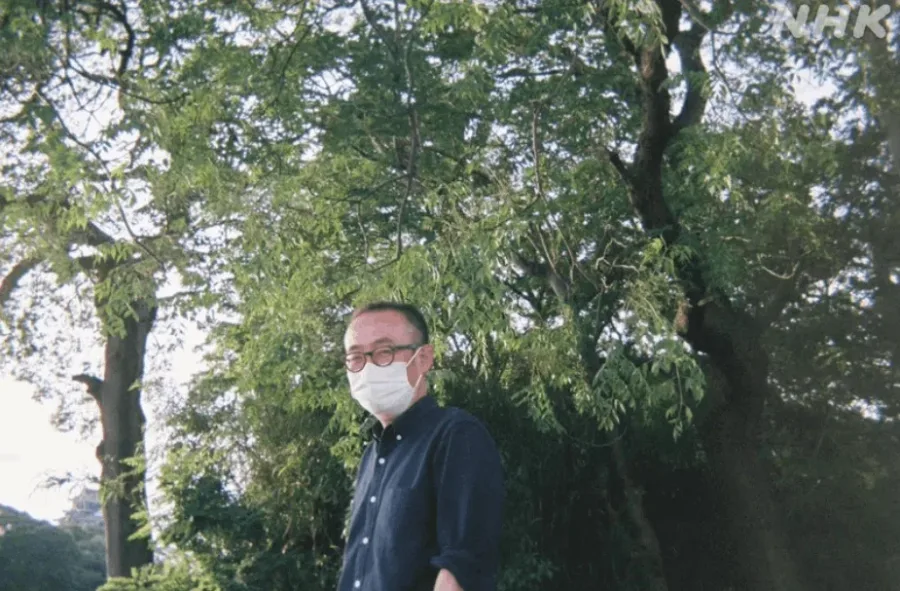
I am Mojiri Adachi, the chief director. This is my second post on note.
I have nothing but gratitude for the many people who read my previous post as well. This is the final article for 'Come Come Everybody,' which was supported by so many of you.
From April 11th, the serial TV novel 'Chimudondon' began, and the stage of the 'Asadora' moved to Okinawa.
It has been nearly a month since the broadcast of 'Come Come Everybody' ended, but personally, I still don't have the feeling that it's over. I also don't have the feeling that I've accomplished it!
'A strange feeling'—that is the most fitting way to put it.
This time, I had the opportunity to bring 'Come Come Everybody' to you all again in the form of an omnibus. Originally, I had planned to upload a note article immediately after the final episode aired.
However, is this what it means to have writer's block? I completely lost sight of what I should convey to everyone, and (though it is a failure as a working professional) I kept putting off the promised manuscript.
Now, 'Come Come Everybody' has completely left my hands. I can only look back on the days of raising a child who has left the nest. But... there are things I can only write now, things I can only convey now, and I am writing this believing that!
Over the three years since the project began in April 2019, the greatest trial was, without a doubt, the 'COVID-19 pandemic.' It forced us to fundamentally rethink everything. What does it mean to create a drama and deliver it to everyone in this day and age? I have been thinking about this throughout the entire production period.
During the broadcast, I received so much feedback from everyone. This was the first time I had heard the term 'drama analysis' used so familiarly.
Until now, I had been making dramas with the image of 'delivering a work created by the writer and nurtured by the cast and staff to the viewers,' but this time, I fell into a slightly different sensation.
'A work that the writer created and the cast and staff tried to nurture, which the viewers firmly nurtured and watched over until the end', that is the feeling I had.
This time, I would like to talk about what I personally experienced, felt, and thought in my position as 'director' through the creation of this work, 'Come Come Everybody.' I hope you will feel free to join me.
The initial ambition—to create a drama that remains in people's memories
Three years ago, I had just finished an 'Asadora' called 'Manpuku'.
During filming, I suffered from ureteral stones, couldn't drink at the wrap party, and was immediately hospitalized for surgery afterward. With nothing to do in the hospital room, I thought about the future with my weakened body. It was already decided that I would be in charge of a Saturday drama program in the autumn.
While I was idly thinking about what would come after that, I thought that since no one was thinking about the 'Asadora' three years ahead yet, if I raised my hand now, maybe I could be allowed to be an 'Asadora chief director' for the first time. Such a naive thought sprouted in me...
After being discharged from the hospital, I first visited the writer, Yuki Fujimoto.
Since the drama 'Fuufu Zenzai' that we worked on together before, we had met from time to time and talked about what we wanted to do, using our dreams as a side dish for our drinks, so in that flow, we talked a lot about how we wanted to try doing an Asadora.
'Would you like to try doing an Asadora?'
'I want to try writing one again'
Since she said that, I was fired up, telling my boss that Fujimoto-san also wanted to do it!
Then, surprisingly, there was one person who had the exact same thought: 'An Asadora with Fujimoto-san.' It was the production supervisor, Reijiro Horinouchi. So, he told us to launch the project together, and things progressed smoothly, and the project was launched immediately.
At first, Fujimoto-san was working on other jobs, and the five initial members, led by Horinouchi, were also making a work called the Saturday drama 'Kokoro no Kizu wo Iyasu to iu Koto'. In the midst of that, we gradually nurtured the project.
What kind of drama should we make? For the first year, we still had plenty of time to talk freely. The initial members held over 40 meetings.
We discussed not only the content of the drama's plan but also the guidelines for 'how to make' the drama and what we would value most in this project.
What would constitute success for this project?
While NHK broadcasts have never prioritized ratings as their primary goal, they were still a concern. However, (though it was before the COVID-19 pandemic) online streaming culture was emerging rapidly, and television viewing habits were beginning to change. The value standard of ratings was also starting to waver.
In such an era, defining what constitutes 'success' was a very troubling point.
Looking back at the notes I scribbled in my notebook at the time, I see I wrote this.
Television is a medium where, despite reruns, the main event is essentially a one-time broadcast. I have fought to find ways to deliver that singular 'live experience' to as many people as possible.
But to be honest, it is very sad that a program you poured your heart and soul into is only watched once. Perhaps my earnest wish at the time was at least to 'make something that stays in people's memories.'
Moreover, you basically cannot see the faces of the people watching television. To put it bluntly, once you make it, that's the end of it.
Is that really okay?
My seniors have always told me, 'Who do you want to watch this? Even if it's just someone close to you, picture their face when you make it.'
On a personal note, I had a close friend who passed away a few years ago. As a prop manager of the same generation, we shared the ups and downs on set since we were underlings, and we were colleagues who could speak our minds without reservation. His hometown was Okayama.
This time, since one of the settings of the story was Okayama, I thought of him. I secretly decided to make 'Come Come Everybody' while constantly asking myself what Kenta would think if he watched this drama.
I continue to write this in my notebook.
Embarrassingly, this was my initial, naive ambition.
Always being emotional is actually very difficult. For example, even when shooting a group shot (a cut showing multiple people from a slightly pulled-back angle), I wouldn't just make it a cut that 'explains' where everyone is and who they are talking to in what situation, but rather a cut that reveals the emotions of each person present.
I wanted to make images where, no matter which single cut you take, someone's emotions are expressed.
I vaguely imagined that if I kept weaving such images together, I would surely be able to create something that moves people's hearts.
An experience that shook even the 'way of making' to its core
As we proceeded with preparations, an unexpected situation occurred: the 'COVID-19 pandemic'.
In April 2020, the first state of emergency was declared, and we were forced to interrupt our meetings with the writer, Mr. Fujimoto. I entered a period of staying home for a while. A debate erupted over whether 'dramas are essential or non-essential'.
I remember feeling quite shaken when I heard voices saying, 'We're going to make a remote drama!' I didn't even know what would happen to the 'Asadora' (morning drama).
While staying home, I had more opportunities to watch online streaming content. I was often made to think about the role of television.
While watching the many 'remote dramas' released by creators who started moving intensely to do something now, feeling half-frustrated, I told myself, 'No, no, now is the time for me to focus on preparing for Come Come Everybody,' but my thinking had completely stopped.
I need to organize my thoughts... Driven by that feeling, I rethought what I wanted to value in making a drama. First, I listed three items.
Content:The planning content, the drama's story, and the finish of the drama itself, including everything else.Method of making:
What approach and method should be used to create that 'content'.Method of delivery:
In what form and by what method should the finished product be shown to everyone.
I thought that when determining what to value, it would get complicated if these three were confused.
At the time, I felt that 'remote dramas' were, in a sense, placing value on the 'method of creation.' If I may be so bold, it was because there were many instances where I felt the 'content' was lacking. However, they captured the present moment overwhelmingly well. It was 'content' that could only be created now, and there was meaning in 'delivering' it in real-time.
...and so on. As I organized my thoughts based on these three points, various things became clear.
And what I realized was the obvious fact that if the 'content' isn't solid, it won't be interesting. As long as it is a television drama, ultimately, I have no choice but to think based on the criteria that have always been used: is it interesting, is it worth watching, can people empathize with it... The moment I realized that, I decided to return to the basics.
—Do what you can now, without trying to be clever, with all your heart and soul.
In the end, it's a matter of mindset, but I arrived at that feeling. What is necessary is to always return to the basics. First, create the 'content' properly. Looking back now, being able to rethink the meaning of that was a very important step.
Heroine Auditions During the COVID-19 Pandemic
Although my mind was made up, various trials visited us in terms of the 'method of creation.' One of them was casting. It was still nearly a year before filming, but we had to start moving on casting as well.
However, the situation during this COVID-19 pandemic presented a completely different aspect than usual.
Even when talking to managers at various talent agencies, there were far too many actors whose future schedules were invisible, saying things like, 'The drama we were scheduled to do this year looks like it will be next year, but it hasn't been decided when yet...' or 'There is talk of a movie, but I have no idea when it will happen...'
Many stage plays were also canceled or postponed, and above all, I heard that the movie industry was in a terrible state.
Amidst the uncertainty of the entire film, drama, and theater industry, a discussion arose about whether or not to hold auditions.
When people think of 'Asadora' (morning dramas), many probably have the image of heroine auditions.
The best part of auditions is, after all, that they are full of new encounters and possibilities.
That value is more than enough to offset the time and effort required to hold them. Precisely because we had the chance to welcome three heroines, I strongly wished to hold auditions!
The concept of depicting the first heroine, Yasuko, from her teens to her 20s; the second heroine, Rui, from her teens to nearly 80; and the third heroine, Hinata, from her teens to nearly 60, became visible the moment the framework of depicting three generations was formed.
I definitely wanted to choose Yasuko and Hinata through auditions. Usually, in the case of 'Asadora' auditions, the heroine is decided through document screening followed by several interview screenings.
Since it is a major project with thousands of applicants, it is a big deal in the situation of the COVID-19 pandemic. Wisdom and ingenuity were needed to hold them.
It was when I was talking to Yoko Narahashi, a casting director who provided English guidance and whom I also interviewed. I heard that there is a system in the United States called 'self-tape auditions.'
It is a method where actors film and send videos of themselves introducing themselves or acting. It is a method that was devised in the United States, which is considerably larger than Japan, because, for example, if an actor living on the East Coast auditions on the West Coast, the travel alone would be a huge burden.
As one idea to reduce the risk of infection as much as possible, we decided to incorporate this 'self-tape audition' into the first interview screening after the document screening.
However, once we started preparing, it was a struggle just to create a single instruction document on what kind of video to film and send. Even though what we wanted to ask for was simple, it was difficult to convey it accurately.
I found myself constantly complaining about how much easier it would be if I could just explain it in conversation.
But surely, the agencies and the actors must have gone through a lot of trial and error, because every video sent was well worth watching. We collected about 30 hours of footage for hundreds of people, and I watched all of it, but I never got tired of it.
When we tried it, the video screening had many good aspects.
First, I felt that the applicants were basically sending them in a form they were satisfied with. In the case of in-person auditions, I think there are many cases where people cannot perform at 100% because they are nervous about the atmosphere of the place.
I heard later that there were various patterns of people, such as those who said they did over 10 takes to film the video, or those who decisively did it in one take. In some cases, the person filming was a family member, and I felt I could see their natural expressions, not in a public setting.
And above all, since we were making a work to be delivered via video, we were able to obtain basic information on how they would appear on screen.
The final stage of the auditions involved repeated interviews. Since we were meeting in person, we were careful about infection control.
Writing it like that makes it sound easy, but we were still in a state of wondering what 'infection control' even meant, so everything was trial and error, such as what to prepare, how far apart the seats should be, and whether acting should be done in a way that doesn't bring people close together.
We had all participants wear face shields and set up acrylic boards between us... it became an in-person screening in such a solemn form.
After all, when you meet in person, there are many things you can see that you can't in a video. This time, we had them form groups of three to create one scene. At this stage, the 'direction' is not so much about being on the judging side, but rather being tasked with the job of drawing out the best from the actors who have come to this place. I was desperate.
Leaving calm judgment to the producers, I just kept creating scenes; it was, in a sense, a luxurious time.
This time, we had them perform a two-person play with a 'Yasuko'-like character and a 'Hinata'-like character. It was a scene where 'Hinata' time-travels to 'Yasuko's' era and they meet.
By watching various people play 'Yasuko' and 'Hinata' and having repeated discussions as a team, we were able to imagine the characters of 'Yasuko' and 'Hinata' more concretely. This process is also the real thrill of auditions. It was a very important time.
Finally, after a final selection process called a 'camera test,' where they wore costumes and were filmed on set just like the real thing, we decided that the heroines of 'Come Come Everybody' would be played by Mone Kamishiraishi as Yasuko and Rina Kawaei as Hinata.
Document screening, video screening, and in-person screening. It was a new experience and a challenge. I feel that I was able to get to know the participants from more angles than ever before. I am strongly glad that we persevered and held the auditions.
The Extremely Difficult Task of Scheduling
The aspect most heavily impacted by the COVID-19 pandemic was the shooting schedule.
For 'Come Come Everybody,' two directors, Kazufumi Matsuoka and Takashi Fukagawa, were in charge of creating the schedule, a role commonly known as the 'scheduler.' Both are directors with experience in drama production and possess solid careers and skills.
In fact, Matsuoka directed weeks 10, 12, and 19, while Fukagawa directed week 22.
The job of a scheduler requires an incredibly high level of directing ability. We decided to entrust this role, which is the lifeline of drama production, to these two trusted directors this time.
The scheduler must think through the order in which scenes should be shot while coordinating the circumstances of all departments to build the schedule.
Of course, it is also necessary to coordinate the schedules of all the performers. If there are 15 scenes in a single broadcast, that is a simple calculation of 1,680 scenes over 112 broadcasts. In reality, there are even more scenes. Deciding when and in what order to shoot them is a mind-boggling task.
However, you can never capture good acting or footage just by mechanically solving a puzzle. It would be ideal to shoot in order from the beginning of the script to the end, but there are many times when that is not possible.
For example, the shooting studio is not large enough to build the sets for the shopping district, the Takemura Cleaning Shop, and the jazz cafe all at once. We shoot scenes for one set, then rebuild the set, and then shoot scenes for another set; it is a constant repetition of that process.
Should we shoot the scene where Rui and Joichiro first meet at the 'cleaning shop' first, or should we shoot the scene where Rui listens to Joichiro's trumpet at the 'jazz cafe' first...
Through fine-tuned negotiations and confirmations—like threading a needle—considering set availability, location circumstances, performer schedules, and weather, we adjust things so that we can shoot as close to the flow of the script as possible.
By doing so, we aim to draw out the best performances from the actors and achieve a better final product.
The COVID-19 pandemic added further pressure to an already difficult scheduling process. Miraculously, there were no instances where a performer contracted COVID-19 and caused a major impact on filming.
Even when filming for 'Come Come Everybody' was going smoothly, there were many times when other drama sets where the actors were working would shut down, making it impossible to predict future schedules. There were also several times when we had to postpone location shoots due to the declaration of a state of emergency. Matsuoka and Fukagawa were always thinking of and preparing contingency plans in case filming became impossible.
I myself have served as a scheduler for an 'Asadora' in the past. But if you asked me if I could build a schedule in the current situation where you never know what might happen, I would have absolutely no confidence.
After the script was completed and the schedule was set, Fukagawa directed the 22nd week, just before the final week. It was a true display of a playing manager, working with all his might to shoot using the schedule he had created himself.
I am also truly grateful to all the performers' managers. I think I made many unreasonable requests. Being able to finish filming safely is the greatest honor of all. I would like to express my gratitude once again.
The Question of On-Site Communication Skills
Filming for 'Come Come Everybody' took place over approximately one year, from March 10, 2021, to February 26, 2022.
Considering the situation at one point, just being able to start filming safely was enough to make me want to cry. We had built up the know-how for 'infection control' during filming with the previous Osaka-produced work 'Ochoyan,' so we were able to carry that over and proceed relatively smoothly (though there was, of course, trial and error).
Returning to the first point, filming is the phase where you finally delve into the 'content' in earnest. With the goal of 'delivering' to the viewers always in mind, we delve into the 'content' while using trial and error in our 'production methods.'
As I wrote in my previous note article, I thought about what kind of mood I wanted people to be in when watching this drama.
'Warm, gentle, and beloved'
We started filming with those keywords in mind.
When filming began, there was one small thing that confused me.
In the past, I often communicated with staff and performers by going out to eat (or, to put it bluntly, going out for drinks) before starting a shoot, but I was faced with a situation where that was completely impossible!
In the case of the Osaka station, performers coming from Tokyo often stay overnight, so it naturally leads to things like 'Shall we go for a drink after rehearsal?'... I considered that kind of 'training camp' atmosphere to be one of the merits of Osaka production.
However, this time, we ended up finishing the year without being able to go out for drinks almost at all. This is different from when I couldn't drink because I had kidney stones during 'Manpuku.'
It was a daily struggle, and I am embarrassed to say it, of having to face how to work and create things without relying on 'nominication' (communication through drinking).
I am basically not good with words, but I made an effort to at least say something to the staff and cast members whenever I made eye contact with them on set.
Among the infection control measures, one was that only the absolute minimum number of personnel were allowed on the filming set. For a long-running production like an 'Asadora' (morning drama), script development, filming, and post-production work are carried out in parallel and non-stop, so every department organizes member rotations to handle the workload.
In the case of directors, normally, even when we are shooting scenes that are not part of our assigned episodes, we would watch the acting on set whenever we had time, but this time, due to infection control measures, that was not possible. A situation arose where we wouldn't know what had been filmed until we saw the finished footage.
The only way to manage was through 'coordination' via communication. Above all, handing over tasks properly and having discussions became even more essential.
Despite such circumstances, the filming was truly stimulating. I was desperate, and I was completely absorbed in it.
What should we deliver to the viewers right now? In a time when such harsh things are happening in the real world, I wanted what we delivered to be something that could be empathized with as 'warm, gentle, and lovable'.
I think I kept in mind to 'not push it' in every sense when it came to the filming style. I have often been told things like, 'It's a drama precisely because it's dramatic, so we want some theatrical flair for the climax!' but this time, I feel like I increasingly wanted to eliminate the feeling of it being 'contrived' as much as possible.
I wanted to create a world that exists naturally, gently snuggling up to the side of the viewer. As filming progressed, I felt that this was the 'content' we should be pursuing.
The ones who made me feel that way were none other than the three heroines.
Mone Kamishiraishi, Eri Fukatsu, and Rina Kawaei. In the world we created, they lived their roles so brilliantly that the word 'earnest' is the most fitting description.
When filming the three of them, it's as if no tricks were needed; I just felt like I wanted to capture 'Yasuko,' 'Rui,' and 'Hinata' living right there.
I wanted to deliver them just as they were. They were heroines who made me think that the world they live in exists right beside us, 'warm, gentle, and lovable.' Being able to create this work with the three of them was an irreplaceable experience.
I learned countless things from the three of them. Their concentration, affection, skill, effort... everything was something I wanted to emulate.
As one symbolic episode, I will talk about Rui's hairstyle.
Many of you may have noticed that her hairstyle changed as the years went by. Regarding Rui's hair, I planned it while consulting with Eri Fukatsu many times. We didn't use wigs; it was all her own hair, and we filmed while gradually cutting it as the years progressed.
It was originally assumed at the plot stage that the reunion of Rui and Yasuko would be depicted at the end of the drama.
I wanted to express that 'by reuniting with Yasuko in a state where Rui was mentally freed from the scar on her forehead, Yasuko herself, who had continued to carry the burden of atonement, would be saved,' so I decided on a hairstyle that was short and did not hide the scar on her forehead at the end.
We planned it by discussing how to express the era and age by gradually shortening it from the long hair at the time of the crank-in toward the end.
I also learned that Ms. Fukatsu had the desire to show various appearances as a form of 'entertainment' while depicting a long period of time.
I could only learn from her truly professional attitude of going all the way to express something.
Wagashi making, dancing, baseball, trumpet, piano, cleaning, abacus, sword fighting, dialects, English, singing... the list is endless.
I made many unreasonable requests to Ms. Fukatsu, Ms. Kamishiraishi, Ms. Kawaei, and the other cast members, not just regarding acting, but they would put on a completely calm face, make tremendous efforts, and perform in a way that made it seem natural for them to be there and do those things.
The driving force behind such a set was, above all, Yuki Fujimoto's script, which possessed overwhelming power.
There was a grand vision until the end in the form of a 'plot' from the beginning, but every time I received a script, there was a fresh surprise in everything, and I kept filming with excitement.
I felt the greatness of Ms. Fujimoto's script every time, which was written using a method where the story moves as the characters live and intersect, without ever forcing the characters to move just to advance the plot.
I feel like I was reading the script with almost the same surprise and emotion as the viewers.
Among the cast members, there was also immense trust in Ms. Fujimoto's script. Surrendering themselves to the script and living in the 'now' of the play with the feelings of the characters—I felt like I was just earnestly filming the figures of those characters.
They were days where I was constantly impressed by the power of the script and the expressive ability of the performers.
What became visible precisely because we depicted 100 years across three generations
When filming ends, we edit the footage. We cut and paste the filmed footage to fit into the 15-minute broadcast slot.
This work is delicate, to say the least. Just by changing the length of a single cut we filmed, the overall impression can even change by 180 degrees.
A drama is, of course, something that the creators make with intention and deliver to the viewers. However, the moment the creators' (if I dare say) 'smug face'—like 'This is moving, right?' or 'This is funny, right?'—becomes visible, it cools the audience down. This balance is truly difficult.
The editing work for 'Come Come Everybody' was handled by a staff member named Hideki Sato throughout the entire series. Basically, Sato and the director in charge worked together, and after a preview involving the producer and other directors, we would have discussions and finalize the form to be broadcast.
When editing the first week, I had considerable discussions with Sato. How should this drama be presented in the first place? How should we convey this world that Ms. Fujimoto creates?
The conclusion and guideline we both reached was for the 'direction to disappear.' It was an image of eliminating artificiality as much as possible, focusing on the characters' emotions, and spinning the story in an orthodox way without any tricks.
The more I worked on the editing, the more I faced the sheer scale of 'depicting 100 years across three generations.' If a drama is meant to follow time from the beginning, there is no single correct answer for how to layer that time.
Sato is an editing staff member who has worked on numerous Taiga dramas and 'Asadora' (morning dramas).
He is a veteran staff member with so many tricks up his sleeve that he would constantly come up with idea after idea, saying, 'If you want to convey this, you could do it this way, or that way.' Even Sato found himself struggling more and more as the episodes progressed.
It is a story spanning a long 100 years. There were countless things that could be depicted by layering time, and there were many choices for how to express them.
Sato, who deeply loves Mr. Fujimoto's scripts, had a catchphrase: 'It can be better. It can be richer.'
In bringing the world of the script to life, he pursued every possible avenue. It was truly a feeling of having lived through those 100 years together. Overwhelmed by the weight of the time we had layered, we proceeded with the editing process through much deliberation and struggle.
Of course, there were many things we planned from the filming stage.
For example, the shopping street in Okayama that was burned down in an air raid and the modern-day shopping street in Okayama. Being able to feel how that place had changed over half a century was one of the true pleasures of depicting a 100-year span. We consciously insisted on using the same shot composition and camera positions.
Just thinking about Hinata running through that same place where the burnt ruins were, where Kinta had wept bitterly... it almost brought me to tears.
Towards the end of the broadcast, major events began to occur in the world. I couldn't help but rethink the meaning of depicting the experiences of ordinary people who lived through these 100 years in Japan, even if it was fiction.
How to 'Deliver' in Today's Era
In the final stages of 'Come Come Everybody,' a character named Annie Hirakawa appeared.
Then, something unexpected happened. Even after entering the final week, discussions were still unfolding among the viewers about whether Annie was Yasuko or not!
It was something I hadn't anticipated at all.
In fact, we had intended to construct the story so that it would be clearly understood that Annie was Yasuko relatively early after her appearance.
We had absolutely no intention of 'hinting' at it little by little...
As I wrote at the beginning, I thought we had considered various ways of 'delivering' the show while making 'Come Come Everybody.' Looking at the various situations these days, I have come to think that just making something and leaving it out there is a very irresponsible thing to do.
We set up a public relations team early on and continued to go through trial and error regarding how to deliver 'Come Come Everybody' with various creative touches.
What I first imagined was a place like a casual amusement park in the neighborhood that you could easily visit.
There is a famous amusement park in a certain part of Kansai with over 100 years of history. A place where you can go without feeling pressured and have fun. We talked about how it would be great if the entire project, including the PR efforts, felt like that.
The idea was that the website and social media would be the entrance to the amusement park, the drama itself would be the main attraction, and there would be other fun little events.
We approached the language team and launched a radio program called 'On the Radio! Come Come Everybody' as one of those efforts.
While we wanted people to enjoy the drama broadcast at a set time on TV, we also tried to create mechanisms to allow people to enjoy the world of this work in different ways through media other than TV, such as social media and radio.
What encouraged me most of all was the truly overwhelming response we received from everyone. As I wrote at the beginning, it felt like 'the audience was raising the work we tried to raise, and watching over it until the end.'
I hadn't anticipated the theories about Annie, but I was truly happy that everyone enjoyed it together with us.
Through 'Come Come Everybody,' I realized something.
'A drama created together with everyone'—that might just be the ideal form of a TV drama in this day and age. Something that can be a catalyst for connecting people, where we can enjoy, empathize, and talk about various things together.
While TV is a one-way street that broadcasts at a fixed time, and as long as this form doesn't change, there are many limitations to how we can 'deliver' it. However, I felt keenly that we must continue to create dramas that are close to everyone and with everyone, by putting effort into the 'content,' 'production method,' and 'delivery method.'
In closing
This has become an incredibly long piece of writing. Thank you very much for reading my clumsy prose this far.
It is my greatest joy that we were able to deliver to you a work that all the staff and cast members worked desperately to nurture and poured their love into until the very end, and that you all cherished it.
There are staff, cast members, historical advisors, and everyone who helped us with filming that I couldn't mention in this article, and above all, everyone who watched the show... I could never have reached this point without the help of so many people.
I would like to take this opportunity to express my gratitude. Thank you so, so much!
Due to the COVID-19 pandemic, we couldn't even have a wrap party. On the final day of filming, we just gathered at the studio to take a commemorative photo. We took the photo without speaking and with our masks off.
Looking at the finished photo...
The shock of realizing that I haven't seen the faces of the staff I met over the past year without their masks on! I don't even know who is who... How sad is that!
There were many trials. I think there will be many more trials to come.
But as in Kyomuzo's words, it is truly 'daily discipline'.
I have been producing dramas in Osaka for a long time, and there are truly many wonderful filming locations in the Kansai region. Just by moving a little, the scenery expands from period drama landscapes to big-city views.
Centering on Kyoto's Uzumasa, once called the 'Hollywood of Japan,' I want to continue creating content that everyone can enjoy while cherishing what can only be done in Kansai.
At the very, very end, I would like to share one episode.
It was the day we recorded the final lines for Jun Hamamura, who played Gin Isomura. When I saw him off, Mr. Hamamura said this: 'I learned a lot.'
These are the words of a super legend, Jun Hamamura, who has been running as a top runner in this world for over half a century.
During the planning stage of this drama, we created a 100-year chronology. We also thoroughly researched the jazz world of 1960s Osaka depicted in the Rui arc.
At that time, the first name I saw was 'Jun Hamamura'.
At the time, Mr. Hamamura worked as an MC at live houses in Osaka and Kyoto called 'jazz cafes.' An MC appeared in the 'Summer Festival' and the trumpet contest in the show, and that is exactly the kind of work he did.
Including the meaning of being a witness to the era, I strongly felt that I wanted him to appear in this drama in some form!
Some time later, I received a call from an old acquaintance, the trumpeter MITCH (who I asked to be our trumpet instructor!).
'Mojiri-san, Mr. Hamamura was talking about the upcoming morning drama on the radio!' There was an exchange like 'What!?', and when I listened closely, it turned out that right after we announced the production of this drama, he was talking on his famous radio program about his memories related to Tadaichi Hirakawa's radio English lessons, which 'Come Come Everybody' is based on, and about post-war jazz.
It was exactly what I had hoped for, so I gathered my courage and asked Mr. Hamamura to appear.
(In the end, thankfully, as 'witnesses of the era,' we were able to have not only Mr. Hamamura, but also many legends participate in the program, including Mitsuo Sagawa, Eiji Kitamura, Sadao Watanabe, and Zenkyo Otsuka.)
And to hear 'I learned a lot' from such an admired legend!!!
No, no, that is my line.
It was nothing but a learning experience for me!
So cool. Amazing. Ah, I want to become an adult like that too!!!
Thank you so much for staying with the serial TV novel 'Come Come Everybody' until the very end!
I will continue to devote myself, hoping to see you all again!
Director Mojiri Adachi
▶▶Click here for the official Twitter!◀◀
▶▶Click here for the official Instagram!◀◀