1. Introduction: It wasn't just a love story
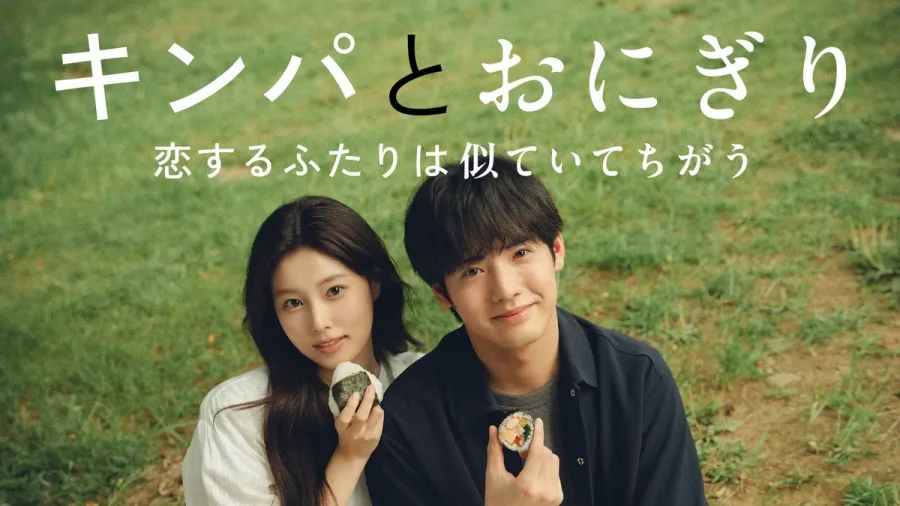
How is everyone doing the morning after the finale? In many ways, I still haven't been able to shake off the lingering effects of "Gimbap and Onigiri".
After watching the final episode, everything clicked: "So that's why it's titled 'Gimbap and Onigiri'...!". Isn't the person who came up with this gimmick a genius?
I actually didn't intend to write this, but since Kang Hye-won-chan appeared in a Japanese production, I wrote this from a fan's perspective to express my gratitude for things I just had to talk about.
I would like to offer a serious analysis of the work and an honest review. Please go easy on me.
※This article contains major spoilers for the ending of the final episode, so if you haven't watched it yet, please navigate away now!※
2. An overly honest impression of the work: It was good precisely because of this ending
The final scene, where they stuffed their faces with gimbap and onigiri, really burned the meaning behind the title into our minds.
The final episode really hit home. It wasn't a typical, classic happy ending. It was a bitter ending, but it was a beautiful and unforgettable romance that will definitely be a turning point in their future lives.
I think it's an ending that will divide opinions.
But they each went their own way, cherishing each other without becoming dependent, and became independent. Rather than forcing a happy ending, it was depicted realistically and left a deep, lingering impression.
Personally, rather than a cliché happy ending, I thought the courage and intentions of the production team in choosing this ending were wonderful.
However, writing honestly after finishing the final episode, it is true that I felt it was a bit of a waste.
Precisely because the psychological depiction in the latter half was so careful and wonderful, I couldn't deny that in the beginning, before the viewers could fully empathize, the romance developed at breakneck speed like a roller coaster.
They started dating in the blink of an eye after meeting, and then immediately started fighting over differences in values, so I'm sure some people were surprised, thinking, "Wait, already!? Hold on!" or "Oh, I see..."
They had to fit a year of love and a breakup into 10 episodes, and I can understand intellectually that they had to rush the beginning to save time for the deep human drama in the second half.
Since whether or not someone continues to watch a drama is often decided by the hook in episodes 1-4, as a fan of the cast, I was a little nervous, thinking, "It would be a shame if people stopped watching here..."
I want to shout to everyone, "No matter how anxious you get along the way, please watch over them warmly until the end." Because it's a drama that is only completed by watching it to the end!
3. The meaning of the title: Expectations and realistic friction "because they are similar"
As I mentioned at the beginning, the title is "Gimbap and Onigiri".
Honestly, at first I thought, 'What kind of title is that? lol' but after watching until the final episode, the meaning hidden in this title became clear.
And the subtitle was "Two People in Love Are Alike Yet Different". It wasn't written on the script, so I wonder if it was added later.
This title and subtitle beautifully expressed the exquisite distance between Japan and South Korea, as well as the differences in values between Taiga and Rin.
Needless to say, in Japan, due to the influence of K-POP and dramas, South Korea is a familiar presence, especially for young people. I am also a typical Korea lover who started with K-POP, and I have been there over 30 times in total because I go many times a year. I love the food and the culture.
On the other hand, in South Korea, as depicted in this drama, the younger generation is increasingly interested in Japan and Japanese culture due to the influence of anime. The number of K-POP idols from Japan has increased, and you see a lot of Japanese restaurants in Seoul. You can easily buy Japanese cosmetics and food. There are also people who listen to J-POP.
If you ask people in their 10s and 20s today about their 'first trip abroad,' I think they would name each other's countries.
And, as was in Rin-chan's lines, there are many words with the same pronunciation.
"Bag (Kaban: gabang)"
"Promise (Yakusoku: yaksok)"
"Shoes (Kutsu: gudu)"
"Impossible (Muri: muri)"
There are so many things that are the same, so many things that are similar. That is precisely why, when I find a 'difference' while talking to a Korean person, 'Oh, this part is different' often leaves a strong impression on me.
Even in the drama,
As there were lines that came from such differences, I thought while watching the drama that because we are similar, we might unconsciously expect things from the other person.
If this were a love story between an American and a Japanese person, 'cultural differences' would be too obvious, and I feel like it wouldn't have been able to be depicted as a heart-stinging pain like this.
Japan and South Korea have similar facial features and many common points in their daily habits. It was truly brilliant to place the realistic friction that arises precisely because of that 'exquisite distance' of being close and similar countries at the center of the love story.
I think again that it is an interesting and profound work that depicted 'being different' not as something negative, but as an important theme for knowing each other more deeply.
4. The True Theme: A Story of 'Independence' Beyond Romance
Well then, with that in mind, what was the essence this drama really wanted to convey?
Honestly, I didn't know until I saw the ending while thinking about various things. But after watching the final episode, I was convinced.
As the subtitle "Lovers are alike yet different" tells us, what this drama wanted to depict was not merely cultural differences or misunderstandings in international romance.
It's because they are different that they learn the good qualities of the other person and incorporate a "new perspective" into themselves to broaden their world. I think it wanted to convey the importance of that.
Taiga, who had given up on his dreams and come to a standstill, and Rin, who was struggling and lost after hitting a wall with her talent in a foreign land.
The two, who met when they had lost sight of their lives, became beings who warmed each other's hearts.
By experiencing each other's values, they both discovered "how they want to live." In the end, while cherishing each other, they both move forward independently along the paths they have chosen for themselves.
What was particularly impressive was the scene where Taiga introduces Rin to his family.
The moment Taiga, who had once given up on his dreams and stood still, gained true "strength" while meeting and clashing with Rin. This line really warmed my heart.
This work is a waste if you only look at it as a love story; it should be viewed as a story where Taiga and Rin, as well as Noa, Junho, and even that deadbeat Aki (lol), all become independent on "the path they have chosen."
When you look at it that way, that ending also makes sense, and it becomes a work that you can see as refreshing and positive, and one you're glad you encountered.
5. I cried at Kang Hye-won's professionalism
From here on, please let me praise my bias. Because she really worked so hard.
I have full confidence in her acting, so I will talk about the "language" part, which must have been an absolute burden on her.
I will say it again, but this was Kang Hye-won's first appearance in a Japanese drama.
Those who learned of Kang-chan through this work might have thought, "Her Japanese is good," or perhaps they accepted it smoothly since they had no comparison. However, as a fan, I want to say this loudly.
You worked so incredibly hard on your Japanese.
Since the time she was active in the Japanese-Korean idol group IZ*ONE, she was one of the members who could speak Japanese at a high level.
But that was five years ago, you know. Language is cruel; if you don't speak it, you keep forgetting it.
But what's amazing about her is her intelligence and good memory. Even after she turned to acting, I had opportunities to talk to her directly, and even when I spoke to her in Korean, she always kindly replied in Japanese.
I was truly happy that she kept remembering Japanese even though she had fewer opportunities to use it.
So, it's not like her Japanese was at zero when she started this drama, but as she herself said that she did intensive training for two months before filming, her Japanese, including her pronunciation, had become incredibly good.
I think that if viewers miss even a single word, their focus on the story is broken.
But this time, that didn't happen even once, and it kept me immersed in the story until the very end.
On the contrary, she performed so naturally—even down to delicate expressions like emotional shifts and a trembling voice—that it didn't feel strange at all, even to us Japanese viewers.
This is harder than you might imagine, and the fact that she pulled it off so brilliantly is, regardless of being a fan, truly amazing as a drama viewer.
Also, since it's about an 'international student' and a 'one-year romance,' the seasons change throughout the work, but if you listen closely, her Japanese gradually gets better from episodes 1-2 to the finale in episode 10.
I wonder if this was a directorial choice, or if she actually improved during the two months she spent in Japan for filming.
Even if it wasn't filmed in chronological order, it's a realistic depiction, and as a fan, I can't help but be moved either way.As a super geeky point, I definitely want you to rewatch it.
The producer also praised Kang-chan as a 'professional who doesn't show their effort', and she is truly a girl who never shows it but is always working hard behind the scenes.
If it were me, I would definitely show it off or say 'I'm working hard!' (lol).
Kang-chan is a girl who is always thinking deeply and working incredibly hard where no one can see.
No matter what anyone says, the effort and brilliance Kang-chan showed in this work are real.That dedication is something I truly respect, and it's one of the reasons I want to keep supporting her.
6. For those suffering from withdrawal. A guide to the Kang Hye-won rabbit hole.
The reason we were able to watch this drama to the end and soak in the deep lingering emotions is undoubtedly thanks to the charm and acting skills of all the cast members, starting with the lead, Eiji Akaso, and all the staff involved in the production.
And to you, who just discovered Kang Hye-won through this drama and are in despair thinking, 'I can't believe I won't be able to see Rin-chan starting next week...'
Rest assured. The Kang Hye-won rabbit hole is just getting started.
From a pure and devoted role like Rin-chan to a crazed villainess she took on after losing weight down to 37kg. In fact, the 'gap' of actress Kang Hye-won is bottomless.
For those asking, 'What other dramas is she in besides Rin-chan?', I have compiled 4 past masterpiece dramas you absolutely must watch in another note.
Please check it out and fall even deeper into the rabbit hole!
So, despite saying this would be no sugarcoating, it ended up being a review overflowing with love (lol).
I would like to conclude this article by sending my heartfelt applause to the wonderful work 'Gimbap and Onigiri,' and to Kang Hye-won, who lived with all her might as Rin-chan.
If reading this article made you think even a little bit that "Kang-chan is great," let's support her together! Thank you so much for staying with me until the end