Abstract
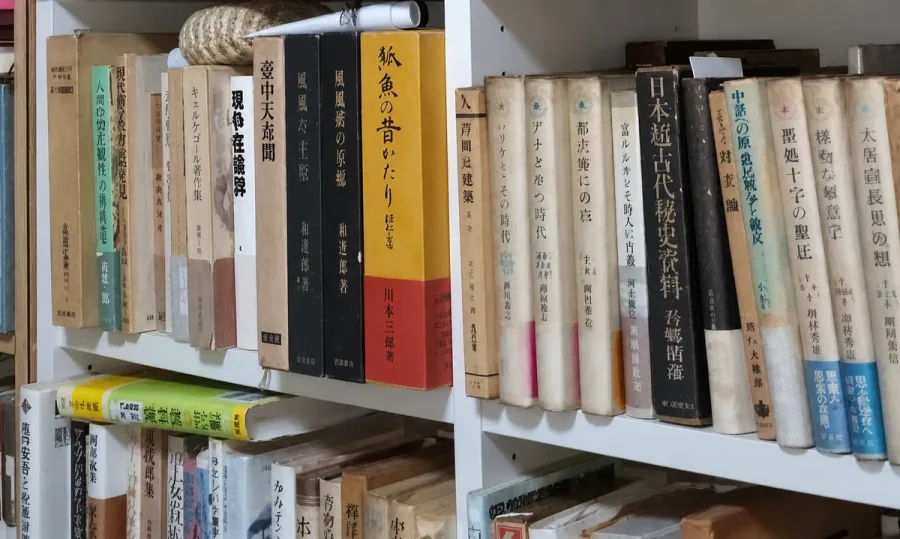
This paper takes Suehiro Tanemura's "Vampire Fantasy" as a starting point to discuss vampire representations by connecting them to Eastern European folklore, fin-de-siècle decadence, Bram Stoker's "Dracula," and contemporary web novel culture, centered on "Shōsetsuka ni Narō." According to verifiable bibliographic information, "Vampire Fantasy" was published by Barajūjisha in 1970, later passed through a Seidosha edition, and was reprinted in the 2024 publication "Suehiro Tanemura Collection: The Box of Wonders." As the introduction by Chikuma Shobo indicates, the work is positioned within Tanemura's primary interests, such as monsters, mythology, fakes, heresy, alchemy, and fraud. In this context, the vampire is read not merely as a monster, but as a symbol that condenses the desires, death, contamination, impurity, deviation, and distrust of authority that modern rationality has excluded. Furthermore, considering that "Dracula" is a modern media novel using epistolary and diary formats, telegrams, and recorded logs, the vampire is more than an external monster; it is a device that exposes the circuits of domination, discipline, and fear within a community. Based on this, this paper argues that in the massive web novel platform, the undead and vampire can be reborn not just as symbols of the "strongest race," but as critical motifs that depict time, exploitation, domination, recognition, loneliness, and information extraction. (CiNii)
Abstract
This essay examines Suehiro Tanemura’s “Kyūketsuki Gensō” (“Vampire Fantasy”) in relation to East European vampire folklore, fin-de-siècle decadence, Bram Stoker’s Dracula, and contemporary Japanese web fiction, especially the ecosystem centered on Shōsetsuka ni Narō. Bibliographic records confirm that Kyūketsuki Gensō was first published in 1970 by Barajūjisha, later reissued by Seidosha, and reprinted in the 2024 anthology Tanemura Suehiro Collection: Kyōi no Hako. In this context, the vampire should be read not merely as a monster of superstition but as a condensed symbol of what modern rationality seeks to exclude: desire, death, contamination, deviation, and distrust of authority. Since Dracula is fundamentally an epistolary novel employing diaries, letters, telegrams, and a phonograph diary, the vampire also functions as a medium through which the fears and disciplinary mechanisms internal to modern society become visible. Building on this framework, the essay argues that in contemporary web fiction the immortal or vampiric figure can still serve as a critical device for exploring time, exploitation, domination, loneliness, and informational extraction, rather than remaining a simplistic marker of overpowering fantasy. (CiNii)
1. Introduction
When discussing Suehiro Tanemura, the vampire should not be treated as mere material for horror interests. According to CiNii bibliographic information, "Vampire Fantasy" was published by Barajūjisha in July 1970 and has since been distributed as a Seidosha edition. Furthermore, Chikuma Shobo's 2024 publication "Suehiro Tanemura Collection: The Box of Wonders" re-presents "How to Make a Monster," "Vampire Fantasy," and "The Captain of Köpenick" as representative works. Thus, "Vampire Fantasy" is positioned not as a peripheral piece of Tanemura's work, but as an important work that aggregates his thought circuits regarding monsters, heresy, fakes, mythology, fraud, and alchemy. (CiNii)
What should be noted here is that this discussion is based on verifiable public bibliographies, publisher introductions, related basic materials, web novel research, and official website information. Because this is a positioning and comparative literary study based on verifiable materials rather than a textual critique based on a verbatim examination of the entire text of "Vampire Fantasy," I will avoid making definitive statements about the details of the text. Even with this limitation stated, it can be sufficiently argued that Tanemura's vampire theory serves as a powerful reference frame for considering modern web novels. (CiNii)
2. The Position of the "Vampire" in Suehiro Tanemura
Chikuma Shobo introduces Tanemura regarding "The Box of Wonders" as a "monster of the 'infinite labyrinth of knowledge' that Japanese humanities should be proud of to the world," and includes "Vampire Fantasy" in it. The introduction also summarizes Tanemura's world as "fakes, heresy, shadows, mythology, alchemy..." What can be read from this is that for Tanemura, the vampire is not a standalone horror motif, but a node that traverses monster studies, heresy studies, mysticism, and fraud theory. The vampire is understood as an existence that shakes the boundaries between truth and falsehood, sacred and profane, reason and superstition, and science and sorcery. (Chikuma Shobo)
In this context, the vampire is less an "object of fear" and more a device that exposes "what modern society has excluded and what it has secretly desired." Since Tanemura's interests extend not only to monsters but also to fraud and fakes, the vampire should also be understood not as a "fake to be seen through," but as an "existence that destabilizes the boundary between truth and disguise itself." Tanemura's vampire can be seen as a story of the return of what modern order has sealed within itself, rather than just a story of the resurrection of the dead. This connects to a reading that sees the vampire not as outside the order, but as a mirror that illuminates the internal contradictions of the order. (Chikuma Shobo)
3. Eastern European History, Folklore, and Views on the Dead
According to Britannica, vampire folklore is told strongly, especially in Eastern Europe, and the word "vampire" is also highly likely to have originated in that region. It is also explained that phenomena such as gum recession and the appearance of growing hair and nails that occur during the decomposition process of a corpse reinforced the belief that "the dead are still alive." In other words, the vampire was not just an absurd superstition, but a social representation formed at the intersection of corpse observation, epidemics, community anxiety, and religious imagination. (Encyclopedia Britannica)
Looking at this from the perspective of Eastern European history and intellectual history, the vampire is not just a variant of the "undead" in general. Rather, it is a community's defensive reaction to the disturbance of boundaries. When the boundaries between life and death, inside and outside, purity and impurity, and kin and other collapse, the community creates the "returned dead" as an explanatory principle. Therefore, before being a symbol of anti-reason, the vampire is a quasi-rational device for the community to narrate its own anxiety. This understanding is essential for reading the vampire as a sociology, psychology, and cultural history of fear, rather than dismissing it as "foolish superstition." (Encyclopedia Britannica)
4. Bram Stoker's "Dracula" and Modern Media
It was Bram Stoker's "Dracula" that definitively established the vampire image in modern literature. Britannica states that this work was published in 1897 and is an epistolary novel using diaries, letters, telegrams, and a "phonograph diary." What should be noted here is that while "Dracula" depicts an old monster, it is a highly modern information media novel in terms of form. (Encyclopedia Britannica)
This gives significant meaning to the vampire representation. The vampire is not a remnant of medieval ghosts, but appears as something that still cannot be captured in an era that tries to capture it through communication technology, records, testimony, and information sharing. In other words, "Dracula" is a work that shakes from within the modern belief that the world can be managed if information is accumulated, recorded, and exchanged. The vampire is a threat coming from the outside, and at the same time, it becomes an existence that visualizes the blind spots of modern governance and information order. Here lies a point that resonates with Suehiro Tanemura's interests. The vampire is, before being a monster, a figure of the remainder that modern reason cannot fully explain. (Encyclopedia Britannica)
5. Decadence, Anti-Reason, and Immorality
Britannica summarizes the literary and artistic mood of the fin de siècle as "sophistication, escapism, extreme aestheticism, world-weariness, and fashionable despair." Also, in the entries for Decadent and Decadentism, it shows that late 19th-century writers leaned toward an aesthetic of sensation, irrationality, subjectivity, and decline as a reaction to positivism and scientific rationalism. It is no coincidence that the vampire became a symbol of this era. This is because the vampire embodies beauty and decay, desire and death, the inversion of holiness, and the sensuality of taboo. (Encyclopedia Britannica)
However, the anti-reason referred to here is not a simple denial of intelligence. Rather, it is the return of the physicality, death, desire, deviation, superstition, and dreaming that modern rationalism discarded to maintain its own legitimacy. Immorality is also not a simple praise of vice. It is a function that destabilizes the arrangement of what society calls "normal" and what it calls "deviant." Therefore, the vampire is more than a hedonistic symbol of immorality; it becomes a critical symbol that exposes the arbitrariness of moral order. It is natural to think that Suehiro Tanemura was attracted to the vampire at this point of ambiguity, where fascination and criticism, and aestheticism and exposure overlap. (Encyclopedia Britannica)
6. The Vampire is a Critic of "Internal Power"
While vampires are often depicted as external monsters, literarily they function more as entities that expose the fragility of internal order. They are strangers, intruders, carriers of infection, seducers, and sometimes aristocrats. Condensed within them are the institutions of modern society: class order, sexual morality, family systems, religious purity, hygiene concepts, and national border control. Communities fear the vampire, but that fear often reflects the community's own violence and exclusionary nature. The vampire is both a 'destroyer of society' and 'one who makes visible the structures of exploitation that society hides from itself.' (Encyclopedia Britannica)
In this sense, the vampire can be an allegory for the critique of power. He is not a revolutionary who openly rebels against kings or the state. Rather, he physically and dramatically demonstrates the exploitation, dependency, ownership, desire, and subordination that operate deep within everyday governance. Sucking blood is also a powerful metaphor for stealing life, time, youth, labor, emotions, and information. The vampire remains effective for modern readers because of the high plasticity of this metaphor. He can be connected to exploitative capital, dominant romantic relationships, closed communities, cults, conspiracy theories, or algorithmic control. Suehiro Tanemura's theory of the vampire can be rebooted for 21st-century readers precisely because of this broad metaphorical range. (Chikuma Shobo)
7. The Modern Narrative Environment of Narou-style Novels
Regarding 'Shousetsuka ni Narou' (Let's Become a Novelist), the official website reports that as of May 2026, there are approximately 1.44 million total works, 19.66 million total episodes, and a total of 59.2 billion characters. The site also claims 'over 1 million works, over 2.4 million registered users, and over 2.5 billion monthly page views.' This indicates that Narou-style novels are not just a subculture, but a massive narrative infrastructure. (Shousetsuka ni Narou)
Furthermore, a doctoral thesis abstract from Osaka University shows, through big data analysis of web novels, that the number of works is increasing year by year, and that high fantasy set in other worlds is overwhelmingly prevalent on 'Shousetsuka ni Narou.' This teaches us that we must grasp Narou-style novels not through mere impressionistic arguments, but from the perspectives of platforms, genres, titles, and trends. In other words, modern vampires and immortals are being reconfigured not as isolated literary symbols, but within rankings, tags, bookmarks, reader reactions, and commercialization pipelines. (Osaka University Academic Repository)
8. The Possibilities of 'Immortals and Immorality' in Narou-style Novels
In Narou-style novels, immortals and vampires are often used as 'strong races,' 'special ability users,' or 'high-ranking beings on the Demon King's side.' However, that alone does not reach the Tanemura-esque vampire. If we are to carry Suehiro Tanemura's awareness of the issues into the modern era, immortals should first be written as beings burdened with the asymmetry of time. Living a long life is an advantage, but it also brings the accumulation of memories, the severance of relationships, the erosion of ethics, and the imbalance of love. Immortality is not a display of power, but a matter of sustained loneliness and responsibility. (Chikuma Shobo)
Moreover, the vampire is extremely potent in modern web novels because it can depict exploitation and intimacy simultaneously. The act of sucking blood can express a complex entanglement of ownership, dependency, consent, harm, devotion, and seduction. If written as a romance, it can depict the ethical conflict of loving someone while stealing their life or time, rather than mere aestheticism. If written as social criticism, it becomes a metaphor for the structure in which a community gradually drains the lives of the weak, or the structure in which a platform absorbs attention and emotion. Modern immortals can be rewritten as beings that suck not only blood, but also information, disposable time, the desire for approval, and the heat of online controversy. This creates a point of contact with informatics and mass media theory. (Encyclopedia Britannica)
In addition, the rankings and attention metrics of 'Shousetsuka ni Narou' are visualized based on evaluation points, bookmark counts, and unique access counts. This means it is an environment where works are strongly filtered by reader reaction. If one is to write a vampire in such a place, the key is how critically one can invert the tropes that readers are already familiar with, such as 'exile,' 'reincarnation,' 'do-over,' and 'the strongest,' rather than just 'consuming immorality.' The vampire can connect to the trope of writing the counterattack of the excluded, or the trope of writing the story of a monster created by the community. That duality is the possibility in modern web novels. (Shousetsuka ni Narou)
9. Similarities to Modern Literature
The similarity to modern literature lies, first, in the depiction of boundary subjects. Beings that are neither living nor dead, neither human nor completely other, overlap with the issues of fluid identity that modern literature has emphasized. Second is the ethics of those who live for a long time. Immortals reject the simple achievement of a coming-of-age story and re-examine the weight of history and the persistence of responsibility. Third is the metaphorical nature of blood-sucking. Blood-sucking easily connects to modern themes such as exploitation, dependency, deprivation, domination, information consumption, and the asymmetry of love. Fourth is the interest in media structure. Since 'Dracula' itself is a novel that incorporates modern media, modern vampire tales are extremely compatible with social media, surveillance, data collection, and the spread of misinformation. (Encyclopedia Britannica)
In this sense, the vampire is not a classic horror trope, but a flexible form capable of taking on the themes of modern literature. The reason Suehiro Tanemura's 'Vampire Fantasy' remains a readable work today is likely because he did not fix the vampire as a folkloric symbol, but treated it as a symbol that multiplies within a labyrinth of knowledge. That is why, if modern Narou-style writers are to write about vampires, they need to redesign them as issues surrounding community, power, media, approval, loneliness, and time, rather than ending up with imitations of Western Gothic or the 'strongest vampire' archetype. Only then can the vampire run alongside modern literature. (Chikuma Shobo)
10. Conclusion
From the above, the axis connecting Suehiro Tanemura's 'Vampire Fantasy' and the 'Immortals and Immorality' of Narou-style novels is not mere horror interest or the glorification of immorality. It is a structure in which death, desire, deviation, infection, and shadows, which modern rationalism excluded, return in the form of the vampire to expose the power and violence within the community. The vampire in Eastern European folklore is a crystallization of community anxiety; in Stoker's 'Dracula,' it becomes a monster that points out the blind spots of modern information society; and in Suehiro Tanemura's work, it becomes an intellectual symbol adjacent to heresy, fakes, myths, and fraud. And in modern Narou-style novels, this vampire remains effective. Rather, it is precisely within a massive posting platform that the immortal has the potential to emerge anew as a critical device for depicting exploitation, domination, information deprivation, loneliness, approval, and the weight of history. (Encyclopedia Britannica)
Therefore, what is important for modern Narou-style writers is not 'writing a vampire' in itself. What is important is to write, through the vampire, about what society fears, what it desires, what it hides, and whose lives it drains to sustain itself. In this respect, Suehiro Tanemura's theory of the vampire remains a valid literary and intellectual resource. (Chikuma Shobo)
List of References and Detailed Bibliographic Notes
Suehiro Tanemura, 'Vampire Fantasy', Bara Juji Sha, 1970.
The first edition bibliography was confirmed via CiNii. Although this is the central text of this paper, this position is based on public bibliographic confirmation, not a precise textual criticism based on a verbatim reading of the entire text. (CiNii)'Suehiro Tanemura's Labyrinth 3: Vampire Fantasy', Seidosha, 1979.
The existence of the Seidosha edition can be confirmed on CiNii. It shows that Tanemura's works shifted from standalone books to a series-based reorganization, which is important for considering later reception. (CiNii)Chikuma Shobo (ed.), 'Suehiro Tanemura Collection: The Box of Wonders', Chikuma Shobo, 2024.
A reprinted anthology that includes 'Vampire Fantasy.' From the publisher's introduction, it can be confirmed that Tanemura's main interests span monsters, heresy, fakes, myths, alchemy, and fraud, serving as basic material for this paper's understanding of Tanemura. (Chikuma Shobo)Encyclopaedia Britannica, “Vampire.”
An overview material that covers the Eastern European origins of vampire folklore, the undead representation, and its connection to corpse decomposition phenomena. Useful as an introduction to folklore and cultural history. (Encyclopedia Britannica)Encyclopaedia Britannica, “Dracula (novel by Bram Stoker).”
Published in 1897, this epistolary novel allows for the identification of formal characteristics such as diaries, letters, telegrams, and phonograph logs. It is fundamental for discussing the relationship between vampires and modern media. (Encyclopedia Britannica)Encyclopaedia Britannica, “Bram Stoker.”
Material that supplements the form and positioning of 'Dracula' from the author's perspective. Useful for confirming the history of the work. (Encyclopedia Britannica)Encyclopaedia Britannica, “Fin de siècle”; “Decadentism”; “Decadent.”
An overview of decadence, anti-positivism, sensualism, irrationality, and the aesthetics of decline. A reference material for organizing the relationship between vampires and the late 19th-century spirit. (Encyclopedia Britannica)Huang Chenwen, 'Web Novels as Big Data: Linguistic Features and Trend Analysis,' Osaka University Doctoral Dissertation Abstract, 2022.
A study that examines the increasing trend of web novels, genre composition, and title trends using natural language processing and big data analysis. An important resource for understanding Narou-style novels beyond mere impressionistic arguments. (Osaka University Academic Repository)Shosetsuka ni Naro, 'About Shosetsuka ni Naro'.
A primary source for confirming the latest official data on the platform's scale, such as the total number of published works, total number of episodes, and total character count. (Shosetsuka ni Naro)Shosetsuka ni Naro, 'Site Guide,' 'About Ranking Aggregation,' 'Regarding Commercialization'.
Official materials for confirming ranking indicators, the platform's visualization principles, and commercialization pathways. Important when discussing the institutional conditions of web novels. (Shosetsuka ni Naro)
Notes
This paper is based on public bibliographies, publisher introductions, dictionary materials, official websites, and doctoral dissertation abstracts. The reason for not including long direct quotations from the text of Suehiro Tanemura's 'Vampire Fantasy' is to avoid making definitive statements beyond the scope of the public materials confirmed at this time. Therefore, a precise textual analysis delving into the detailed expressions and paragraph structure of Tanemura's original text would be more appropriately conducted in a separate paper after verifying the actual work. (CiNii)