Until now, when Japanese people aimed to go abroad for baseball,
the common path was the United States.
However, the hurdles for doing so are definitely rising today.
The main reasons are the following three:
Increased costs due to the weak yen
Rising tuition for studying in the U.S.
Uncertainty regarding visas and work systems
Because of this, the hurdles for Japanese people to study in the U.S. are getting higher every year. That is why I am focusing on studying baseball in Canada.
Let's take a look at the reasons why.
The Impact of the Weak Yen on Study Abroad Costs
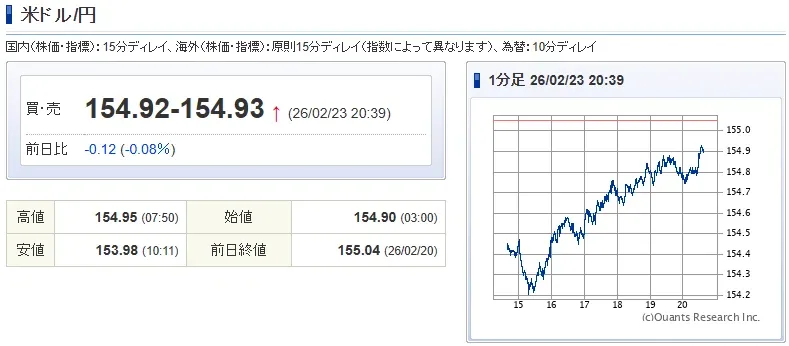
1 U.S. dollar is approximately 155 yen. A burden increase of about 1.3 to 1.4 times over the last 10 years
■ Canadian Dollar / YenCanada is also rising, but not as much as the U.S. dollar
Even considering only exchange rates, I believe the burden for Japanese people is lower in Canada than in the U.S.
■ Community College (International Students)
Now, let's look at tuition fees.
Estimated Annual Tuition by Country (Both are public)
Merced College, California, USAUSD 20,708 (approx. 3.21 million yen)
Lethbridge Polytechnic, Alberta, CanadaCAD 14,950 (approx. 1.70 million yen)
*Lethbridge is for business majors
Merced is a city of about 80,000, Lethbridge is a city of about 100,000
■ 4-Year University (International Students)
Estimated Annual Tuition by Country (Both are public)
California State University, Fresno, USA37,770 USD (approx. 5.85 million yen)
University of Lethbridge, Canada20,760 CAD (approx. 2.35 million yen)
The cost difference is obvious, isn't it?
■ Visas and Career Paths After Graduation
United StatesOPT: Up to 1 year (extensions available depending on major)
After that: A work visa is required (high difficulty).
Obtaining a work visa has become stricter, especially since the Trump administration.
Possibility of working for up to 3 years (While the hurdle for local employment is high, the difficulty of obtaining a visa is lower than obtaining a work visa in the U.S.)
There is a path to permanent residency.
Canada is a country that is proactive about accepting immigrants.
The Option of Baseball Study Abroad in Canada
Canada is connected to the U.S. by land, and its baseball culture is also North American style.
Generally speaking, baseball is more popular in the U.S. than in Canada.
However, Canada also has universities and academies that focus on baseball.
When I went to study abroad in Canada after graduating from a Japanese university,Prairie Baseball Academy (hereinafter referred to as PBA) I was coaching a baseball team for university students called.
PBA is not a university, but a baseball academy. It is located in Lethbridge, Alberta, Canada, and the players attend Lethbridge Polytechnic, a two-year college, and the University of Lethbridge, a four-year university.
Most players attend a two-year college, and after playing for PBA for two years, they transfer to a four-year university.
Depending on their performance over the two years, they may advance to a four-year university in the U.S. with a non-repayable scholarship. Both when I was there and now, several students transfer to U.S. universities with scholarships every year. Of course, there are also players who advance to Canadian four-year universities and continue playing baseball. In other words, now that baseball study abroad in the U.S. has become difficult, I can recommend this route to Japanese students as well.
Why this route is realistic
Reason 1: Costs can be kept downThis is as I mentioned earlier. There is a difference of double or more just in tuition fees. This is a major advantage in the current era of a weak yen.
Reason 2: Adaptation to North American baseballAlthough the countries are different, the U.S. and Canada, the baseball culture is basically the same. The offense-oriented baseball and practice styles are similar.
Reason 3: Improvement of English proficiencyAlthough there are some regional differences, Canadian English and American English are basically the same.
Reason 4: Possibility of TransferYou can play in Canada while keeping tuition costs down, and if your performance is recognized, you can transfer to a four-year university in the U.S. or Canada with a scholarship. Teams like the PBA have a long history and sufficient connections with American universities. Canada is connected to the U.S. by land, and Alberta, where the PBA is located, faces the U.S. border. When I was with the PBA, I often crossed the border by bus to go on away games in the U.S. That is how much contact there is with American baseball.
However, there is actually one hurdle.
That is the high barrier of English proficiency. In American community colleges, you can sometimes enroll with a minimum TOEFL score of 45 or Eiken Grade 2A (
Reference). In other words, in terms of English proficiency, Japanese high school students can enroll smoothly. (However, it is actually quite tough if you enroll with Eiken Grade 2A.)
On the other hand, a TOEFL score of 70-80 is common in Canada (Reference). This is equivalent to Eiken Pre-1st Grade level. If you can improve your English to this level and enter university, I think you will be able to keep up with the classes.
Therefore, for a Japanese person to enter a Canadian university, they must either meet these English requirements in Japan before going to Canada, or study for a year (or more) at a language school affiliated with a Canadian university.
So, if you are not confident in your English, it is better to plan for an extra year to a year and a half before university. In the case of Canadian universities, even with this extra year, it is cheaper in terms of tuition than in the U.S.
In addition, although it takes time and money, this way you will definitely acquire English proficiency.
There are quite a few Japanese students who go to the U.S. and enroll in university with a TOEFL score of 45, but cannot keep up with their classes. So, they utilize the Japanese community to take easy classes and help each other out to somehow earn credits. And while they may manage to get credits and acquire survival skills, there are quite a few students who do not really acquire English proficiency.
In the case of Canada, you have to study at a language school until you acquire English proficiency. It is tough at first because you cannot easily get out of the language school. I even had a friend who took more than a year to graduate from a language school after graduating from a Japanese high school. He said it was difficult to maintain motivation.
After graduating from the language school, that friend transferred from Lethbridge College to the University of Lethbridge, returned to Japan, and found a job. Now, he travels the world as a manager for a super-famous artist.
Therefore, I recommend studying in Canada for students who want to work hard and acquire English proficiency, even if it takes time instead of taking a shortcut.
Regarding Consultations
I have been involved in college baseball in both Canada and the U.S. I would like to support those who are considering studying baseball abroad in North America, so if you are interested, please consult me from the following link.
https://forms.gle/Ash5iKSP9iKFZFvo8
*There is no cost.
Summary
Having received a lot of inspiration through studying baseball abroad myself, I have a desire to support those who are aiming to study baseball abroad.
Studying baseball in the U.S. is of course good, but precisely because of this situation, I think Canada is also an option.
If you read this article and became even a little interested, please 'Like' it.
If there is demand, I would like to write another article about Canadian baseball.