Let's occasionally think about technology in a context other than performance.
For example, Claude, the generative AI developed by Anthropic, is often evaluated for its coding performance. It is also excellent as an agent.
In that context, have you ever felt a sense of incongruity with the names given to AI models (the trained engines used to create text, etc.)?
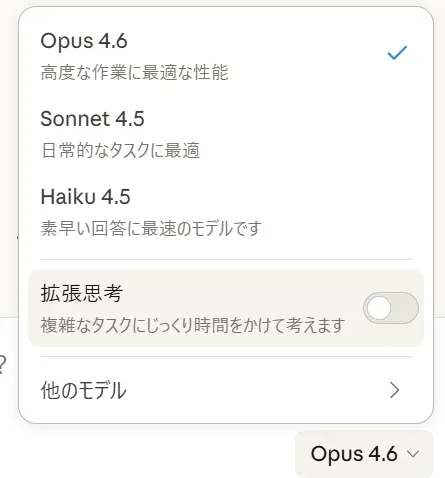
Haiku, Sonnet, Opus... these are all taken from forms of poetry and music.
Haiku: A Japanese short poetic form consisting of 17 sounds in a 5-7-5 structure.
Sonnet: A European fixed-verse poem consisting of 14 lines. Shakespeare and Petrarch are representative sonnet writers.
Opus: Means "work" in Latin, and in music, it refers to a composer's major or representative work (e.g., Beethoven's Op. 131).
The scale of poetry and music increases from Haiku to Sonnet to Opus, and one can imagine that these forms correspond to the performance of each model.
However, giving cultural names to model names is something not seen in other AI companies. If it were simply to express the performance of the model, it would be better to use intuitively understandable words like "Instant" or "Thinking."
Why take such a roundabout approach that appeals to cultural intuition?
As far as I have seen, there are no articles where Anthropic officially explains the origin of the naming. Therefore, there is no clear answer to this question, but I would like to think about this peculiarity based on some information.
Anthropic and its founders
Anthropic was founded in January 2021 by the Amodei siblings, who left OpenAI.
The older brother, Dario Amodei (CEO), earned a bachelor's degree in physics at Stanford and a doctorate in biophysics at Princeton, following a trajectory of physics → biophysics → computational neuroscience → AI. It is a thorough science-oriented career.
The younger sister, Daniela Amodei (President), earned bachelor's degrees in English literature, political science, and music at the University of California, Santa Cruz. It seems unusual for someone from a humanities background to be the President of an AI company.
It seems that Anthropic is a company operated complementarily by two people who have walked completely different career paths. The younger sister, Daniela, says the following:
Also, Daniela talks about the importance of studying the humanities in the AI era, and the importance of being human.
Despite being an AI company, there is a founder who studied the humanities, and they are showing an attitude of valuing the humanities.
With this background, is naming the models after poetry just a way to express the length of the context?
Is the choice of names a superficial act?
Daniela earned three bachelor's degrees at the University of California: English literature, political science, and music. While these three disciplines may seem unrelated at first glance, they share common properties.
English LiteratureA fundamental training exercise in English literature is 'close reading.' It is a technique for interpreting meaning within the form, structure, and word choice of a work itself. For example, when studying a sonnet, one considers why it has 14 lines or why a turn (volta) occurs at the ninth line. In English literature, form is generally not seen as mere decoration, but as meaning itself.
MusicMusic is similar. Academic analysis of music deals with how the form of a composition structures the listener's experience. This is because the same musical score can create entirely different experiences depending on the performer. In other words, a work is not completed by the creator alone. It is a worldview where the work only comes into existence when there is a receiver.
Political ScienceWhat about political science? In the world of politics, the choice of words drives reality. Speeches, laws, constitutions... how things are named and how they are spoken about changes people's perceptions and actions. The act of naming itself carries social significance.
English literature teaches that meaning resides in form, music is completed through the receiver, and political science teaches that naming creates reality.
For someone who has studied these three fields, product naming should never be a superficial act. It is not surprising to think that some profound philosophy is reflected at Anthropic.
The Role Poetry and Music Have Played in Human Society
The names of poetry and music given to AI models.
To pursue their meaning, I would like to consider what role poetry and music have played in our human society in the first place.
In the era of oral culture, meter was humanity's first information technology. Homer's 'Iliad' and 'Odyssey' (around the 8th century BC) were passed down orally for generations before being fixed in writing. Tens of thousands of lines of stories were transmitted in an age without writing.
The Role as a CommunityPoetry and music also served to bind the emotions of a community. For example, in 'A Mighty Fortress Is Our God,' written and composed by Martin Luther, the congregation singing together allowed even illiterate people to share the doctrine.
The Role of FormalizationThere is also the function of giving form to things that cannot be verbalized, such as Matsuo Basho's 'The old pond, a frog jumps in, the sound of water' (1686), which is familiar to Japanese people. Within the 17-syllable constraint of haiku, it expresses scenes, silence, the flow of time, and the presence of life and death.
What these have in common is that they convert things that cannot be conveyed as they are into a form that can be conveyed. It can be said that poetry and music have played the role of translation in human society to connect people with one another.
The Role of Poetry for AI
Haiku, Sonnet, and Opus are not merely metaphors for size. Haiku leaves space and entrusts it to the receiver, the sonnet is a form of dialogue, and an opus is an art that integrates different elements. Each has its own unique way of relating humans to expression.
Anthropic may be trying to have AI inherit the role of the 'translator' that humanity has carried since ancient times through poetry and music. That is, the role of translating knowledge into a form that people can receive, translating individual thoughts into a form that can be shared with others, and giving form to things that have not yet been put into words.
The Anthropic Principle originally refers to a cosmological concept that the universe possesses the conditions that allow for human existence.
Not to replace humans, but for people to connect with people. Just as poetry and music have been, AI as a translator. That may be the AI Anthropic Principle for Anthropic.