—Captivated by the Silence—
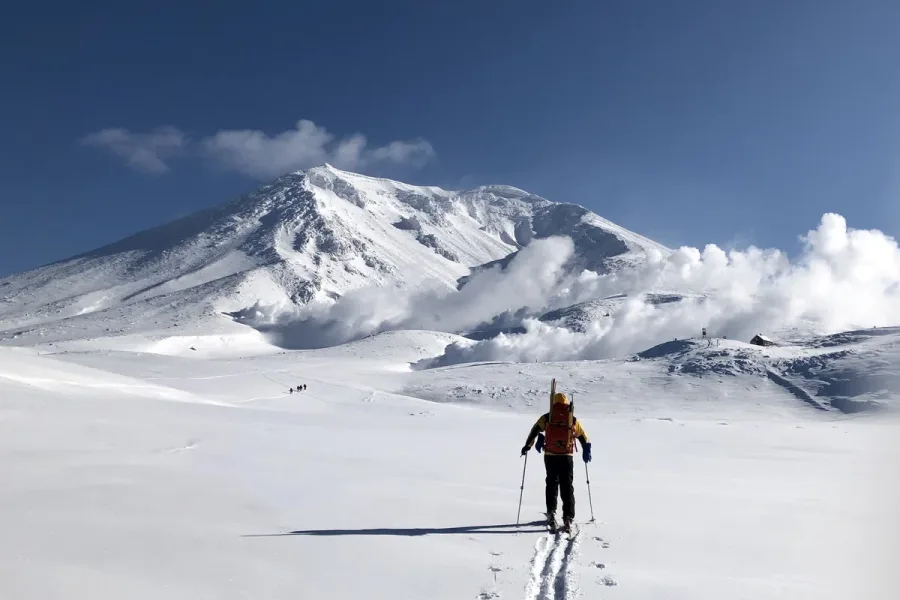
I have been winter mountaineering for 10 years.
I have over 20 years of experience in summer mountaineering, having been taken along by my father since I was a child, but I only started challenging winter mountains as an adult—about 10 years ago—due to reasons such as:
・Equipment is expensive
・The weight of the term 'self-responsibility' is greater than in summer
・The weather hurdles are high
・The risks are on a completely different level...
Perhaps because they saw me excitedly talking about the appeal of winter mountains (though that's definitely not it),
my husband started gathering equipment and walking in winter mountains last year.
At that time, I held a lecture and practice session at my parents' house called 'Winter Mountaineering Basics',
so to recall and solidify the knowledge gained there,
I decided to record various things about winter mountaineering on note with my husband.
Winter Mountaineering Styles
There are several ways to walk and enjoy winter mountains.
Boot packing
This is the method of walking directly on the snow. It is light and easy where the snow is packed, but consumes a lot of energy in deep snow.Snowshoes/Wakan
Using tools that provide buoyancy on the snow surface, you can walk without sinking even in deep snow. This is suitable for beginners experiencing winter mountains.Skiing
A style of climbing and sliding down snowy mountains using skis as a means of transportation. It offers a sense of speed and exhilaration, but requires skiing skills (I was taught in the mountaineering club I belonged to that this is the most standard style).Crampons and Ice Axe
These are basic pieces of equipment for safely climbing frozen slopes and steep snow ridges. It is also a symbolic style of winter mountaineering.Alpine Climbing (Full-scale snow ridge climbing)
An advanced climbing style that incorporates snow walls and rock ridges. Skill and experience are essential, and it is the most severe domain of winter mountaineering.
Depending on the snow conditions and terrain, one might use snowshoes or skis part of the way, and then switch to crampons and an ice axe once reaching areas above the tree line or wind-exposed slopes to aim for the peak.
Also, when the goal is skiing, there is a style where you don't aim for the peak, but instead find good slopes to ski down and then climb back up. Many people repeat this 'climb and ski' process, which is one of the unique ways to enjoy winter mountains.
By the way, our styles are skiing, snowshoeing, and crampons/ice axe.
Dangers of Winter Mountains
Winter mountains harbor dangers that do not exist in summer mountains.
Cold, Strong Winds, Hypothermia, Frostbite
If you underestimate the cold, your body temperature will be rapidly depleted. Coldness progresses from the extremities, which can be life-threatening.Whiteout and Ring Wandering※・Route loss
Visibility becomes completely white due to a blizzard, and you lose your sense of direction. Even with a map or GPS, walking itself becomes difficult. This can also lead to slipping or getting lost.Avalanches
These occur depending on snow conditions and terrain. Even with knowledge and equipment, they cannot be completely avoided.Slips, falls, and cornice※break-throughs
The snow surface is hard, and you can slip even while wearing crampons. A moment of carelessness can lead to a major accident.Falls while sliding and collisions with trees
When traveling on skis or snowboards, you gain speed, which carries the risk of falling or colliding with obstacles. A lack of skill combined with fatigue can lead to accidents.
※ Ringwandering: A phenomenon where a person loses their sense of direction and unconsciously walks in circles, returning to the same spot.
※ Cornice: A mass of snow that forms on the leeward side of a mountain ridge or crest due to wind blowing in one direction.
What I want to convey in this series
The winter mountains are a harsh yet beautiful world. What is needed there, more than special skills, is to "carefully build upon the basics."
I will reorganize information on clothing, gear, risk preparation, and avalanche knowledge, summarizing it in a way that is useful for both beginners and experienced climbers.
By writing this as a way for my husband to relearn and for me to confirm my own knowledge, I hope it will help readers take their first steps with confidence.