Hello, this is k, a music nerd at times.
Basically, as long as I'm awake, I'm listening to some kind of music day and night. I'm such a severe music lover that I'm reaching the level of a tuna that will die if it doesn't keep swimming. This time, I've started writing this article because I want to introduce, without leaving anything out, the amazing artist that I want to recommend to all of humanity: "haisuinonasa".
I've listened to everything from classical to progressive metal, and from anime songs to opera, but haisuinonasa is the only artist that has been this enlightening, both before and since.
I'll do my best to convey even a little of their charm, so please give it a read!
The Encounter
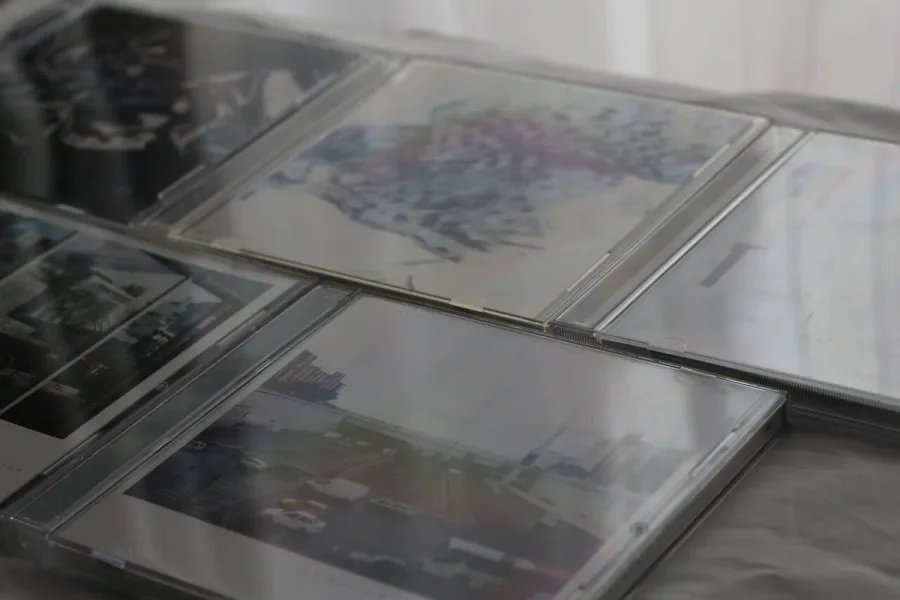
Around the summer of 2013, when I joined the light music club at university and started playing guitar in earnest, I basically spent my days holed up in my room playing guitar. The trigger that broadened my world was, surprisingly, a game playthrough video. The song playing in the video by Fuu-san, famous for his Dark Souls playthroughs, was "Happy End" by haisuinonasa.
The cutting riff, catchy despite its odd time signature, jumped into my ears from the intro. I was blown away. What is this?. As the song progressed, I was immediately drawn into the saturation of the ambient B-melody, which I had never heard before, where the dynamic drums and the contrasting, floating vocals and keyboards were perfectly blended.
It hit the spot for me, as someone who started with classical music and loves instrumentals.
I became curious about who this artist was and what other works they had, and having received a complete revelation, the me of that time bought all the albums that had been released at that point on Amazon for the first time in my life.
Comprehensive power as "art"
You might say, "What are you talking about while calling this a band introduction?", but it didn't really feel like I was listening to music, haha.
As I listened to the albums I bought, I gradually began to see a modern, minimalist, and inorganic interior, or perhaps a somewhat empty "space" like a sophisticated urban building, and it didn't take long for me to realize, "I see, this is modern art in the form of music".
The following three songs represent that one-of-a-kind "haisuinonasa" sound.
The song with the highest number of views on YouTube and streaming sites is this "Chikatetsu no Doutai". This music video, where auditory and visual senses are fused with extreme precision, is very impressive, isn't it? It's as if the music was derived from the visuals. It's no wonder it was recognized by the Agency for Cultural Affairs (Japan isn't a lost cause yet...!), and you can see from the comment section that it is highly regarded overseas.
This is not simply because "the math rock genre doesn't focus on singing (i.e., Japanese)", but perhaps the high comprehensive resolution as art that goes beyond the realm of music is a major reason why this work has been elevated to a borderless piece of work, both domestically and internationally, regardless of interest in the genre.
…It doesn't matter, but I think the finely chopped hi-hat represents a train passing through the city calmly. Am I right...? (A style of exposing my lack of sensitivity)
Next is "reflection", which is also a single.
Among the band's songs, it is characterized by an exceptionally inorganic sound design, and the distinctive panning and the phrases of each part scattered finely, as if reflecting randomly as the song title suggests, create "stillness" and "motion". It's a number that I want to call "experimental" rather than just contemporary. Should I call it a museum of sound? Personally, when I think of haisuinonasa, I think of this song.
By the way, there is a song called Mirror as the first track on this single, and it seems that reflection was created by editing this Mirror (I have no idea...). The third track, in motion, is a dynamic piece with a good groove from the bass and drums, which makes me feel some kind of intention.
Finally, "logos". This is a song that I would like you to enjoy with the live video, and the video by Keita Onishi, who worked on the music videos for the two works mentioned above, is playing in the background.
It's a song that shows the high level of individual performance ability, and it's one of haisuinonasa's most difficult tracks, where the distortion sound of the Terui brothers, which keeps surging, and the transcendental drumming that makes you want to ask "what was a rhythm instrument?" create the development. From a player's perspective, I have absolutely no idea how this song works in a live performance. There are few notes for the keyboard and vocals, and I seriously wonder how they are counting...
As an aside, I'm sure many of you discovered Haisuinonasa through the "Zankyo Record" label, but don't you think "logos" feels particularly like Zankyo? Around 2012, when it was released, they were in their prime, weren't they?
There are other songs that I feel have a similar vector, so please do listen to them on streaming services or elsewhere!
Expressiveness that doesn't end with being "inorganic"
I've introduced some "quintessentially Haisuinonasa" songs so far, but what do you think? Since they are all avant-garde songs that seem to say "an antithesis to commercial music," from here on, I would like to shift from the aforementioned experimental sounds to songs that are (presumably) a bit more accessible.
The album "Doubutsu no Shintai (Animal Body)," with its jacket featuring a stuffed owl that creates a unique atmosphere. I feel that the noise, which has a touch of electronica like the intro, brings out the organic quality of the piano, which is both transparent and soft.
The songs on this album are, in photographic terms,high exposure—or rather, the overall warm, light-like tone is impressive. Even in the vocal work, compared to the early songs that heavily used high-pitched falsetto, I feel there are more organic songs that make use of the softness of the natural voice. It is truly an album that should be called the culmination of Haisuinonasa, and I think the other tracks are relatively easy to listen to, so please give it a listen.
Next is "Souzou to Toshi no Kodomo (Imagination and the City's Children)." It is a number with a gentle melody, where the open-D tuned acoustic guitar and piano weave an impressive, fantastical worldview. When I listen to this song, I imagine a warm scene, like watching light shine into an underwater city...
By the way, this album is the only one not available on streaming services. Why...
Well, I think it has high BGM potential due to its inherent abstractness, but once you get used to listening to it, don't you feel a sense of satisfaction with the scenes that emerge from the song titles and sounds, or a certainpleasantness to the ears?
In the next section, I have summarized my own interpretation of that mechanism.
Haisuinonasa as the embodiment of "logos"
The band's composer and a guitarist I deeply admire,Yoshimasa Terui-san, reflects on his own composition style in an interview as follows.
To summarize, Haisuinonasa may seem difficult at first glance, but the themes are actually very straightforward. It can be read that the music exists with a visual image of a certain phenomenon or scenery as the goal, and these are converted into sound. Perhaps they do not use existing methods such as adding flesh to a pre-composed chord progression, but are creating music in a more fundamental field, closer to the era when classical music or so-called packaged composition techniques were not yet established.
So, the question is, "What is so amazing about them in the end?" Even if there are other artists who create songs from this "from things/events to sound" approach,I don't think any artist surpasses Haisuinonasa in outputting while balancing high resolution of scenery and artistic abstraction.
I introduced the song "logos" earlier, and this is thought to be derived from the Greek word that appears in philosophy, meaning "the fundamental order or principle that makes all things exist."
I had always been curious about what that difficult song represented, but since Haisuinonasa is a group with the theme of "sonification of visual art," I interpreted it as a band that exists to embody the logos (≒ principles) that constitute that worldview, and that the complexly intertwined logos riffs are hinting at these human thought circuits.
Haisuinonasa's music is an existence that has been sublimated to a level that can be called aunique language, and this conversion process is the biggest point in creating a sound image thatevokes synesthesia. I would love to dig deeper, but it is frustrating that the only way to know what the members are thinking when they phrase things is to peek inside their heads. It is hard to believe that such an abstract worldview is all calculated and crafted to this extent...
I wish someone would post a collection of interpretations of the lyrics.
"Chizu ni nai Machi" and the effective hiatus
I have introduced the charm of haisuinonasa up to this point, but after the release of "Henshin" in 2015, and following a final Twitter update in August 2017, the band has been in a state of de facto hiatus (as of the end of June 2021).
I feel that the change in lineup due to the departure of vocalist Ai Kamano also had an impact, but since Mr. Terui's activities began to diversify right around this time, even though they continued live performances by recruiting new members, I believe that they simply lacked the resources to dedicate to his own music production.
A prime example issora tob sakana, which caused a sensation not only in the math-rock scene but even in the idol industry. Of course, I invested everything I had into their crowdfunding for their farewell concert, and despite being a grown adult, I was depressed for a week. There were also his band activities insiraph, various song contributions, and recently he has been in charge of the soundtrack for the anime "Jujutsu Kaisen." As a devotee who would love to send subscription money directly to Mr. Terui every month, I am happy from the bottom of my heart, but I still find myself wondering about the fate of their origin.
The last song I will introduce is from the single "Henshin", which is their final release to date.
"Chizu ni nai Machi"
Honestly, it is no exaggeration to say that I wrote this article just so I could pour out all my thoughts about this song.
In haisuinonasa's songs, "cities" and "towns" frequently appear as themes, but none of them depict bustling cities. I have the impression that many of their songs evoke the dim light before dawn, as if you were the only person in the world amidst a cluster of large buildings, and "Chizu ni nai Machi" is the pinnacle of that. Beautiful from beginning to end. What is this?
In particular, the grand chorus that unfolds all at once from the fragile guitar arpeggios and the cascading piano melody brings me to tears no matter how many times I listen to it.
There was a time lag between the release of the audio and the release of the music video for this song, but from the moment I first heard it, I couldn't help but imagine a hollow and sorrowful scene, just like the CG footage right before the grand chorus, as if I were watching the end of a collapsing world.
Why did I introduce this song last?
Honestly, I had been waiting for haisuinonasa to resume activities all this time, and for me, I was unusually hopeful. I checked social media, kept track of the members' activities, and continued to listen to their songs.
In the midst of that, I witnessed the members themselves state in multiple settings that they could not resume activities at this time.
Strangely, I wasn't shocked. That is because as I watched the activities of the members, especially Mr. Terui, who had become a highly regarded up-and-coming creator, diversify, I felt it might be difficult to continue haisuinonasa in the way Mr. Terui was satisfied with, which likely involved a lot of creative struggle.
Perhaps the city that collapses and is reconstructed was haisuinonasa itself.
As I listened to this song over and over, I eventually started thinking about things like that.
"Everything that was haisuinonasa was poured into this song."
I introduced "Chizu ni nai Machi" last because even if this song was a work in progress for haisuinonasa, I felt that I could accept that answer with conviction. It is that wonderful, special, and irreplaceable a song that has colored my artistic perspective.
In conclusion
I intended to focus on introducing their songs, but it ended up being quite a long article. I don't know how many people will see this, but I hope that music nerds might find at least some parts of the latter half relatable, haha.
To begin with, this is my first time attempting something like this analysis, and I am aware that it is a shallow piece that only touches on superficial elements based on my own intuition. I would like to be able to write music theory-based critiques and analyses of the lyrics, which I skipped this time. I also lack knowledge about art. Someone please teach me, haha.
That said, perhaps because I was able to pour out my feelings, I feel incredibly refreshed right now. Personally, I feel like I have reached a stopping point regarding my thoughts on haisuinonasa, so I hope to continue living my musical life while looking forward to the future activities of Mr. Terui and the other members of haisuinonasa.
I would like to write about osakana and siraph sometime again. school food punishment is also good.
I wonder what songs I should listen to tomorrow.
<Reference Links>
<Works I have played>
Happy End
City Not on the Map